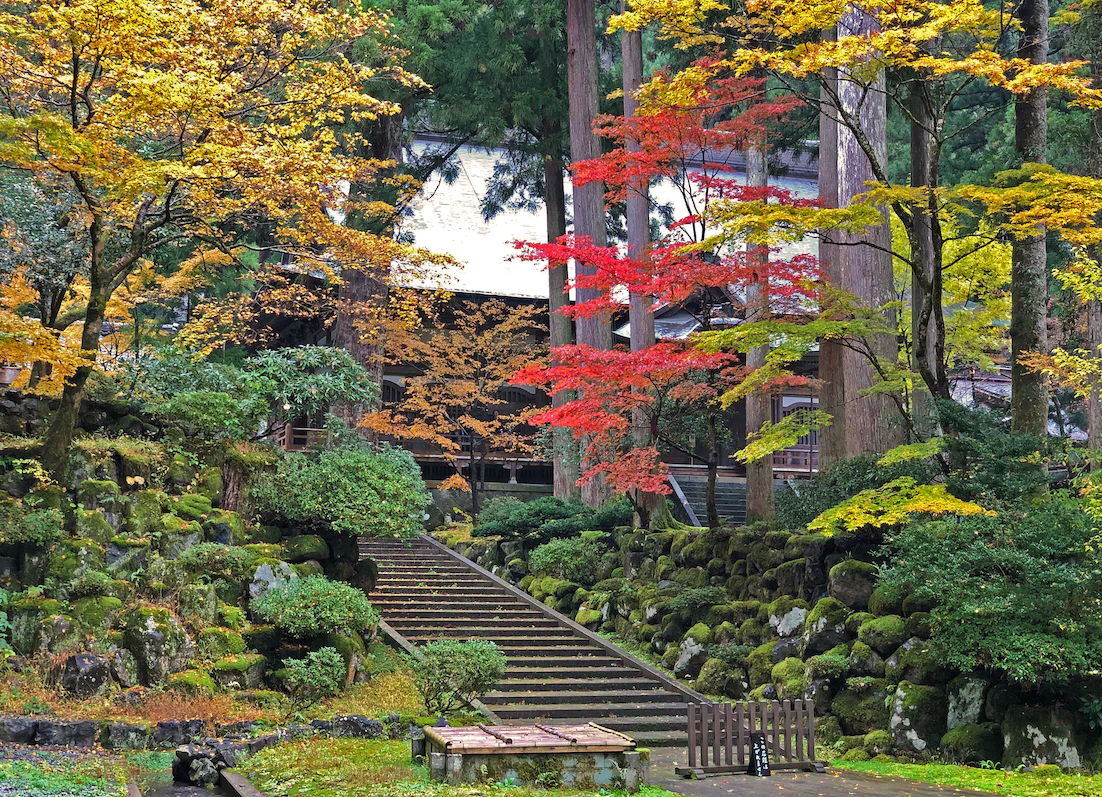
Fukui is one of the least-visited prefectures in Japan, and it holds an unusually strange and wonderful combination of things: one of the most important Zen monasteries in the world, the best dinosaur museum in the country, dramatic cliffs dropping into the Sea of Japan, and—in winter—some of the finest crab anyone will ever eat. Few foreign travelers come here, which makes the rewards feel like genuine discoveries rather than items on a checklist.
It’s a prefecture of contrasts: ancient and prehistoric, spiritual and playful, mountain and sea. Here’s how a curious traveler should approach it.
Eiheiji: A Living Zen Monastery
Eiheiji, founded in 1244 by the monk Dogen, is one of the two head temples of Soto Zen Buddhism and one of the most atmospheric places in Japan. This is not a museum—it’s a working monastery where dozens of monks train in strict silence, sweeping the same wooden corridors, sitting the same meditation their predecessors have for nearly 800 years.
The temple complex climbs a cedar-forested mountainside, its halls linked by covered wooden walkways. Walking through in respectful quiet, past monks going about their day, is genuinely moving. Some lodgings nearby offer a taste of the discipline—early-morning meditation and the vegetarian shojin ryori diet. Eiheiji is the reason serious travelers make the trip to Fukui.
The Dinosaur Museum: Better Than It Has Any Right to Be
Fukui is, improbably, Japan’s dinosaur capital—more dinosaur fossils have been unearthed here than anywhere else in the country. The Fukui Prefectural Dinosaur Museum is one of the best of its kind in the world: a vast, modern space with dozens of full skeletons, life-sized animatronics, and excellent exhibits. It’s a must for families, and impressive even if you arrived with no interest in dinosaurs at all.
Tojinbo: The Cliffs at the Edge
Tojinbo is a kilometer of dramatic columnar basalt cliffs plunging into the Sea of Japan—a rare geological formation found in only a few places on earth. You can walk right to the edge (carefully) above the crashing waves, or take a sightseeing boat to see the rock columns from below. It’s at its most powerful in rough winter weather, and beautiful at sunset year-round.
Inland, Maruoka Castle has one of Japan’s oldest surviving keeps, and Echizen Ono—the “castle in the sky”—floats above a sea of morning cloud on the right autumn mornings.
Eat This
- Echizen crab (Echizen-gani)—the local snow crab is among the most prized in all of Japan, and winter (roughly November–March) is the season people travel here specifically for. If food is your priority, come in winter.
- Oroshi soba—buckwheat noodles topped with grated daikon radish, the Fukui style.
- Sauce katsudon—a local take on the pork-cutlet rice bowl, dipped in a Worcestershire-style sauce.
Local Tips Most Visitors Miss
- Come in winter for the crab—Echizen crab season is the single best reason to time a Fukui trip.
- Eiheiji rewards quiet—go respectfully and early; it’s a working monastery, not a photo op.
- The new Hokuriku Shinkansen extension has made Fukui far easier to reach from Tokyo than it used to be.
- Rent a car to link Eiheiji, the dinosaur museum, and Tojinbo comfortably in a day or two.
- Tojinbo is best in dramatic weather—don’t avoid it on a stormy day; that’s when it’s most spectacular.
Practical Info
| Item | Detail |
|---|---|
| Access | Hokuriku Shinkansen to Fukui from Tokyo; or via Kanazawa/Kyoto |
| Don’t miss | Eiheiji, Fukui Dinosaur Museum, Tojinbo cliffs, Maruoka Castle |
| Eat | Echizen crab (winter), oroshi soba, sauce katsudon |
| Best time | Winter for crab; autumn for Echizen Ono’s cloud sea; spring for blossoms |
| Getting around | Rental car recommended |
Fukui is the prefecture that surprises you—Zen monks and dinosaur skeletons, sea cliffs and snow crab, all in a quiet corner of Japan almost no foreign visitor reaches. Go for Eiheiji’s silence, stay for the crab, and enjoy having it nearly to yourself.