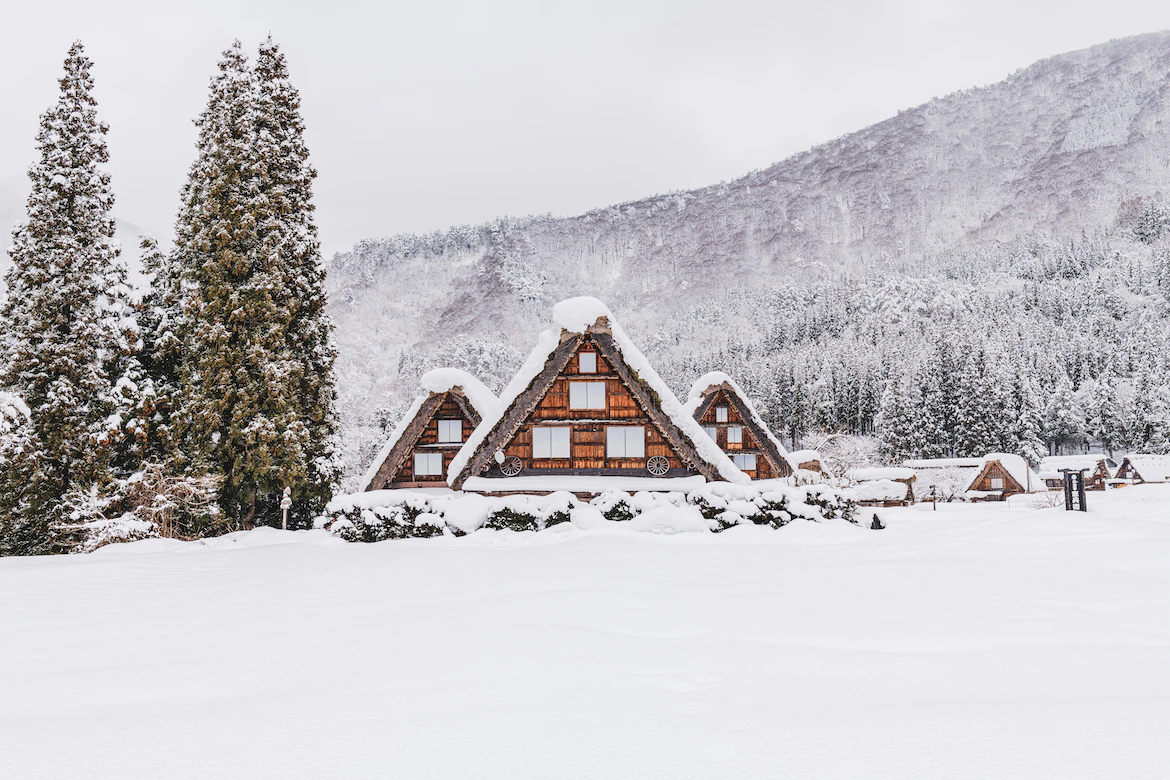
There is a version of Japan that survives almost nowhere else: mountain valleys where snow piles to the eaves, families farm the same terraced fields their ancestors did, and the houses are built to a logic four centuries old. That Japan is in Gifu. While most first-time itineraries never leave the Tokyo–Kyoto corridor, the people who venture into Gifu’s Hida highlands come back saying it was the part of the trip that felt most real.
The challenge with Gifu is purely logistical—it is mountainous, and getting it wrong means losing half a day to slow roads. Get the routing right and it is one of the most rewarding regions in the country.
Shirakawa-go: The Houses Built to Survive Winter
Shirakawa-go is the reason most travelers come to Gifu, and it earns it. The village’s gassho-zukuri farmhouses—their name means “praying hands,” for the steep triangular roofs—are a UNESCO World Heritage Site. Those roofs are not decorative: they are engineered to shed the metres of snow this valley receives, and the vast attics under them once housed silkworm cultivation. Some houses are centuries old and still lived in.
What to understand before you go: Shirakawa-go is a working village, not an open-air museum. People live here. The famous postcard shot is from the Shiroyama viewpoint above the valley. Several houses are open to enter; one or two operate as farmstay inns if you want the rare experience of sleeping inside a gassho house. Winter transforms it into the snow-globe image you’ve seen, with periodic evening illuminations—but those require advance reservations and book out fast.
Takayama: The Old Town That Never Got Demolished
An hour from Shirakawa-go, Takayama is often called “Little Kyoto,” but that undersells it. Its Sanmachi Suji district is a few blocks of Edo-period merchant houses—dark wood, sake breweries marked by cedar globes hanging over their doors, morning markets along the river. Because Takayama was wealthy in timber and isolated in the mountains, it escaped both wartime bombing and postwar redevelopment. What you walk through is genuinely old.
Use Takayama as your base for the region. It has the hotels, the restaurants, and the train and bus connections; Shirakawa-go is a day trip from here, not the other way around. Don’t miss the morning markets (best before 9 AM) and the Hida Folk Village, an open-air collection of relocated thatched houses on the town’s edge.
Gero Onsen and the Rest
Gero Onsen ranks among Japan’s three most celebrated hot-spring towns, its alkaline water famously soft on the skin. Riverside ryokan here make a fine, relaxed end to a Gifu trip—soak, eat a kaiseki dinner, soak again. If you have more time, Mino is a historic paper-making town that lights up with thousands of washi lanterns at its autumn festival, and Gifu City itself offers the 1,300-year-old spectacle of ukai, cormorant fishing on the Nagara River by torchlight (May–October).
Eat This: Hida Beef
Gifu’s mountain cattle produce Hida beef, a wagyu the equal of any famous-name brand and often cheaper here at the source. Have it grilled, as sukiyaki, or—the Takayama street-food move—as a single skewer or atop a small dish of rice from a stall in the old town. Do not leave the region without trying it.
How to Route It Without Wasting a Day
- From Tokyo or Nagoya: Take the JR Limited Express “Hida” to Takayama. Base there.
- Day trip to Shirakawa-go by highway bus (about 50 minutes from Takayama). Reserve the bus in advance in peak seasons.
- Add Gero Onsen on the way in or out—it’s on the same train line.
- Avoid renting a car in winter unless you are confident on snow; the buses are reliable and the mountain roads are not forgiving.
Local Tips Most Visitors Miss
- Book Shirakawa-go’s winter illumination months ahead—it is reservation-only and extremely popular.
- Reserve the Takayama–Shirakawa-go bus; seats sell out in cherry and autumn seasons.
- Takayama’s markets are a morning thing. Arrive before 9 AM or you’ll miss them.
- Dress for real cold in winter. This is snow country, colder than anywhere on the standard tourist route.
- Stay overnight in Shirakawa-go once if you can. The village empties of day-trippers after 4 PM and becomes something else entirely.
Practical Info
| Item | Detail |
|---|---|
| Access | JR Limited Express “Hida” from Nagoya (~2.5 hr) or via Tokyo; bus to Shirakawa-go from Takayama (~50 min) |
| Base town | Takayama (hotels, food, transit hub) |
| Best time | Autumn (foliage), winter (snow & illuminations), spring (greenery) |
| Don’t miss | Hida beef, Shirakawa-go viewpoint, Takayama morning markets |
| Payment | Carry cash; rural shops and some inns are cash-preferred |
Gifu asks for an extra day and a little planning, and it returns something most of Japan no longer offers: a mountain culture still being lived, not just preserved. Base yourself in Takayama, ride out to the thatched valleys, eat the beef, soak in Gero, and you will understand why the travelers who make the detour rarely regret it.