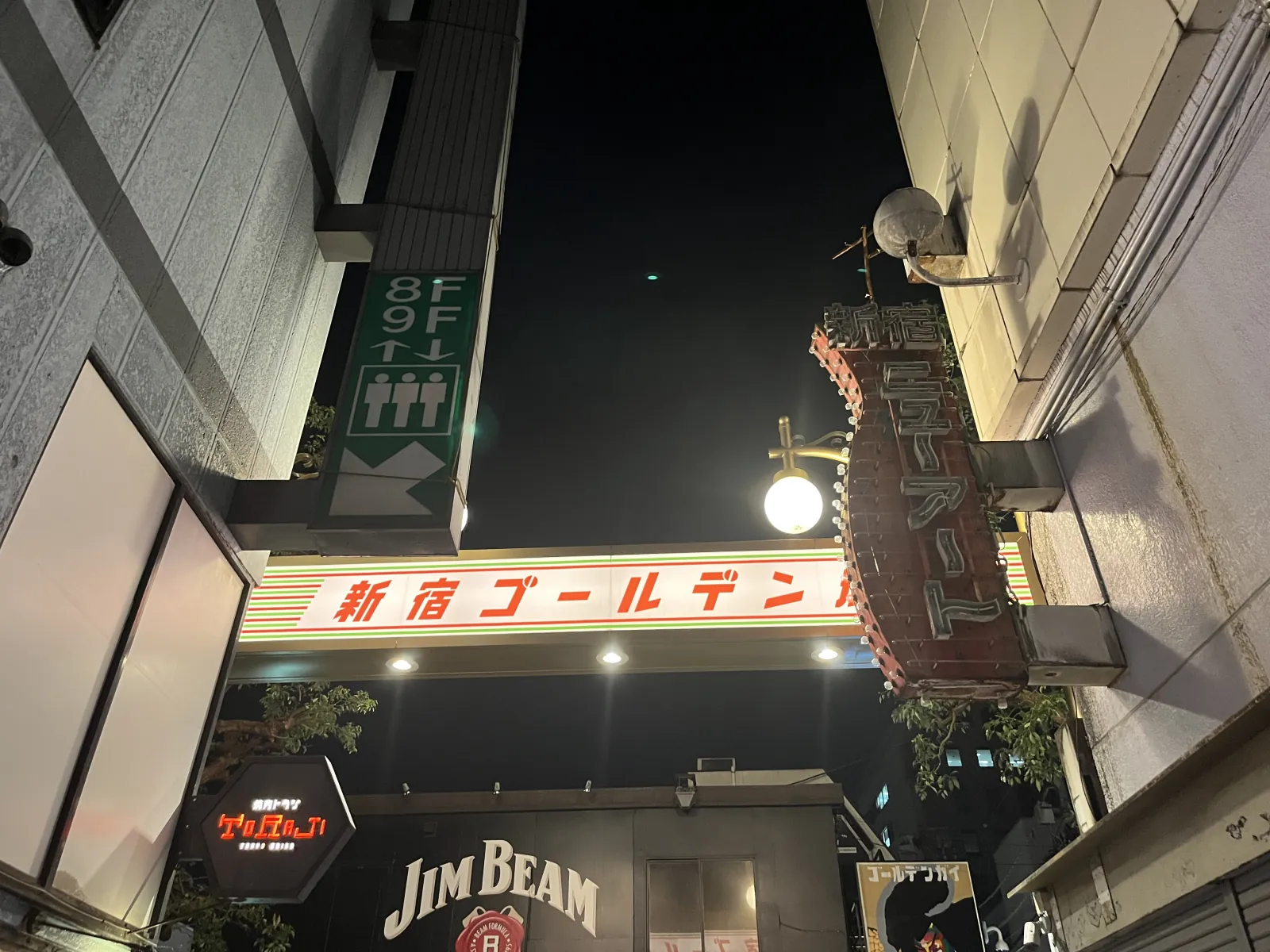
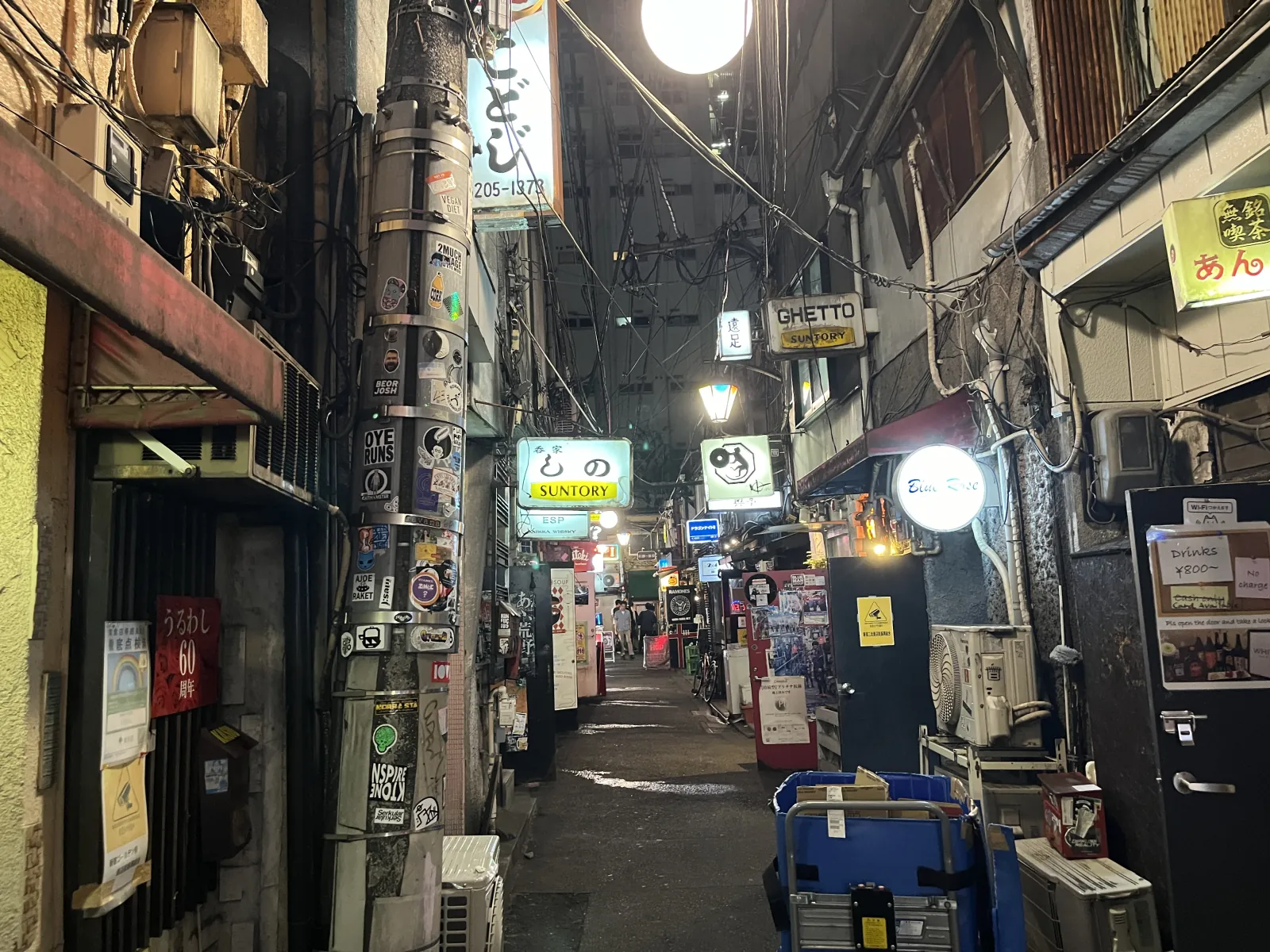
In the northeastern corner of Shinjuku, tucked behind the Kabukicho entertainment district and accessible through a gap in the buildings that looks more like an oversight than an entrance, Golden Gai occupies roughly the area of a single Tokyo city block. Within that block are approximately 200 bars, most seating between five and eight people, connected by six narrow alleys that a person of average shoulder width can traverse without quite touching both walls simultaneously.
The district has survived things it should not have survived. Postwar redevelopment. The 1964 Olympics cleanup. The bubble economy of the 1980s, during which the land value of the surrounding Shinjuku blocks reached prices that would have made demolition and replacement a straightforward financial calculation. An arson fire in 1984 that destroyed several buildings. Multiple attempts by local development interests to accelerate the decline.
What has kept it standing—apart from the collective resistance of the bar owners—is harder to quantify but has something to do with what Golden Gai represents: a place where the organizing principle is conversation rather than transaction, and where the physical compression of the space enforces a kind of accidental intimacy that is extremely difficult to manufacture in a planned entertainment district.
A Short History: From Black Market to Cultural Landmark
Golden Gai’s origins are in the postwar black market economy that occupied several areas of Tokyo immediately after 1945. The area around what is now Golden Gai was a concentration of kasutori bars—cheap establishments serving kasutori shochu, a low-grade distilled spirit made from the residue of sake production, which was one of the few alcoholic drinks available in the immediate postwar period. The bars were illegal, the alcohol was rough, and the clientele was desperate, which meant the atmosphere was exactly what a city in ruins required: a place to sit, drink, and be in the company of other people who were also trying to figure out what came next.
As Tokyo rebuilt and the formal economy reconstituted itself through the 1950s, the Kabukicho area became the city’s primary entertainment district, and Golden Gai evolved from black market to a somewhat more legitimate collection of small bars. The clientele shifted: writers, directors, photographers, political journalists, and actors began gravitating to the district through the 1960s and 1970s, attracted by the low prices, the small scale that precluded performance, and the fact that the bars were too small to hold groups that would dilute the possibility of real conversation.
This cultural layer—the association with Showa-era bohemian and intellectual life—is the foundation of Golden Gai’s current identity and the reason preservation efforts found support beyond the immediate bar community. Several of the alleys are now informally named after cultural figures associated with the district: one bears a sign referencing the novelist Jiro Asada; another acknowledges the film critic community that drank here through the 1970s and 1980s.
The Cover Charge: What It Is and Why It Exists
The most common point of confusion for first-time visitors is the entry fee, or otoshi charge, that many Golden Gai bars collect on arrival. This is typically between ¥500 and ¥1,000, sometimes described as a cover charge, sometimes as a charge for a small snack delivered with your first drink.
The logic is straightforward: each bar seats five to eight people. At full capacity on a Friday night, the maximum revenue is eight drinks for a few hours. Without a fixed per-head fee, a bar could fill with three people nursing single beers for an entire evening and earn almost nothing. The cover charge is the mechanism by which a bar with five seats can remain economically viable.
It is also, in practice, a selection mechanism. Bars that charge a ¥500 cover and serve it with a small plate of pickles or nuts are signaling: we take our business seriously, and we expect you to stay for a while. Bars that do not charge a cover tend to be either very established (with regulars who understand the implicit obligation) or very tourist-oriented (with volume replacing depth).
The charge is not negotiable and is not a sign that the bar is overpriced. Pay it without comment.
How to Choose Your Bar
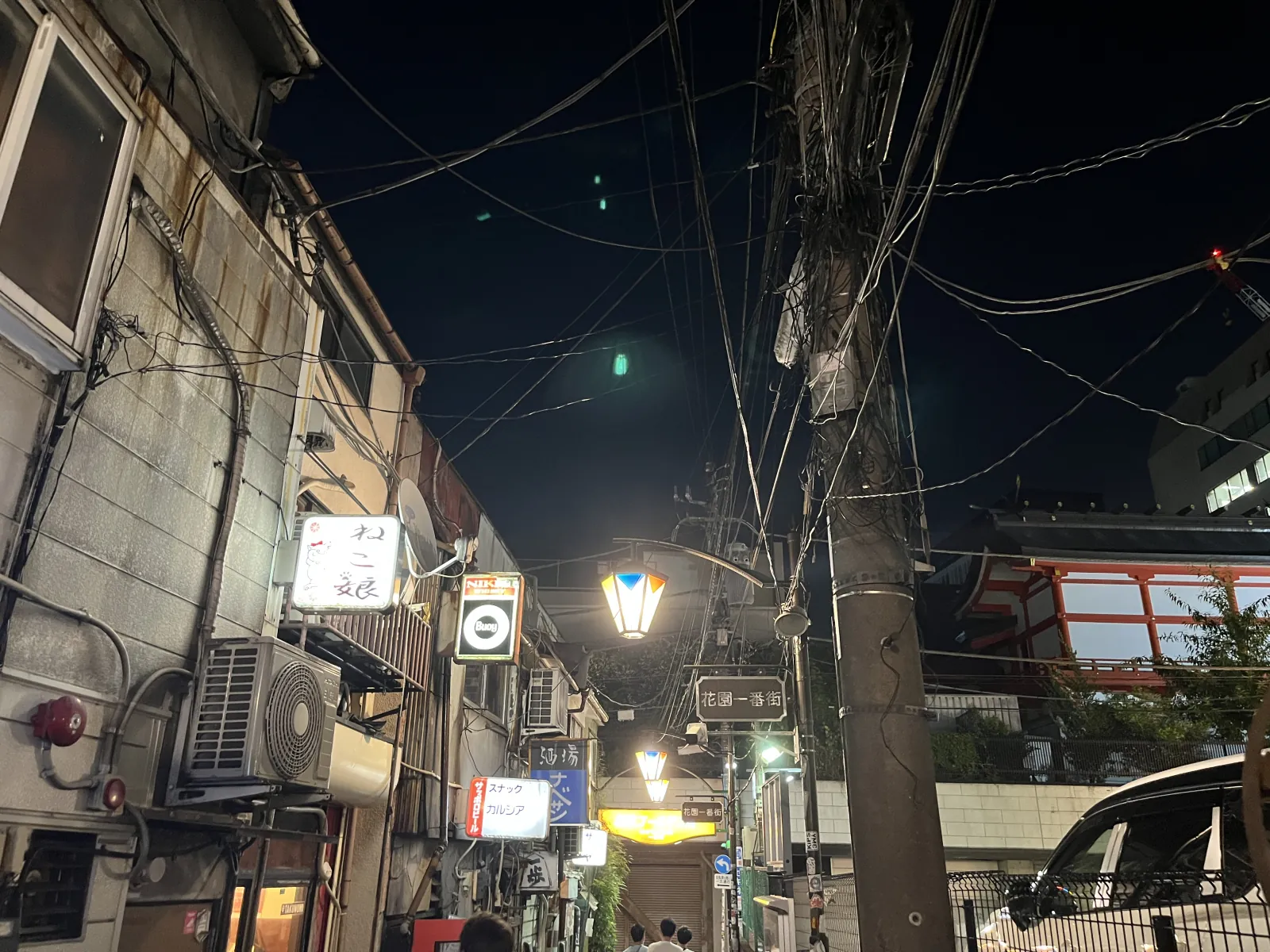
Golden Gai’s bars are organized by the interests and personality of their owners. Each bar is, in effect, a room-sized expression of a specific person’s taste. The most reliable method for finding a bar you will enjoy is to read the signs in the alleys and let your existing interests guide you.
By category:
Music bars are the most numerous. A bar specializing in a specific genre—jazz, 1970s soul, heavy metal, Brazilian MPB, obscure 1980s synthpop—will have the relevant albums on the walls, the owner playing their preferred records, and a clientele that shares the obsession. These are the most accessible bars for foreign visitors because the subject matter transcends language.
Film bars typically display movie posters, and the conversations are about cinema. Some specialize in specific eras or national cinemas; one well-known bar focuses exclusively on Hong Kong action films of the 1980s.
Literary bars often have books lining the walls and owners who are either writers or readers of a specific intensity. Language matters more here; these are harder for non-Japanese speakers to fully enter.
General conversation bars are the remainder: places where the owner is simply a person who likes to talk, and the bar functions as an extension of that personality. These can be the most rewarding and the least predictable.
Practical selection method: Walk one full alley before entering any bar. Look through the doorways (most doors are open or have glass panels). Assess the current occupancy—a bar with one other person already seated is easier to enter than a full bar, and provides more chance of conversation. Look at the handwritten signs in the window; Google Translate’s camera function handles most of them. Enter the bar that interests you most.
The Social Logic: Regulars, Tourists, and the Space Between
Golden Gai’s relationship with tourists is more ambiguous than it first appears. The district has become internationally known primarily through travel media coverage and social media, which has substantially increased foreign visitor numbers over the past decade. Most bars accommodate this reality; some do not.
The bars that post signs saying “regulars only” or “Japanese speakers only” are exercising the same prerogative as any small bar with limited seating: the owner has decided that the social dynamic of the space they are managing requires a specific kind of customer. These signs are neither hostile to foreigners in principle nor illegal; they are expressions of owner preference in a context where the bar is five seats and the owner is both proprietor and bartender. Respect the sign and move to the next alley.
The bars without such signs are, by definition, open to whoever walks in. The question of whether a conversation develops is separate from the question of welcome. Enter, sit, order, pay the cover charge, and be present. Introduce yourself if the opportunity arises naturally. Do not treat the bar as a photo opportunity while others are in conversation. Do not arrive in a group larger than three; groups of four or more exceed most bars’ capacity and change the dynamic for everyone else present.
The correct attitude is one of genuine curiosity about the bar, the owner, and the regulars—rather than the performance of curiosity, which is a different and less productive thing.
Getting There and the Mechanics of the Evening
Location: Golden Gai is northeast of Shinjuku Station, accessible via the East Exit (東口) with a seven-minute walk. The specific entrance is most easily reached by walking north on Kabukicho’s main street (Kabukicho Ichiban-gai) and turning right at the Hanazono Shrine. The alleys begin immediately behind the shrine’s perimeter fence.
Timing: Golden Gai begins filling from around 7 PM. Peak density is 9 PM to midnight. The late-evening hours after midnight on weekends are when the district is busiest, loudest, and most difficult to find a seat. Arriving between 7 and 8 PM on any evening provides the best combination of atmosphere and availability.
Planning an evening: Allow three to four hours to experience two or three bars properly. The custom is to stay for an hour or two in each bar—long enough to have a conversation, short enough to leave before the conversation exhausts itself. Moving between bars is the correct mode: Golden Gai is a circuit, not a destination.
What to drink: Most bars serve beer, shochu, whisky, and simple cocktails. Specialty bars may stock specific wines or spirits relevant to their theme. Prices are typically ¥700–¥1,500 per drink, higher than a standard izakaya but not unreasonable given the cover charge logic and the experience on offer.
Cash: Most Golden Gai bars are cash only. Carry at least ¥5,000–¥8,000 for a standard evening.
Practical Information
- Access: 7-minute walk from Shinjuku Station East Exit; via Kabukicho Ichiban-gai to Hanazono Shrine
- Hours: Most bars open 7:00 PM to 2:00 or 3:00 AM; some open until dawn on weekends
- Cover charges: ¥500–¥1,500 at most bars; always ask if not posted
- Group size: Maximum three people for most bars; some accept two only
- Photos: Ask before photographing the interior or other patrons; most bars discourage photography inside
- Language: English-friendly bars are common but not universal; having a Google Translate camera function ready is helpful for menus and signs