Ask a Tokyo resident where to go for the best hot springs within easy reach of the city, and Gunma comes up first. Two hours north, this landlocked, mountainous prefecture is Japan’s onsen heartland, home to Kusatsu—routinely ranked the number-one hot-spring town in the entire country. Add a UNESCO silk mill, a famous marshland national park, and mountain adventure towns, and Gunma becomes the most rewarding hot-spring-centered trip you can do from Tokyo.
The way to think about Gunma is simple: pick your onsen town based on your mood, and build the trip around a night (or two) of soaking.
Kusatsu: Japan’s Greatest Hot-Spring Town
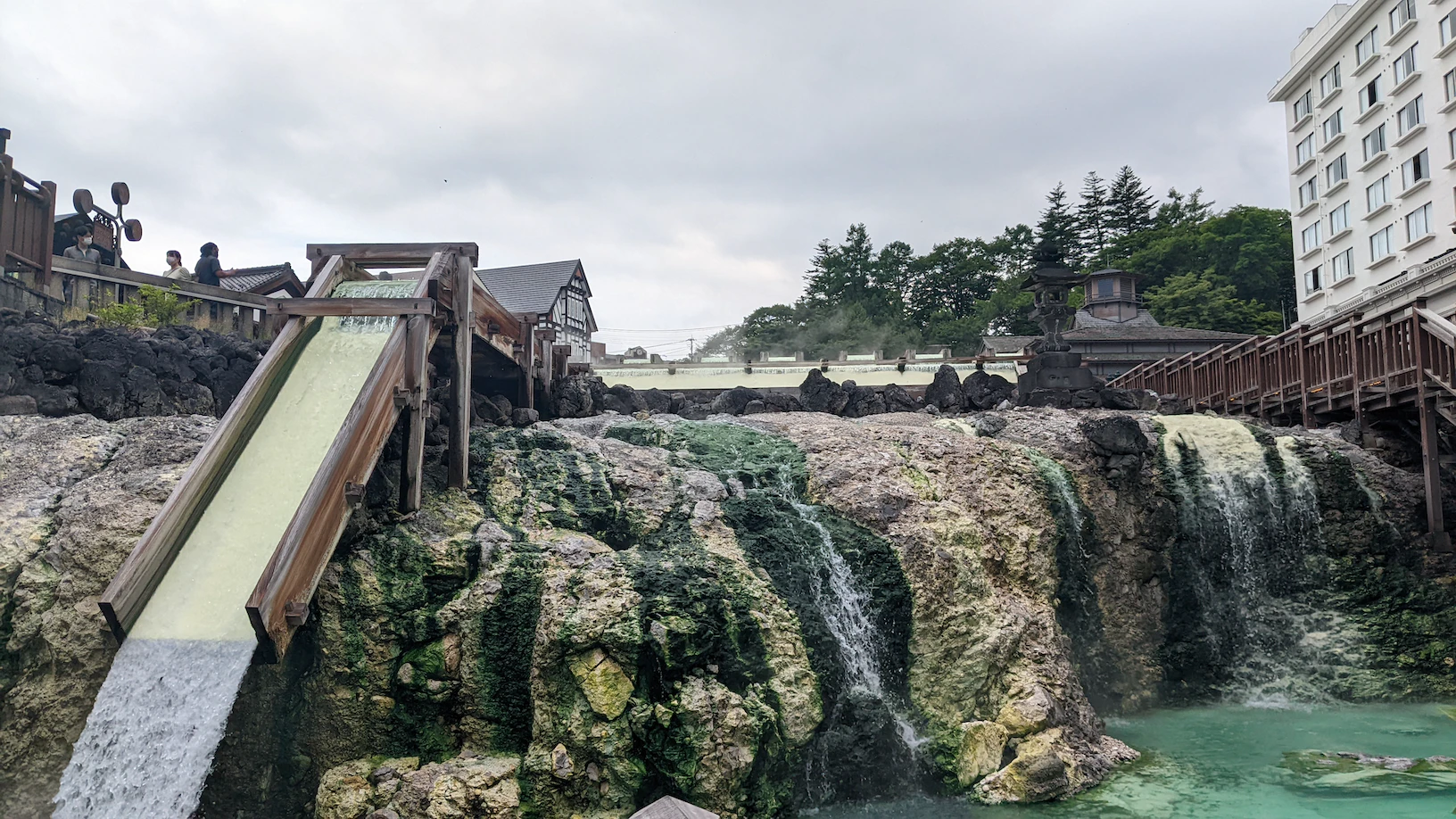
Kusatsu Onsen is the real thing. Its waters are so acidic and abundant that the town’s centerpiece, the Yubatake (“hot water field”), is a steaming cascade of mineral water running right through the center of town, glowing at night. The water is genuinely therapeutic—locals joke it cures everything but lovesickness.
Don’t miss the yumomi performance, where women cool the scalding water by stirring it with large wooden paddles while singing traditional songs. Stay overnight in a ryokan, walk the steaming streets in a yukata, and soak in the public baths. Kusatsu is the gold standard of the Japanese onsen experience.
Ikaho and Minakami: Two More Moods
- Ikaho Onsen is built around a famous stone staircase of 365 steps, lined with old inns, shops, and retro game arcades, climbing to a shrine with mountain views. Its iron-rich “golden water” is said to be good for the skin. It’s nostalgic and charming—a different feel from Kusatsu’s intensity.
- Minakami, in the mountains along the Tone River, is the adventure base: white-water rafting, canyoning, and bungee jumping in summer, skiing in winter, riverside onsen year-round.
Beyond the Hot Springs
- Oze National Park—one of Japan’s most beautiful highland marshlands, crossed by wooden boardwalks, famous for its skunk-cabbage and daylily blooms in early summer and golden grasses in autumn. A hiker’s paradise.
- Tomioka Silk Mill—a UNESCO World Heritage Site, this remarkably preserved 1872 factory was the engine of Japan’s modernization, mechanizing silk production and tying the country into global trade. The guided tours are genuinely interesting.
- Mount Asama—an active volcano on the Nagano border with dramatic landscapes and nearby resort towns.
Eat This
- Okkirikomi—wide, flat wheat noodles simmered with vegetables in a miso or soy broth; Gunma’s hearty mountain comfort food.
- Yakimanju—grilled buns slathered in sweet miso sauce, a regional snack.
- Joshu wagyu and konnyaku—premium local beef and the famous jelly-like konjac, of which Gunma is the top producer.
Local Tips Most Visitors Miss
- Kusatsu is the headline—if you do one Gunma onsen, make it Kusatsu, and stay overnight.
- Many ryokan offer day-use baths if you can’t stay the night—a good way to sample the water.
- Oze is seasonal—late spring to early summer for wildflowers, October for autumn grass; check trail conditions.
- Take the Shinkansen to Takasaki (~1 hr from Tokyo), then local lines or buses to the onsen towns.
- Bring cash and check tattoo policies—some public baths still restrict tattoos; look for tattoo-friendly options in advance.
Practical Info
| Item | Detail |
|---|---|
| Access | Shinkansen to Takasaki (~1 hr from Tokyo), then bus/local line to onsen towns |
| Onsen towns | Kusatsu (premier), Ikaho (stone steps), Minakami (adventure) |
| Don’t miss | Kusatsu Yubatake, Oze marshlands, Tomioka Silk Mill |
| Eat | Okkirikomi, yakimanju, Joshu beef |
| Best time | Year-round for onsen; early summer/autumn for Oze; winter for skiing |
Gunma is Tokyo’s hot-spring backyard—close enough for a weekend, deep enough to deserve longer. Soak in Kusatsu’s glowing waters, walk Ikaho’s stone steps, hike Oze’s boardwalks, and you’ll understand why this is where Tokyoites go when they need the city to fall away.