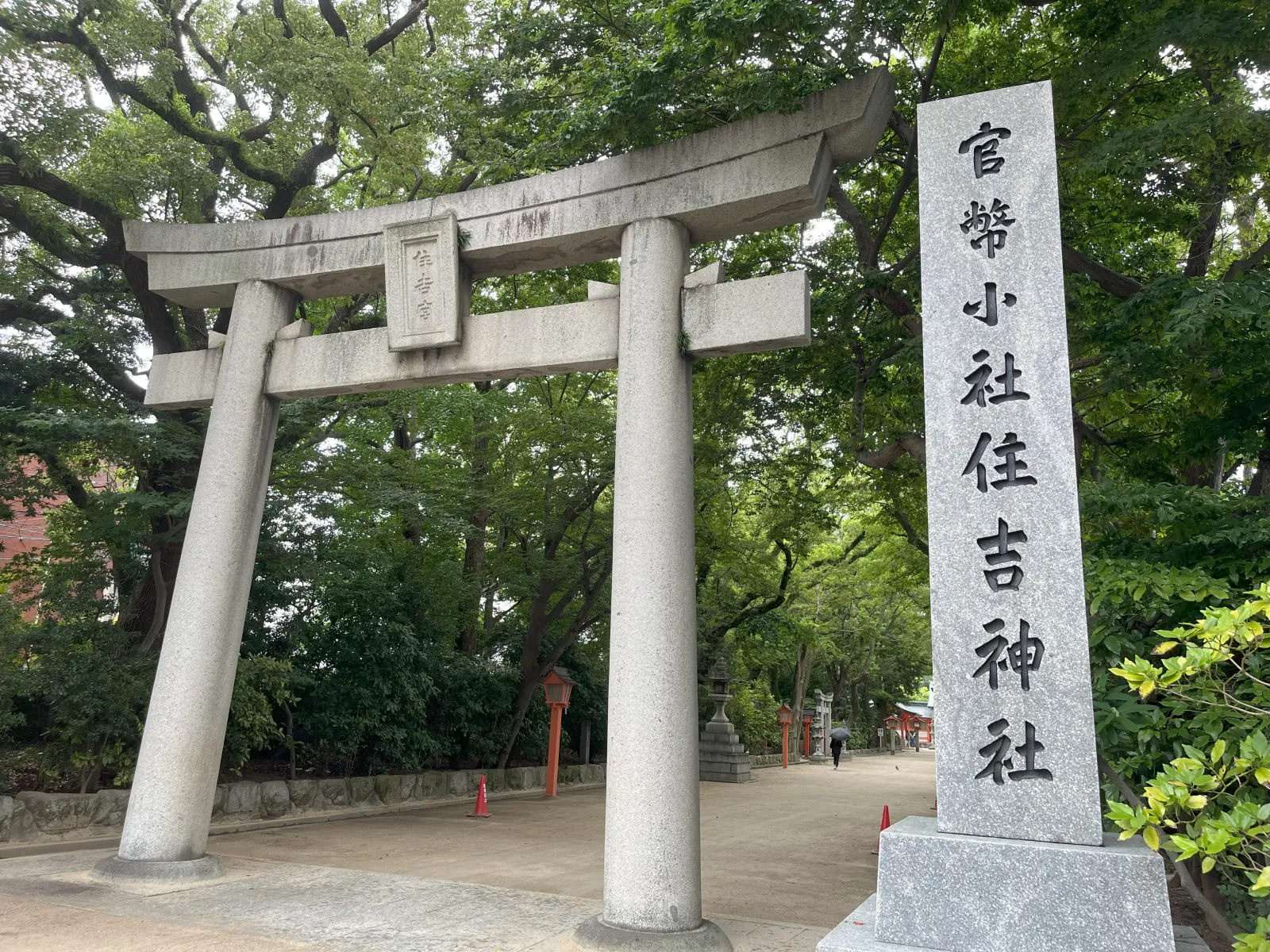
A ten-minute walk from Hakata Station—Fukuoka’s busy gateway to all of Kyushu—the city suddenly goes quiet. Behind a screen of old trees stands Sumiyoshi Shrine, believed to be among the oldest shrines in all of Japan, watching over sailors and travelers for more than 1,800 years. Most people rushing through Hakata never know it is there. That is exactly why a Tokyo resident who travels Kyushu often will tell you to make the short detour: it is the easiest way to step from the modern city straight into ancient Japan.
This is not a grand, sprawling shrine you need half a day for. It is a compact, dignified place that gives you a genuine encounter with the oldest stratum of Japanese culture in under an hour.
Why This Shrine Matters
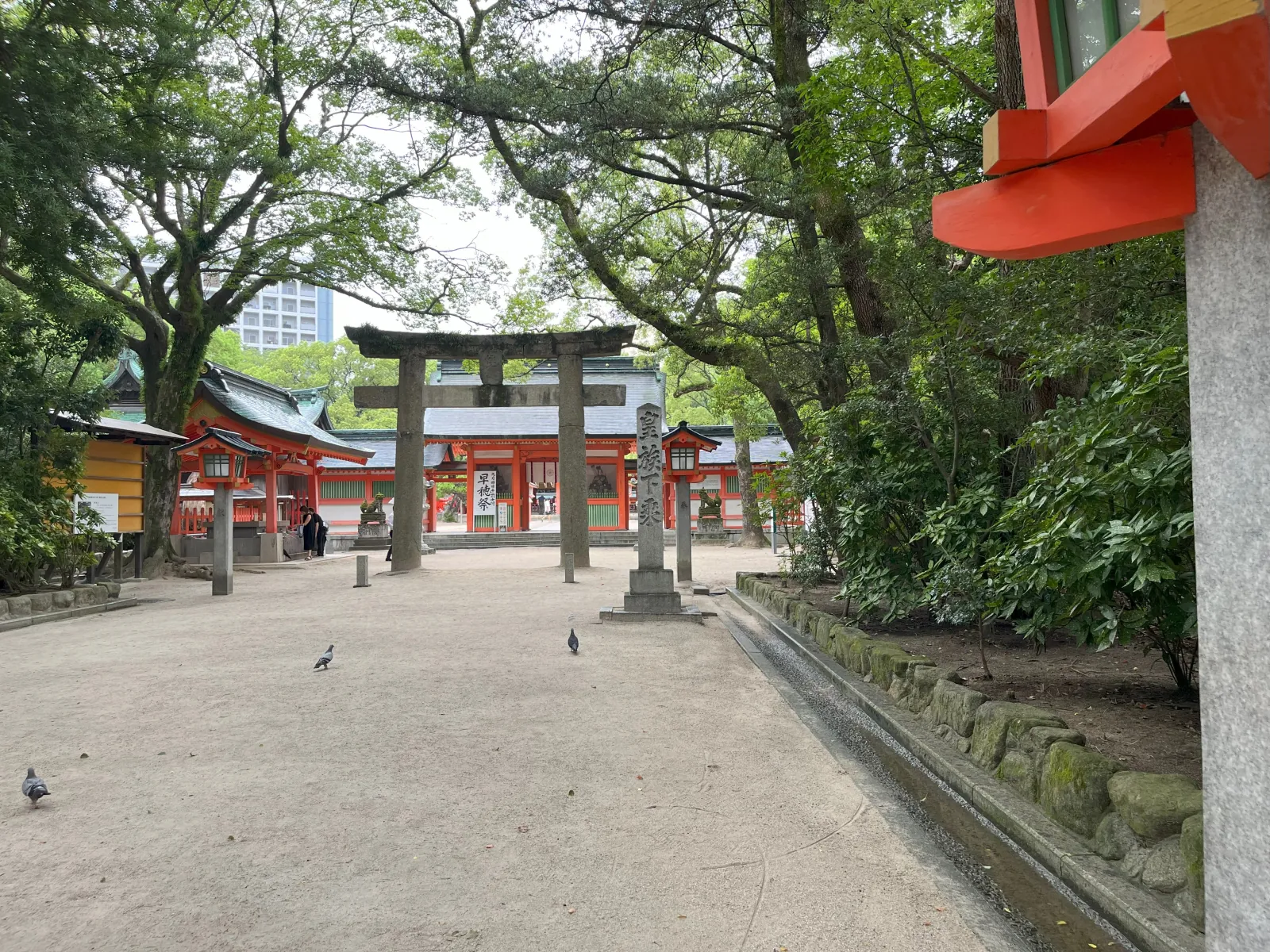
There are over 2,000 Sumiyoshi shrines across Japan, all dedicated to deities of the sea and safe voyages, and Hakata’s is counted among the three most important—the original “Three Great Sumiyoshi Shrines.” For a port city that has been Japan’s doorway to the Asian continent for over a millennium, a shrine protecting sailors and travelers was not decoration; it was infrastructure for survival.
Empress Jingu is also enshrined here, tying the site to Japan’s legendary early history. You do not need to know the mythology to feel the weight of it. The point is simply this: people have stood on this ground asking for safe passage for nearly two thousand years.
The Architecture: Older Than Buddhist Japan
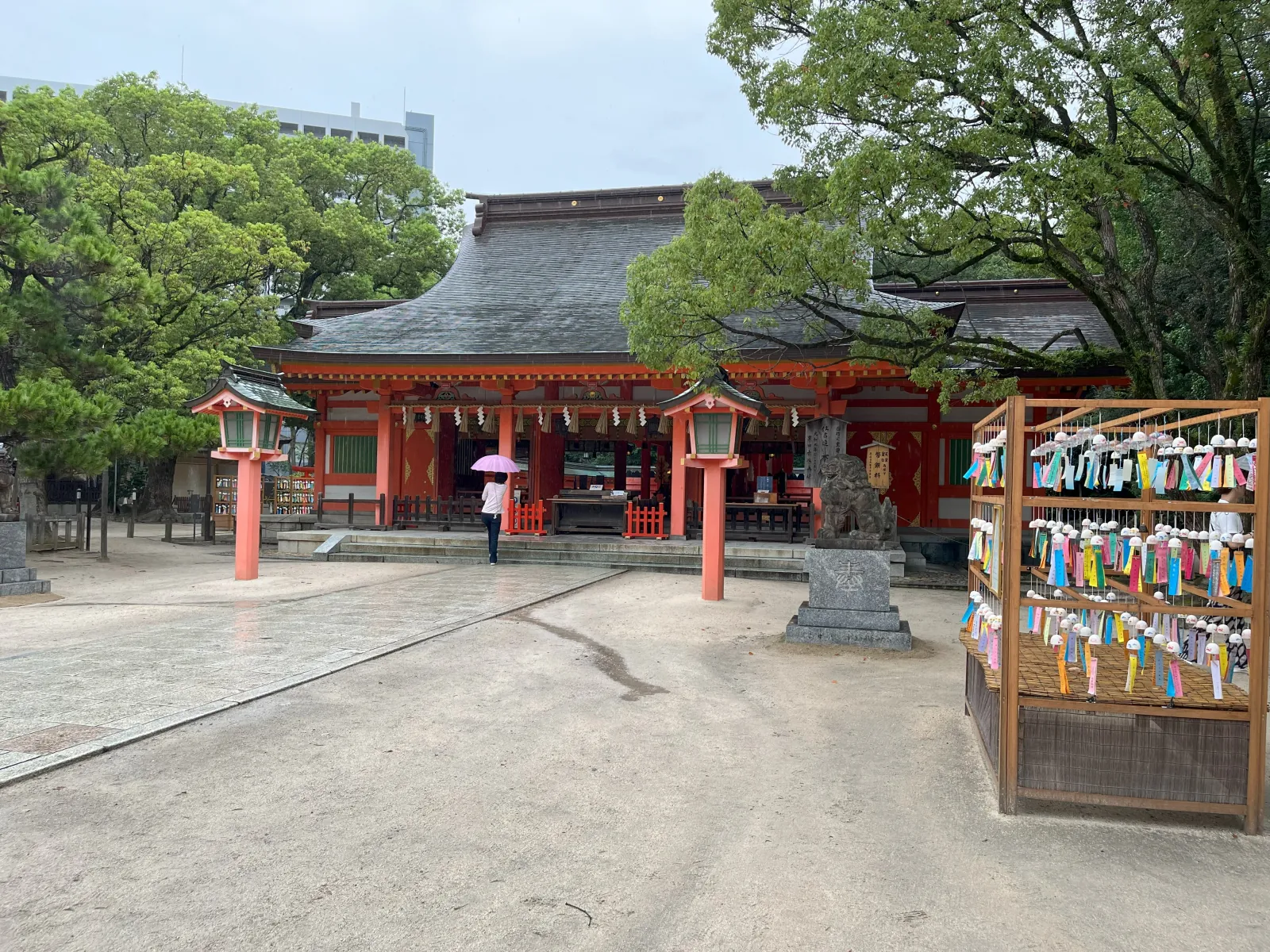
The main hall is designated a National Important Cultural Property and is a rare surviving example of Sumiyoshi-zukuri, an architectural style that predates Buddhism’s arrival in Japan. That makes it one of the purest expressions of native Japanese building you can see.
What to notice—and what most visitors walk past without registering:
- The straight, dignified roofline with no upward curve (curves came later, with continental influence)
- Cypress-bark roofing and clean, uncluttered lines
- Vermilion accents against natural, unpainted wood
- A sense of strength through simplicity rather than ornament
Compare it in your mind to the gilded extravagance of a shrine like Nikko, and you grasp the entire spectrum of Japanese religious architecture.
How to Visit Respectfully
This is a working shrine, not a museum, so a little etiquette goes a long way:
- Purify at the water basin (temizuya). Rinse your left hand, then right, then pour water into your left hand to rinse your mouth (never touch the ladle to your lips), rinse the left hand again, and stand the ladle upright to clean the handle.
- At the main hall: toss a coin in the offering box, bow twice, clap twice, offer a silent prayer, then bow once more.
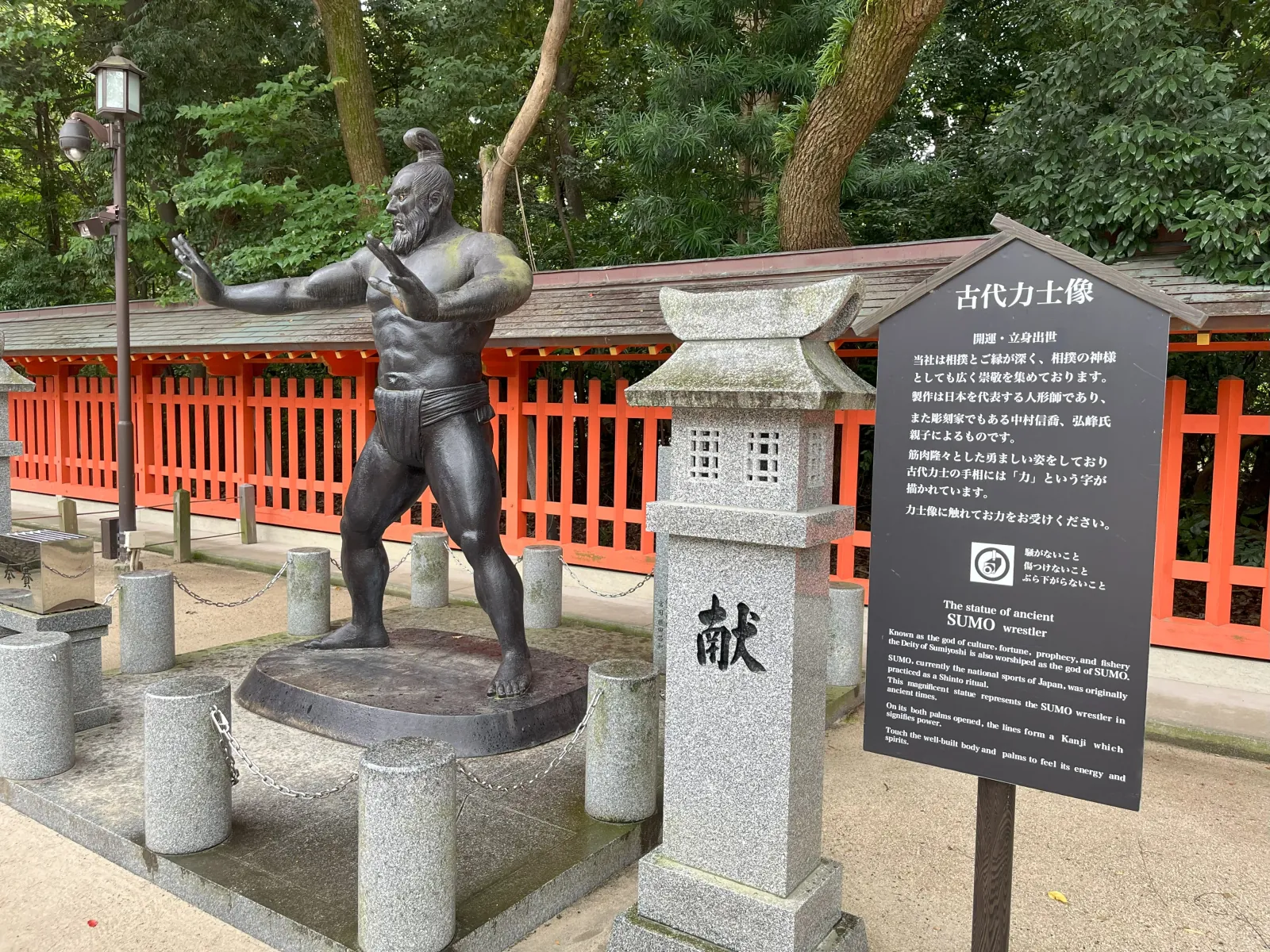
Keep your voice low, don’t photograph worshippers up close, and stay out of roped-off areas. Look for the stone marked with 力 (power), linked to sumo strength—many visitors touch it for luck.
Fit It Into a Half-Day in Hakata
Sumiyoshi takes 30–60 minutes on its own, and it sits naturally on a walking route through the best of central Hakata. A local mini-itinerary:
- Sumiyoshi Shrine — grounds, architecture, an omikuji fortune (45 min)
- Canal City Hakata — a short walk; food and the fountain show (30 min)
- Kushida Shrine & Hakata Old Town — the historic heart of the city and home of the Yamakasa festival (45 min)
End the night with Hakata’s real signature: tonkotsu ramen at a counter, or a riverside yatai (open-air food stall), the city’s most beloved institution.
Local Tips Most Visitors Miss
- Go early morning or late afternoon for soft light, fewer people, and the best photos.
- New Year is packed—if you want the quiet version, avoid the first days of January.
- Pair it, don’t isolate it. The shrine is best as one stop on a Hakata walk, ending at the yatai stalls.
- Admission is free; only charms and fortunes cost anything.
Practical Info
| Item | Detail |
|---|---|
| Access | 10–15 min walk from Hakata Station (flat) |
| Address | 3-1-51 Sumiyoshi, Hakata-ku, Fukuoka |
| Hours | Generally daylight hours; grounds open, times vary by season |
| Admission | Free (charms/fortunes optional) |
| Time needed | 30–60 min alone; 2–3 hr with nearby stops |
| Best time | Early morning or late afternoon |
Sumiyoshi Shrine is proof that you don’t need to leave the city center to touch the oldest layer of Japan. Ten minutes from the shinkansen, under old trees, stands architecture older than Buddhist Japan and a prayer for safe travels repeated for eighteen centuries. Step in, slow down, then walk on into Hakata.