Tokyo’s most photographed shrine corridors are in Kyoto’s imagination, not Tokyo’s—or so most visitors assume. But a few minutes from the National Diet, in the heart of the city’s political and business district, a tunnel of vermilion torii gates climbs a wooded hillside, and at the top sits a shrine guarded not by the usual lion-dogs but by monkeys. This is Hie Shrine (日枝神社), and it’s one of central Tokyo’s most rewarding quiet stops—hiding in plain sight above Akasaka.
What I like about Hie, after twenty years in this city, is that it never feels like a tourist site. You’ll share it with office workers in suits stopping to pray on their way to work. It’s a living shrine in the middle of working Tokyo.
A Shrine for Power and Protection
Hie Shrine has watched over this ground for centuries. Founded in the 1400s and moved to its current Akasaka site in 1659, it became one of the most important shrines of the Tokugawa shogunate—chosen to protect Edo Castle (today’s Imperial Palace) from misfortune. Its location was never accidental: it guards the seat of power, and it still sits surrounded by the government and corporate heart of modern Japan.
That heritage is why its festival, the Sanno Matsuri, is counted among the three great festivals of old Tokyo. Held in full scale in even-numbered years (mid-June), it sends a grand procession winding through the center of the city.
The Monkeys: Not Your Usual Guardians
Most Shinto shrines are flanked by komainu, the lion-dog guardians. Hie Shrine has monkeys instead—messengers of the mountain deity. Look for the pair at the worship hall: one cradles her infant, marking this as a shrine for safe childbirth, marriage, and family.
There’s wordplay at the heart of it, the kind Japanese culture loves. The word for monkey, saru (猿), sounds like the verb saru (去る), “to leave” or “drive away”—so the monkeys are also believed to drive away misfortune. The female monkey with her child is one of the most quietly touching details in any Tokyo shrine; many visitors gently touch the statue while making a wish.
The Torii Tunnel and the Escalator
Hie Shrine’s signature image is the hillside corridor of red torii gates—dozens of them packed into a tunnel that glows when the afternoon sun filters through. It’s the closest thing central Tokyo has to Kyoto’s famous torii paths, and far less crowded.
The shrine’s other quirk is pure Tokyo: alongside the traditional stone steps, there’s a covered escalator carrying visitors up the steep hillside. Ancient ritual and modern convenience side by side—exactly the contradiction this city runs on. (The escalator also makes the shrine accessible in light rain or for those who’d rather skip the climb.)
Local Tips Most Visitors Miss
- Go early, 7–9 AM, for soft light, empty torii gates, and the chance to see locals praying before work.
- Climb the stone steps up, take the escalator down—or the reverse; the torii tunnel is on the stepped path, so don’t skip it entirely for the escalator.
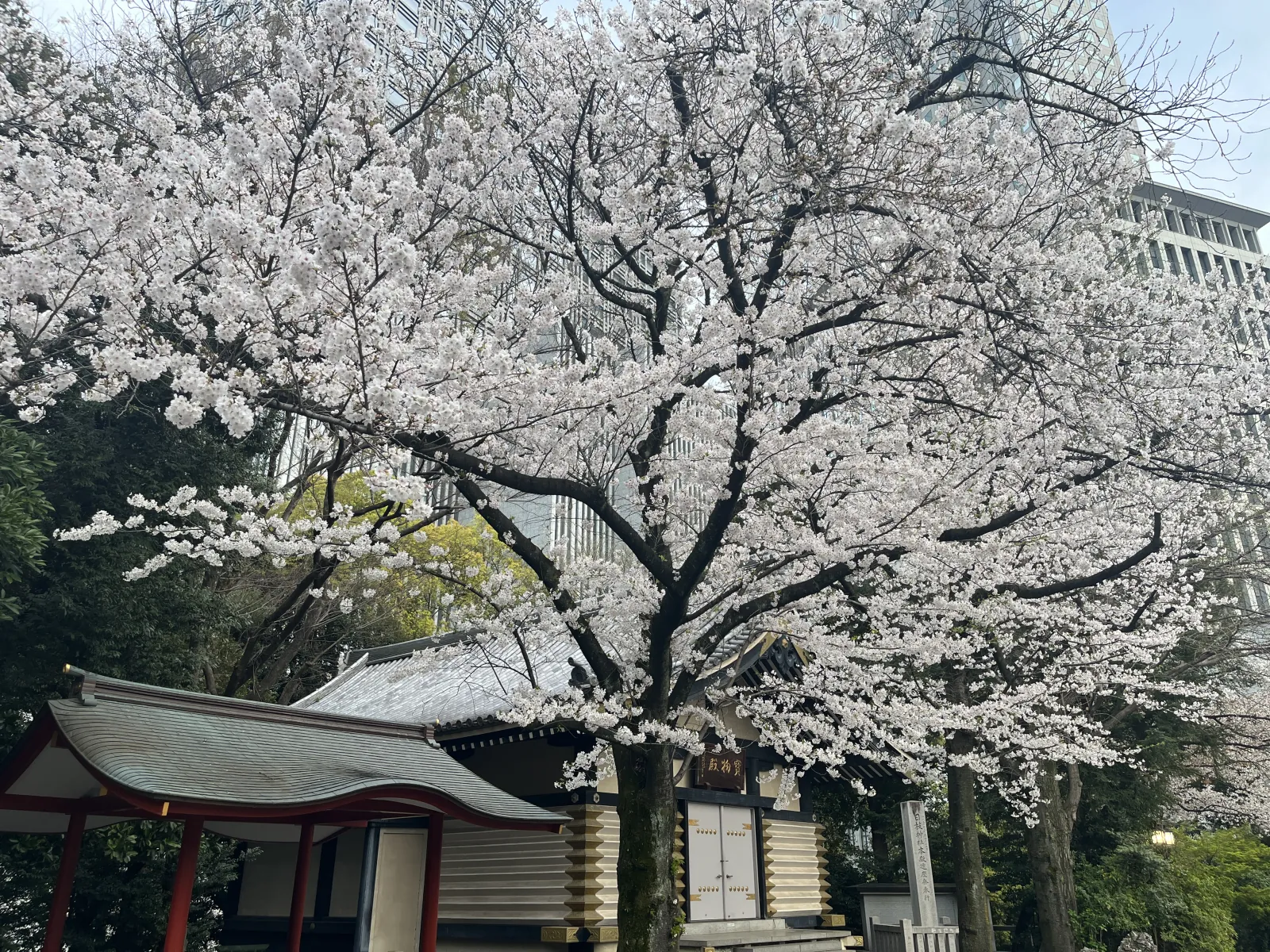
- Cherry blossom season is beautiful here and far quieter than Tokyo’s famous spots.
- Buy the monkey amulets—the shrine’s omamori and ema (prayer tablets) feature its unique monkey theme, a better souvenir than the usual.
- Pair it with Akasaka and Kioicho—dinner in Akasaka’s backstreets is two minutes away.
Practical Info
| Item | Detail |
|---|---|
| Access | 3-min walk from Akasaka Station (Chiyoda Line); also near Tameike-sanno and Kokkai-gijidomae |
| Address | 2-10-5 Nagatacho, Chiyoda City, Tokyo |
| Hours | ~5/6 AM–6/5 PM (seasonal); free admission |
| Best time | Early morning; spring for cherry blossoms |
| Don’t miss | The torii tunnel, the mother-and-child monkey statue |
| Pair with | Akasaka, Kioicho, the Imperial Palace gardens |
Hie Shrine is the Tokyo contradiction in miniature—monkey guardians and an escalator, ancient protection rituals and salarymen on their way to the office, a glowing torii tunnel a stone’s throw from the Diet. Come early, climb through the gates, and find the quiet that the city keeps hidden right above its busiest district.