Hiroshima is a city that has performed the most difficult act a city can perform: it rebuilt itself entirely and then asked visitors to remember why it needed to. The two facts coexist in the contemporary city without contradiction. The rebuilt Hiroshima is functional, modern, and genuinely pleasant to spend time in. The memory of August 6, 1945 is present not as a wound but as a deliberate, maintained argument—an argument made in concrete, in water, in careful alignment of buildings, and in the stories of objects preserved specifically because they survived.
Understanding how these two things coexist is the key to experiencing Hiroshima in a way that neither reduces it to historical tourism nor ignores the reason most people come here in the first place.
The City That Built Itself Twice
The atomic bomb detonated 600 meters above Hiroshima on August 6, 1945. The hypocenter—the point directly below the blast—was the Shima Surgical Clinic, which no longer exists. Everything within a two-kilometer radius was effectively destroyed. The industrial port facilities, the military headquarters, the residential districts, the temples, the schools—almost nothing survived in functional form.
The speed of the subsequent reconstruction is, in retrospect, as remarkable as the destruction. By 1949, the national government had passed the Hiroshima Peace Memorial City Construction Law, designating the city for a specific rebuilding program with international political significance. The decision to locate the Peace Memorial Park on the site of the most densely destroyed area—rather than to rebuild the neighborhood that had stood there before the war—was made deliberately and contested at the time. The former residents of the Nakajima district, whose homes and families had occupied that land, were asked to accept that the public purpose of the site superseded their personal claims.
By 1955, ten years after the bomb, Hiroshima had a functioning city again. It was not the same city. It was a new city built on the same ground, carrying an explicit political intention that no other city in the world carries in quite the same way.
Peace Memorial Park: How to Navigate It Meaningfully
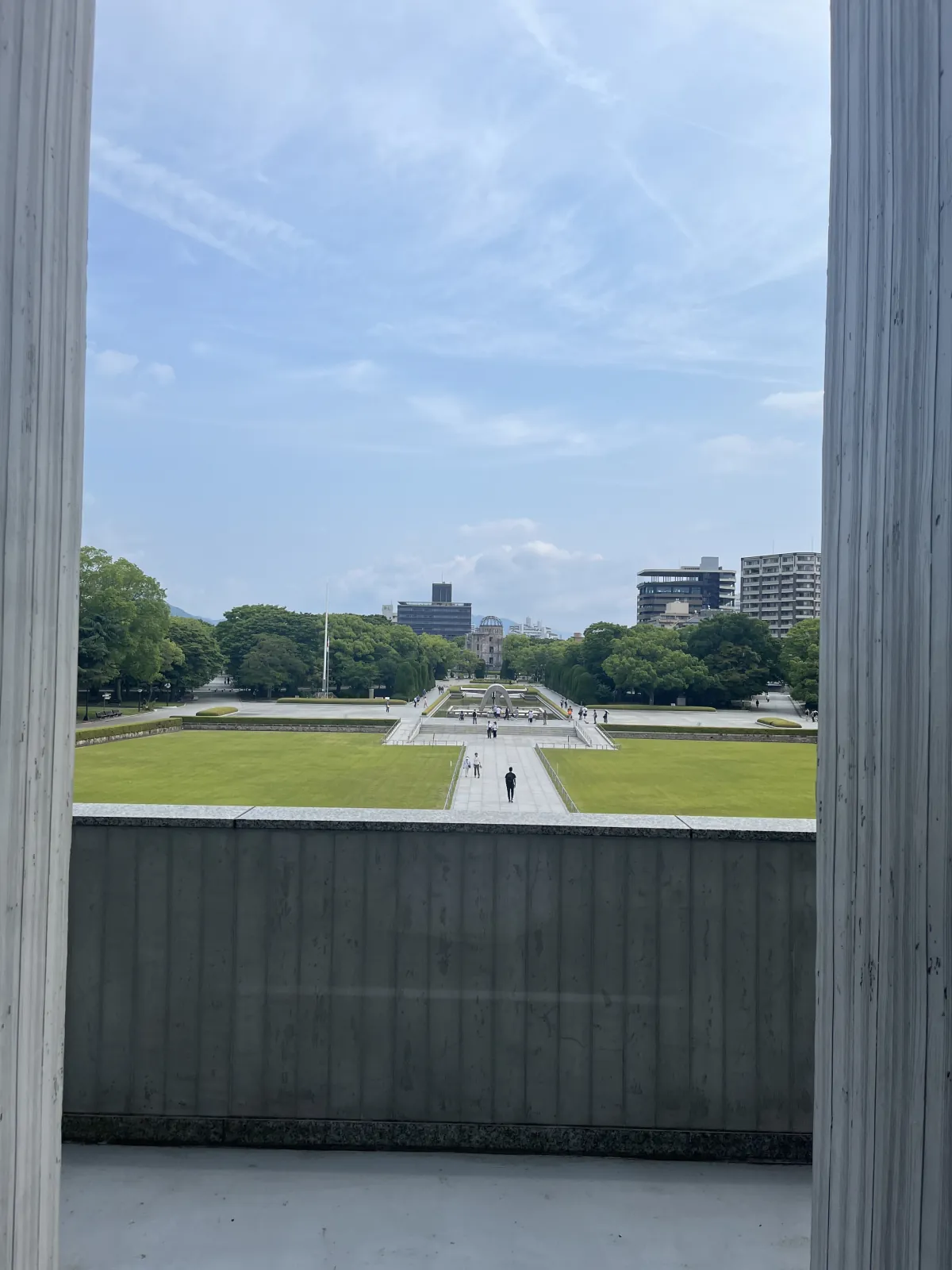
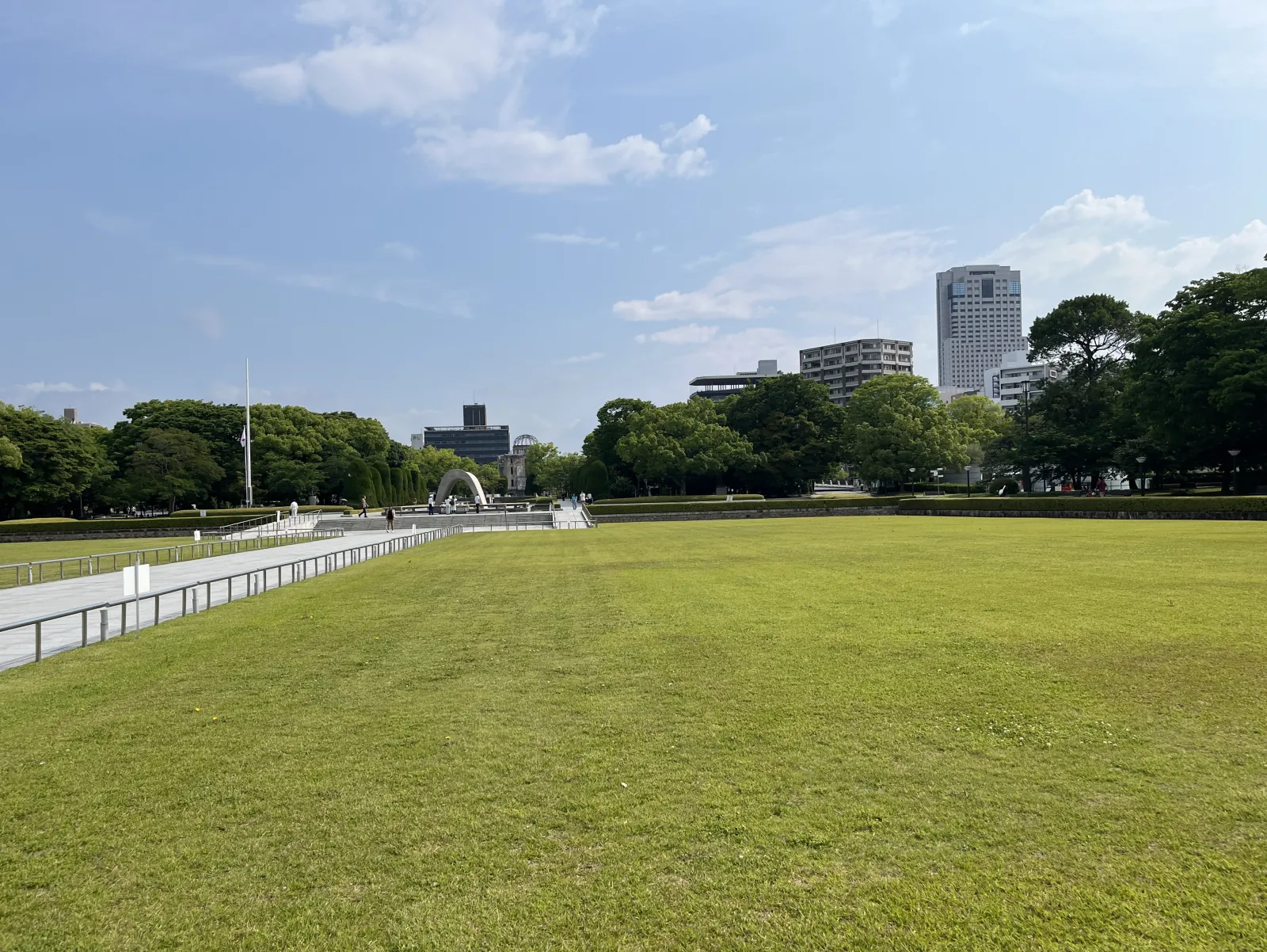
Hiroshima Peace Memorial Park occupies the delta island between the Honkawa and Motoyasu rivers—precisely the land that was once the Nakajima neighborhood. The park is compact (about 12 hectares) but dense with memorials, and the spatial arrangement is not incidental.
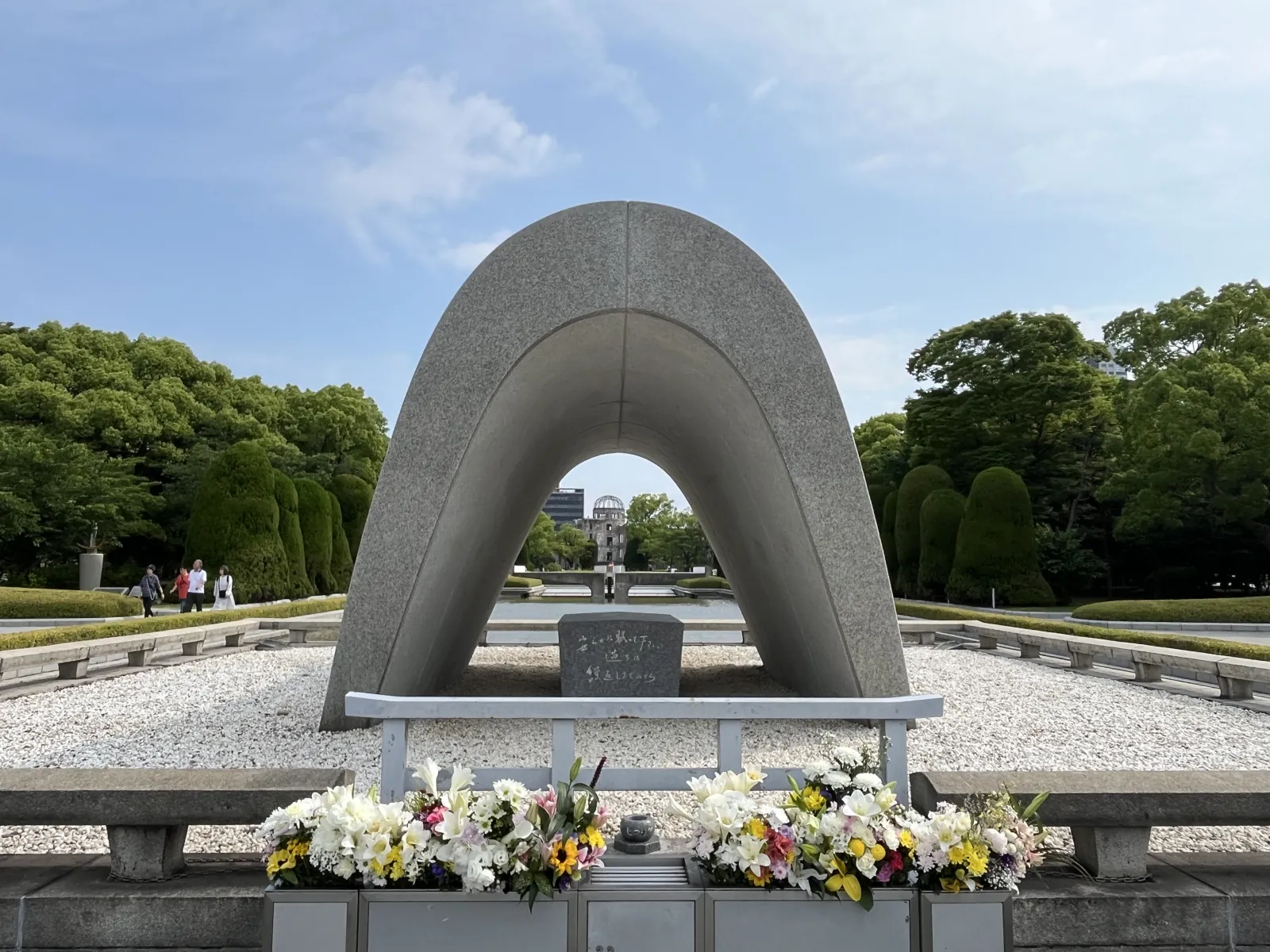
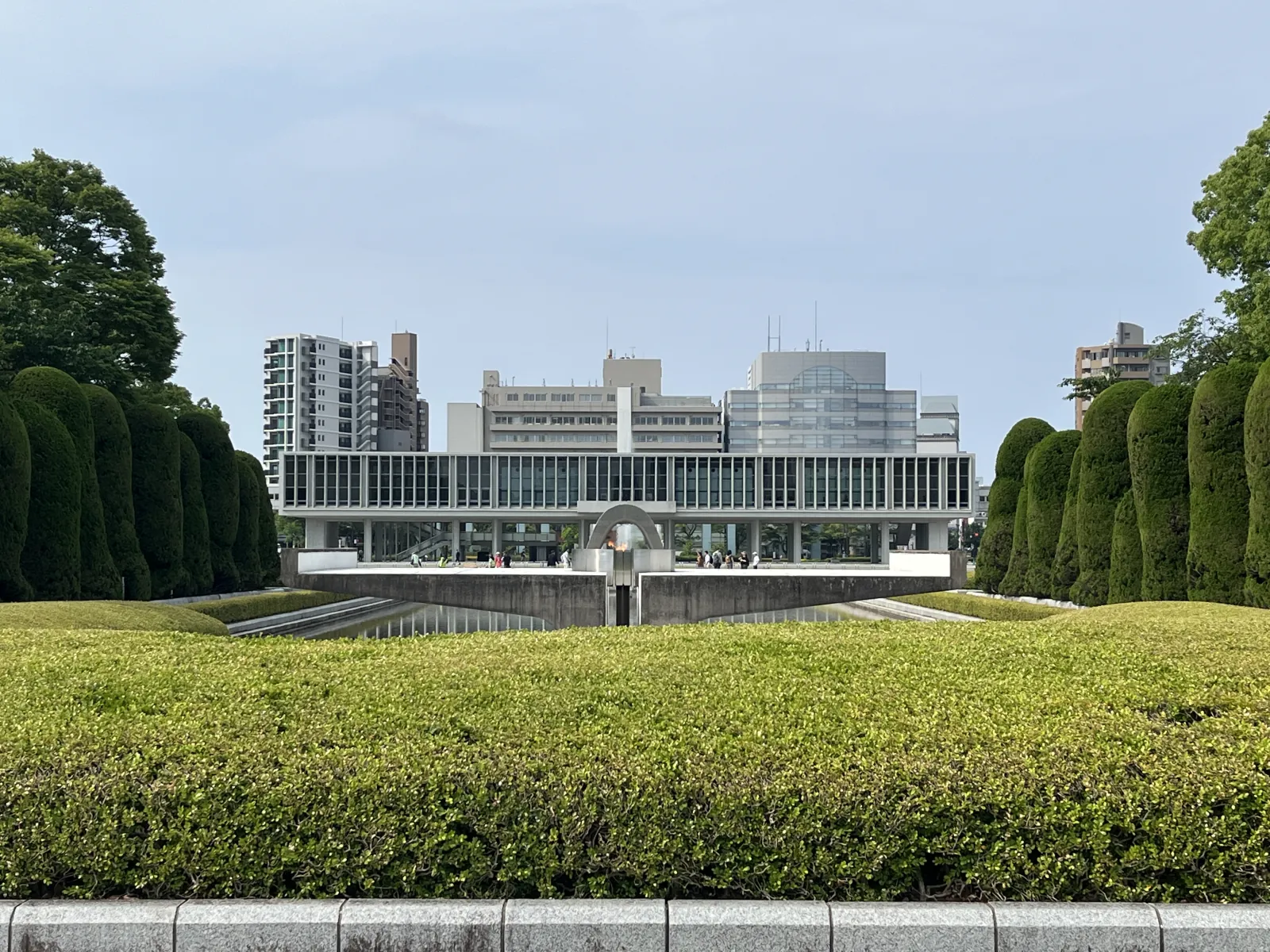
The most important spatial fact about the park is the alignment. Standing at the Cenotaph (the arched concrete monument at the park’s center), look through the arch. The line of sight passes precisely through the flame of the Peace Flame (which has burned continuously since 1964 and will, according to the city’s stated intention, continue until all nuclear weapons are eliminated) and then continues to the Atomic Bomb Dome on the opposite bank of the river. This is not a coincidence. The architect Kenzo Tange designed the alignment deliberately: the arch frames the Dome as a perpetual object of awareness.
The Cenotaph holds a register of the names of all known victims of the atomic bombing, currently over 330,000 names. The inscription on the cenotaph—“Please rest in peace, for we shall not repeat the evil”—is famously ambiguous in its original Japanese: the subject of the sentence is unspecified. Who shall not repeat the evil? Japan? The world? Humanity? The ambiguity is considered by many Japanese scholars to be intentional, and it has been the source of sustained debate since the monument was unveiled in 1952.
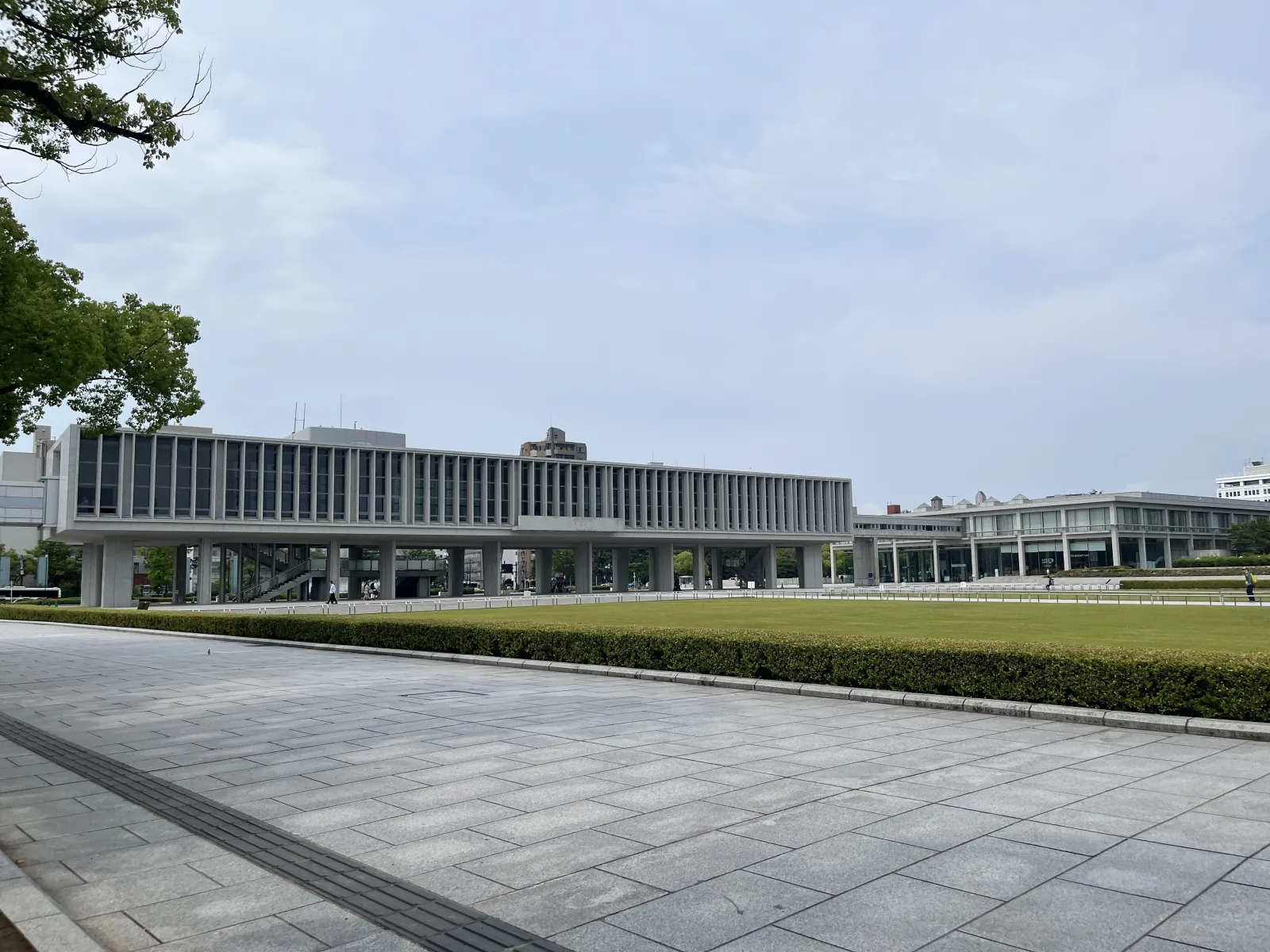
The Peace Memorial Museum occupies the building at the southern end of the park and holds the most comprehensive collection of material evidence from the bombing: melted tiles, a wristwatch stopped at 8:15 AM, photographs, personal accounts, medical records. The museum was renovated and expanded in 2019; the new permanent exhibition is more internationally oriented in framing than the previous version and is accessible without Japanese language ability. Allow two to three hours.
The Atomic Bomb Dome: What the Structure Is
The Atomic Bomb Dome (Genbaku Dome) is, technically, not a dome. The domed structure—a small cupola above the main building—is what remains of what was the Hiroshima Prefectural Industrial Promotion Hall, completed in 1915. The building was approximately 160 meters from the hypocenter of the blast. At that distance, the pressure wave came from nearly directly above rather than horizontally, which allowed the walls to remain partially standing while the interior was entirely destroyed.
The decision to preserve the ruined structure was not immediate. In the late 1940s and 1950s, the city debated whether to demolish it as part of the reconstruction. The argument for demolition: it was structurally unstable and visually a reminder that many survivors wanted to leave behind. The argument for preservation: it was the only physical object in the city that bore direct material testimony to the event. Preservation prevailed, and in 1996 the structure was inscribed as a UNESCO World Heritage Site—the first such listing in Japan for a monument to destruction rather than cultural achievement.
The dome is visible from within the Peace Memorial Park across the Motoyasu River. It is also accessible on foot from the park’s northern edge, across the Aioi Bridge—the T-shaped bridge that American bombardiers used as their aiming point. Standing on the bridge provides the only position from which you can see both the dome and the point below the former hypocenter simultaneously.
Hiroshima Okonomiyaki: The City’s Defining Food
Hiroshima has one substantive culinary argument with the rest of Japan, and it involves okonomiyaki. The standard version of okonomiyaki—a savory pancake of batter, egg, cabbage, and protein, mixed together and cooked on a griddle—is the Osaka style. Hiroshima’s version is made differently: the components are layered rather than mixed. Batter is poured into a thin crepe, cabbage and bean sprouts are piled on top, noodles (yakisoba or udon) are added, an egg is cracked and fried flat, and the entire layered structure is flipped and pressed on the griddle.
The result is denser and more filling than the Osaka version, the noodles providing a carbohydrate layer that the Osaka style lacks. The debate between Hiroshima-yaki and Osaka-yaki is the most reliably animated food argument in Japan. People from Hiroshima will not concede the point.
The best place to experience Hiroshima okonomiyaki is Okonomimura—a five-story building near Hatchobori Station that houses approximately 25 okonomiyaki restaurants, each operated by an individual family with their own recipe and their own regular customers. The building has been operating since 1945, when street vendors who had lost their shops in the bombing reassembled in the area and began cooking. This is literally where Hiroshima’s postwar food culture was born. Choose a floor by walking up and looking at the menus; sit at a counter seat if available to watch the cooking process.
Hiroshima Castle: Reconstruction as Argument
Hiroshima Castle (広島城) was originally constructed in 1589 and served as the center of the Mori clan’s domain. The castle complex was destroyed by the atomic bomb and the current donjon—the main tower—is a 1958 reinforced concrete reconstruction. It contains a museum of local history on its floors and is worth the climb to the top for the view over the city and, on clear days, toward the Seto Inland Sea.
The castle is notable in the Hiroshima context not for its architectural authenticity (the reconstruction makes no pretense of being the original) but for what its rebuilding represented: the specific act of reasserting a pre-war historical identity in a city that had been physically erased. Hiroshima rebuilt its castle seventeen years after the bomb, on the same ground, in a form that references the original without duplicating it. The rebuilt castle is a monument to resilience as much as to feudal history.
Connecting Hiroshima and Miyajima
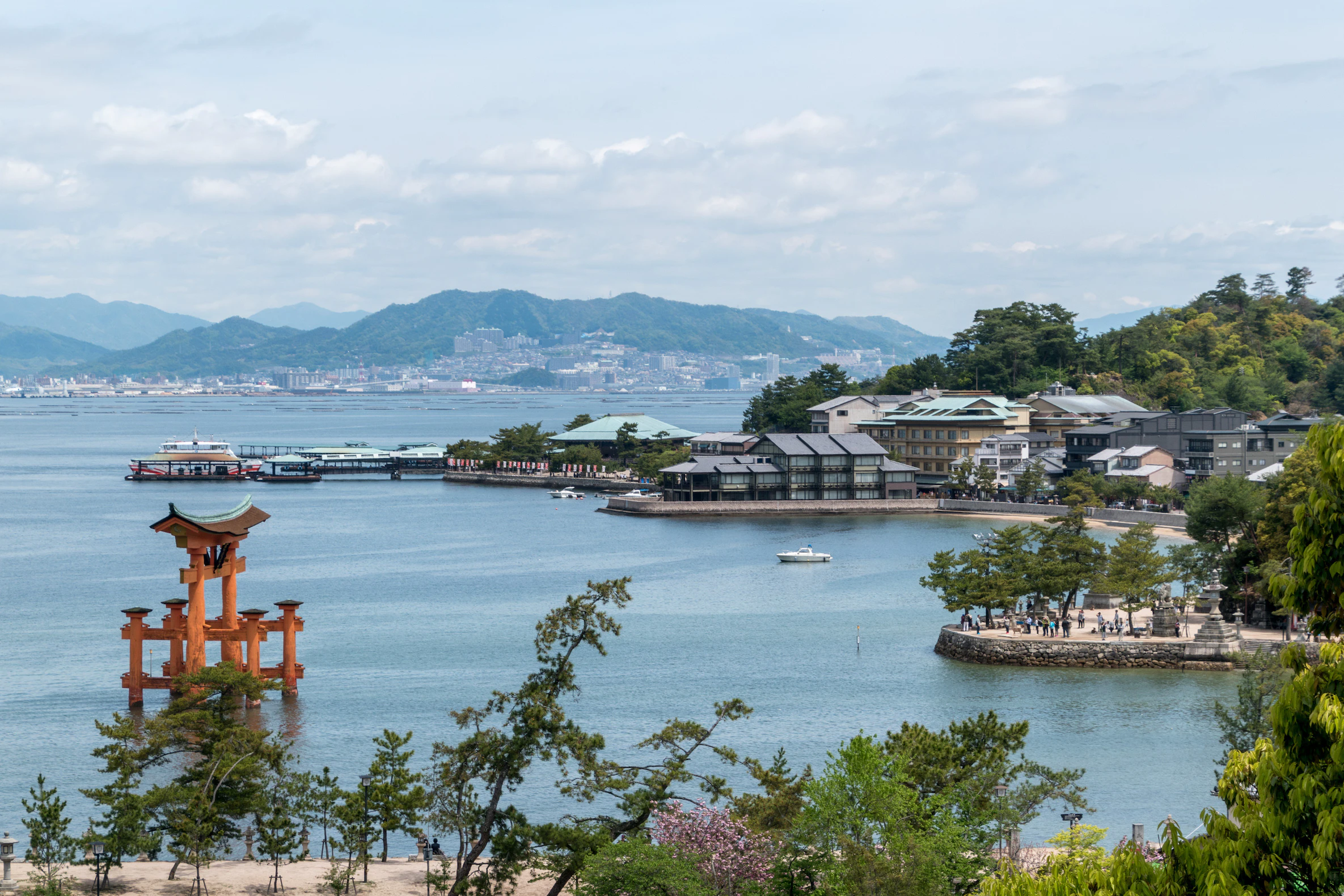
Miyajima (宮島)—Itsukushima Island—is the most practical and most rewarding day trip from Hiroshima. The combination of the two sites in a single day (or over two days with an overnight stay on the island) is the natural itinerary for the area and is supported by frequent ferry service from Hiroshima’s Ujina Port terminal.
The standard routing: Peace Memorial Park in the morning (museum opens at 8:30 AM), walk or tram to Hiroden Ujina port by early afternoon, ferry to Miyajima (approximately 30 minutes), arrive for the late afternoon light on the torii gate, return by the last ferry. This is feasible in a single day but does not allow for the Miyajima hike to Mount Misen or an evening at the island. Two days—one full in Hiroshima, one on Miyajima—is the recommended allocation.
The tram line connecting Hiroshima Station to the Peace Park and the Hiroden port terminal is one of the oldest operating tram systems in Japan. The fact that it survived the bomb and was running again by August 9th, 1945—three days after the bombing—is cited in Hiroshima’s own narrative of recovery as one of the first signs that the city would reconstitute itself.
Practical Information
- Access: Hiroshima Station is on the Tokaido-Sanyo Shinkansen; Tokyo to Hiroshima is approximately 4 hours (Nozomi), Kyoto to Hiroshima is approximately 1.5 hours
- Peace Memorial Museum: 8:30 AM – 6:00 PM (August until 7 PM; December–February until 5 PM); ¥200 adults
- Hiroshima Castle: 9:00 AM – 6:00 PM (September–November and March–July until 5:30 PM); ¥370 adults
- Ferry to Miyajima: From Hiroden Miyajima-guchi pier (tram terminus), 10 minutes, ¥200 one way; JR Pass holders can use the JR ferry from Miyajimaguchi Station at no additional charge
- Okonomimura: 11:00 AM – 10:00 PM; multiple floors, walk-in only
- City transport: Hiroshima has an extensive streetcar (tram) network; a one-day tram pass for ¥700 covers most sightseeing routes; IC cards accepted on all trams