Most first-time visitors treat Kanagawa as scenery glimpsed from the Shinkansen window on the way to Kyoto. That is a mistake I watch people make constantly. Kanagawa, the prefecture immediately south of Tokyo, is where Tokyo residents go for the day when the city gets to be too much—and it holds four of the best day trips in eastern Japan: a global port city, a samurai-era temple town, a sacred island, and one of the country’s great hot-spring valleys.
The skill is not finding things to do in Kanagawa. It is choosing which two to combine and which to leave for next time. Here is how a local actually thinks about it.
The Four Kanagawas, and How They Pair
Yokohama: Japan’s Window to the Outside World
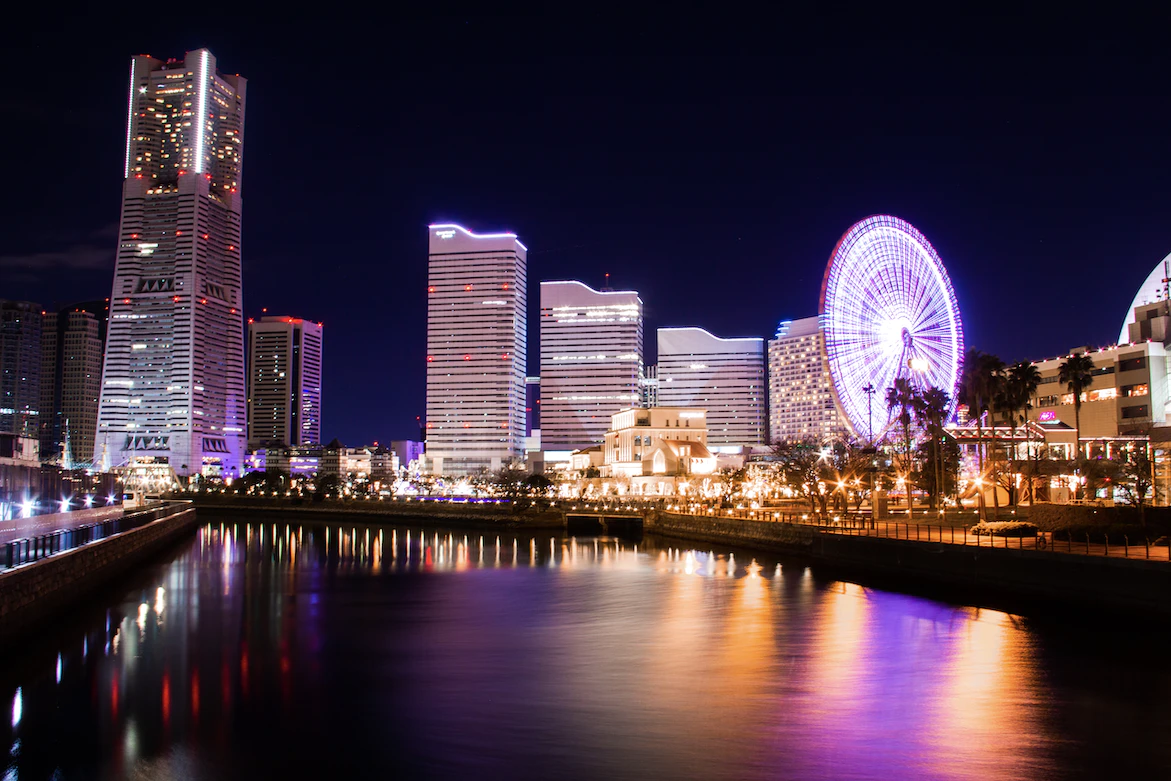
Yokohama was one of the first Japanese ports forced open to foreign trade in the 1850s, and that history still defines its character. It is Japan’s second-largest city, but it feels open and unhurried in a way Tokyo never does—wide harbor promenades, a futuristic waterfront at Minato Mirai, the largest Chinatown in Japan, and the brick warehouses of the old port now full of shops and cafés.
A local secret: Yokohama is best in the evening. Come late afternoon, walk the harbor as the Minato Mirai towers light up, and have dinner in Chinatown. It is twenty-five minutes from central Tokyo, which makes it the easiest half-day escape on this list.
Kamakura and the Great Buddha: Tokyo’s Kyoto
Before Kyoto, before Tokyo, Kamakura was the seat of Japan’s first samurai government (1185–1333). That history left it dense with temples and shrines. The icon is the Great Buddha (Daibutsu)—an 11.4-meter bronze figure that has sat in open air since a tsunami washed away the hall around it in 1498. You can step inside the hollow statue.
Pair the Buddha with Hasedera (a hillside temple with sea views) and Tsurugaoka Hachimangu (the city’s grand shrine), then walk Komachi Street for snacks. Kamakura rewards an early start—the temples fill by late morning.
Enoshima: The Island You Combine with Kamakura
A small offshore island connected by a bridge, Enoshima is a tangle of shrine paths, sea caves, and seafood shacks crowned by an observation tower with Mount Fuji views on clear days. It is right next to Kamakura on the same rail line, which is why locals treat Kamakura + Enoshima as a single day—temples in the morning, the island and coast in the afternoon. The vintage Enoden train between them is half the pleasure.
Hakone: The Hot-Spring Day (or Overnight)
Hakone is the volcanic valley where Tokyo goes to soak. Hot springs, Lake Ashi cruises under Mount Fuji, the Open-Air Museum, and a ropeway over steaming sulfur vents. Hakone is the one destination here I would not rush as a day trip if you can avoid it—staying a night in a ryokan with a private onsen is one of the best experiences in Japan. If you must do it in a day, buy the Hakone Freepass, which covers the whole loop of trains, cable cars, boats, and buses.
How to Plan It: A Local’s Combinations
You will not do all of Kanagawa on a first trip, and you shouldn’t try. Pick based on what you want:
- One free day, want variety: Kamakura + Enoshima.
- One free evening: Yokohama harbor and Chinatown.
- Want to relax, not sightsee: Hakone, ideally overnight.
- Love Mount Fuji: Hakone or Enoshima on a clear day—check the forecast, the mountain is shy.
Do not try to combine Hakone with Kamakura in one day. They are in opposite directions and you will spend the day on trains.
Local Tips Most Visitors Miss
- Use an IC card (Suica/Pasmo) for everything—every train and bus in Kanagawa takes it.
- Check Mount Fuji’s visibility before committing to Hakone or Enoshima for the views. Winter mornings are clearest; summer often hides the mountain entirely.
- Kamakura is a walking town. Wear real shoes; the good temples involve hills and stairs.
- The Hakone Freepass pays for itself the moment you do the full loop—don’t buy individual tickets.
- Avoid Kamakura on summer weekends if you can; the hydrangea and beach seasons overwhelm the small streets.
Practical Info
| Item | Detail |
|---|---|
| Access from Tokyo | Yokohama ~25 min; Kamakura ~1 hr; Enoshima ~1 hr 10 min; Hakone ~1.5 hr |
| Lines | JR, Odakyu (Hakone, Enoshima), Keikyu, Enoden |
| Passes | Hakone Freepass (Odakyu); Enoshima-Kamakura Freepass |
| Payment | Suica/Pasmo accepted everywhere; carry some cash for small shops |
| Best time | Spring (blossoms), autumn (foliage), clear winter mornings (Fuji) |
Kanagawa is the proof that you do not have to leave the Tokyo region to see a different Japan. A samurai capital, a treaty port, a sacred island, and a steaming hot-spring valley all sit within ninety minutes of the city. Pick one or two, go slow, and let Kanagawa be the day your trip stops feeling like a sprint.