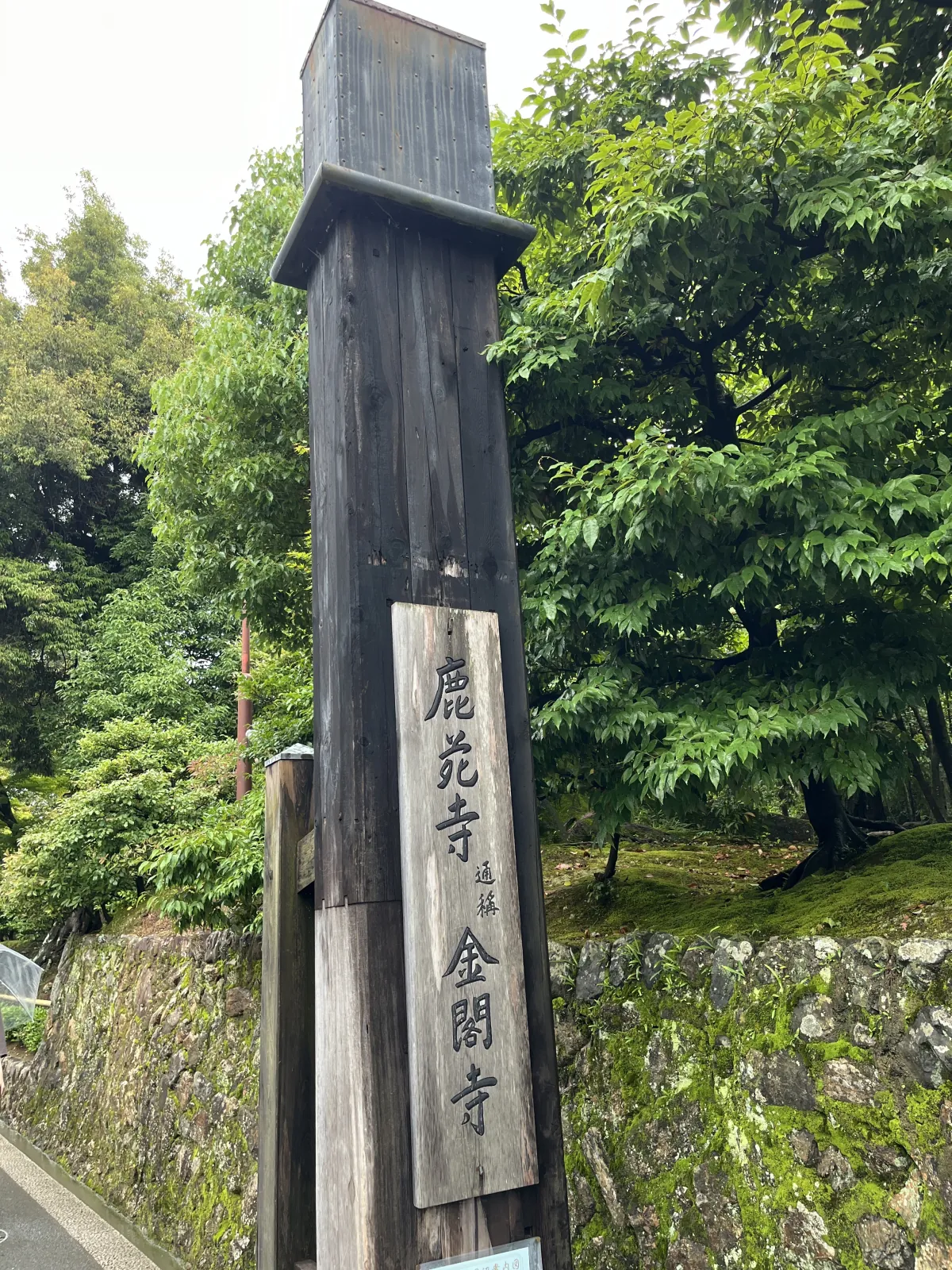
On July 2, 1950, a 21-year-old Zen monk named Hayashi Yoken set fire to Kinkakuji and attempted to take his own life at the top of Mount Kinugasa behind the temple. The pavilion—a 14th-century wooden structure covered in gold leaf, considered one of the most beautiful buildings in Japan—burned to the ground in approximately four hours. Hayashi survived. He was arrested, convicted of arson, and sentenced to seven years in prison; he was released early due to mental illness and died of tuberculosis in 1956.
The Kyoto reconstruction committee moved quickly. A new pavilion was built on the same stone foundation, completed in 1955, and opened to visitors who came in enormous numbers to see what had been rebuilt. In 1987, the gold leaf covering was entirely replaced with a new application five times thicker than the previous version. In 1994, the temple complex was inscribed as a UNESCO World Heritage Site.
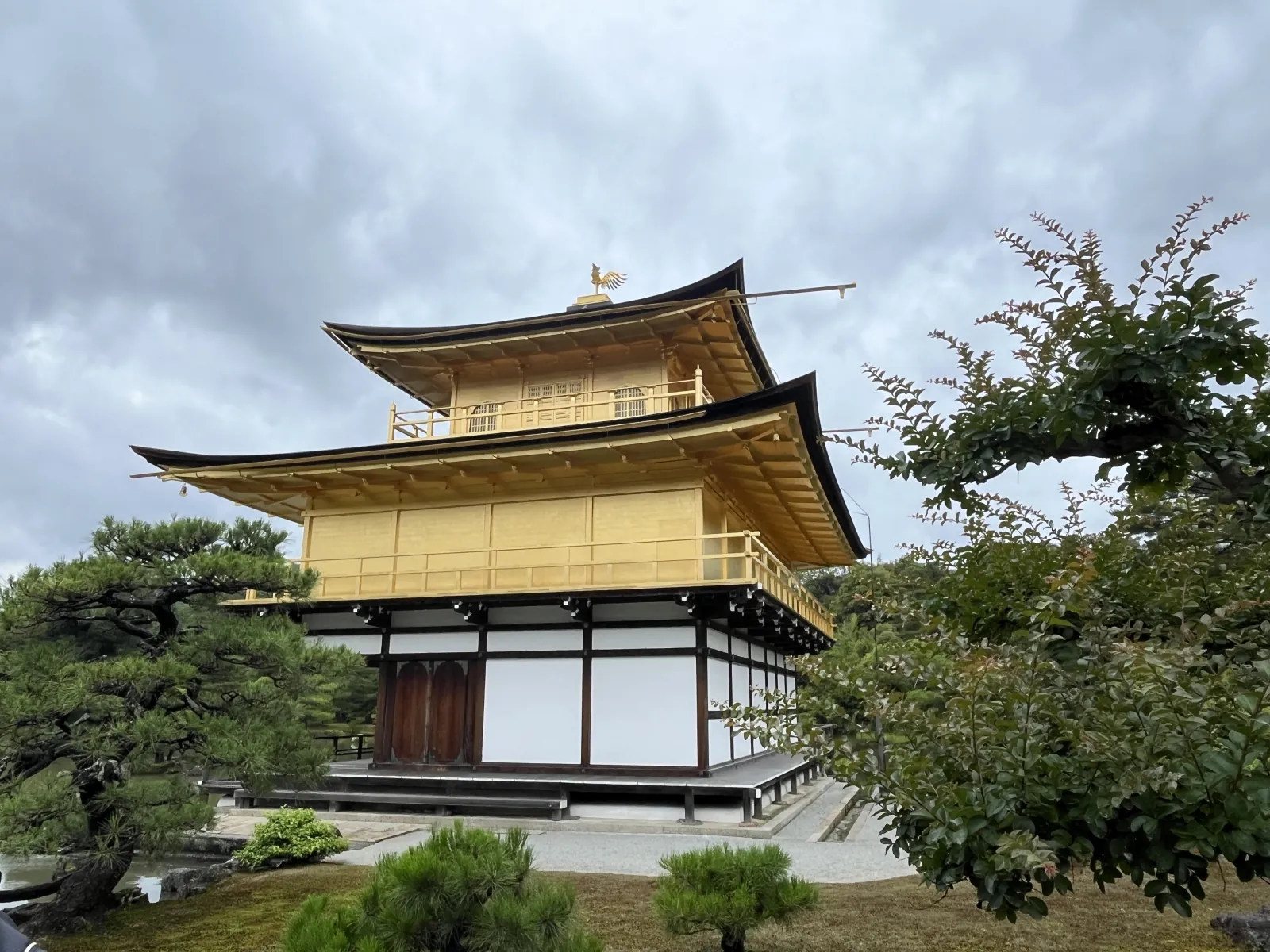
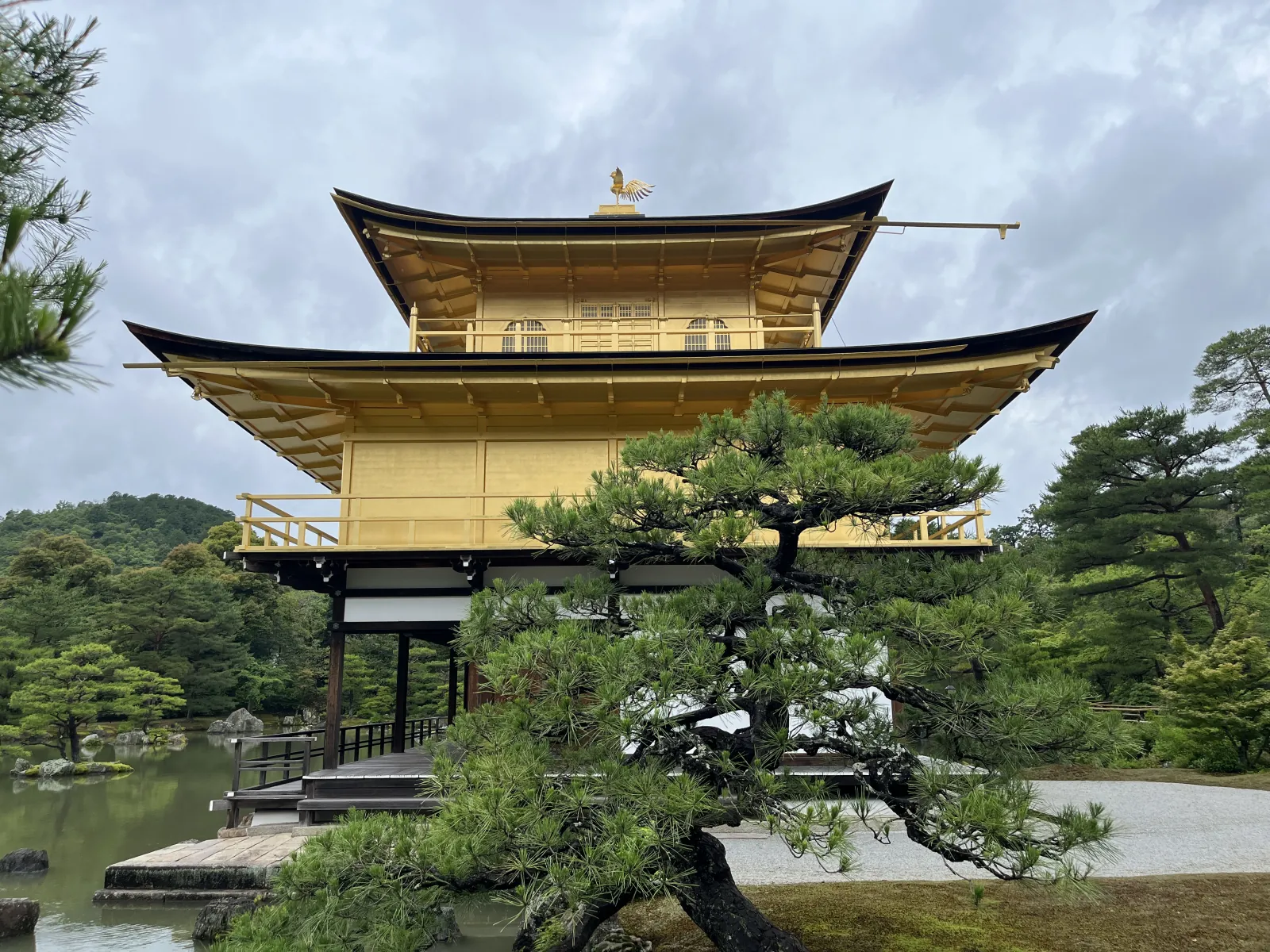
The structure you are looking at when you visit Kinkakuji is the 1955 building with the 1987 gold leaf. The original pavilion—the one that Ashikaga Yoshimitsu built in 1397, the one that survived the Onin War and the Meiji Restoration and the Second World War—exists now only in photographs and in the novel that Mishima Yukio published four years after its destruction.
What Hayashi Yoken Saw: The Original and the Psychology of Obsession
Mishima Yukio’s 1956 novel Kinkaku-ji (translated as The Temple of the Golden Pavilion or The Golden Pavilion) is based on the arson and on the imagined interior life of Hayashi—renamed Mizoguchi in the novel—a young monk who becomes so overwhelmed by the beauty of Kinkakuji that he is unable to experience anything else without measuring it against the pavilion and finding it insufficient.
Mishima’s Mizoguchi destroys the pavilion not from hatred but from a logic that the novel presents as coherent if catastrophic: if beauty of this magnitude cannot be possessed or equaled, and if its existence makes all other experience pale, then the only way to be free of it is to eliminate it. He does not destroy the beauty; he destroys his access to the comparison.
This reading is, as literary criticism goes, contested. But the psychological insight it identifies—that extreme beauty can be a kind of tyranny—is worth carrying into a visit to the actual site. The crowds that gather at the edge of Kyokochi Pond to photograph the pavilion are, in a mild sense, doing what Mishima’s character could not contain: being captured by the image and struggling to process the experience beyond the visual record.
The Three Floors and Their Different Registers
The pavilion has three stories, each built in a different architectural style, and this formal variation is not decorative but theological.
The first floor (Hōsuiin) is built in the aristocratic shinden-zukuri style of the Heian period—the style of court residences. It is the only floor that is not covered in gold leaf; the exterior is unpainted wood and white plaster. This floor represents the human world and the imperial court tradition that preceded the Muromachi period. It is open to the elements, with no exterior walls, designed for viewing the garden rather than protecting from weather.
The second floor (Chōondō) is built in the bukke-zukuri style associated with samurai residences and is covered in gold leaf. This floor represents the world of the warrior aristocracy—the Muromachi shogunate whose head, Ashikaga Yoshimitsu, commissioned the original pavilion. The interior holds a small statue of Kannon (Bodhisattva of Compassion) flanked by figures of the four Heavenly Kings. The gold leaf begins here and continues upward.
The third floor (Kukkyōchō) is in the zenshūbutsuden style—pure Chinese Zen Buddhist temple architecture—and is the most intensely gold-leafed floor, with the interior also covered. This floor holds a small golden Amida Buddha statue. It represents the highest register: the Zen Buddhist realm, which transcends both the aristocratic and the military worlds below it.
The formal argument the building makes—ascending from court culture through warrior culture to Buddhist liberation, with the gold leaf intensifying upward—is a statement about Yoshimitsu’s own ambitions. He had controlled the imperial court, unified the warring factions of the warrior class, and achieved a political power that no shogun before him had held. The pavilion was, among other things, a statement that he had transcended the categories that previously defined Japanese political life.
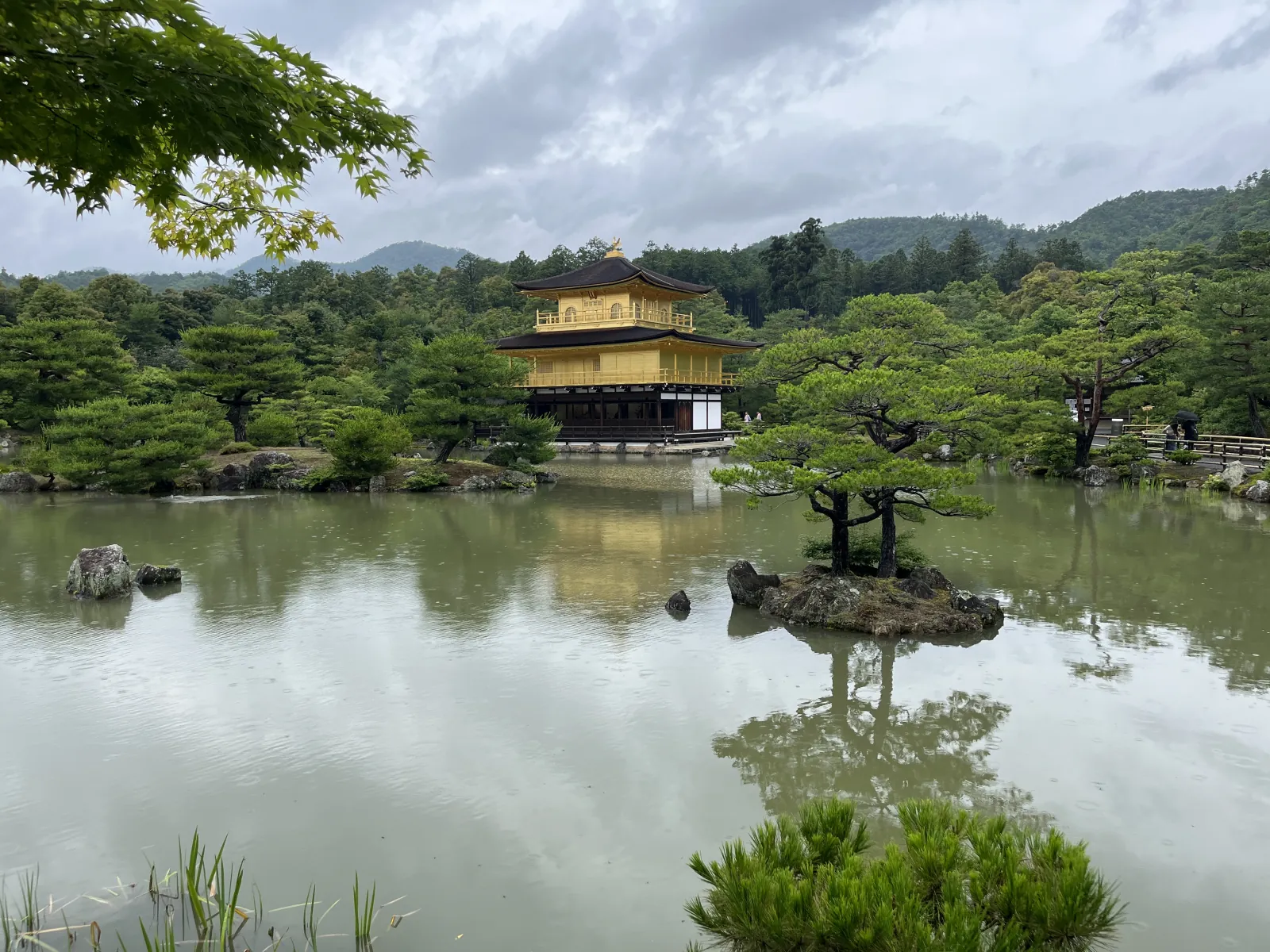
The Garden: How Yoshimitsu Designed for Reflection
The garden surrounding Kinkakuji is a kaiyu-shiki teien (circuit garden), designed to be experienced through movement along a prescribed path that provides different views of the pavilion and its setting at calculated intervals. The design is attributed to Yoshimitsu himself, working with landscape gardeners in the late 14th century.
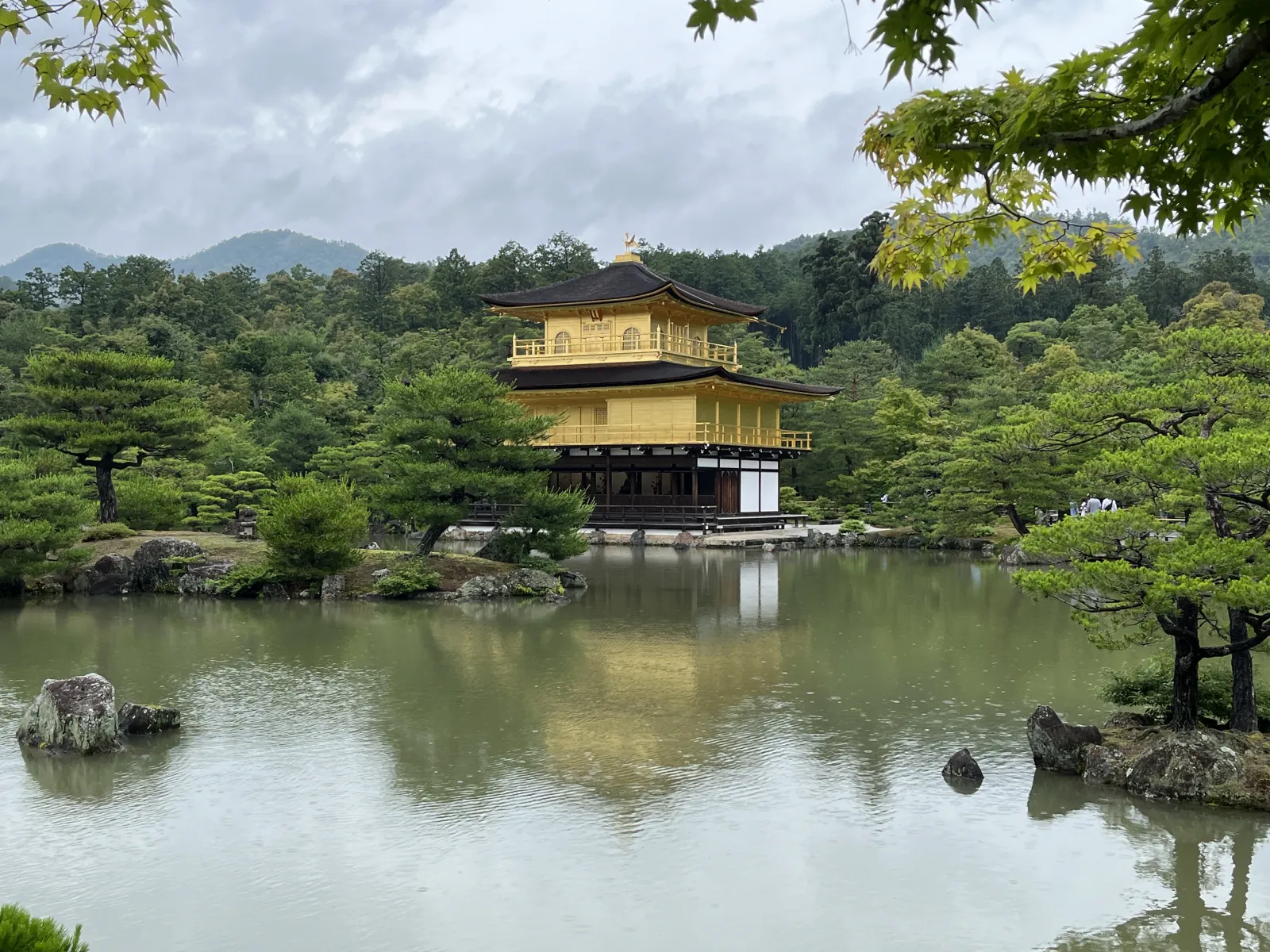
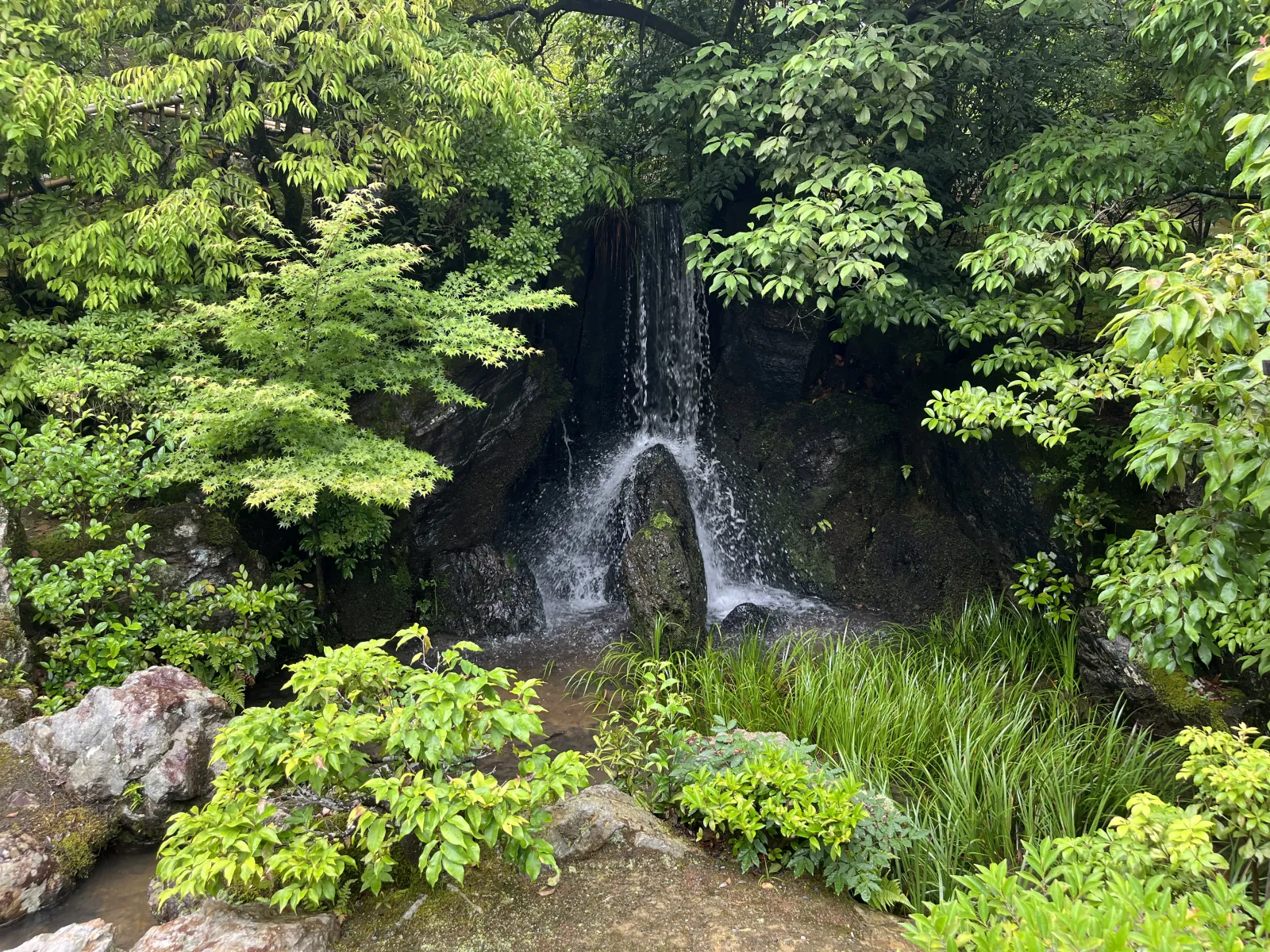
Kyokochi Pond (Mirror Pond), which reflects the pavilion in the classic photograph, was designed with specific islands that serve cosmological functions: Ashihara Island represents the island of Japan; the central island is Ryūmon-taki (Dragon Gate Waterfall); smaller stone arrangements represent the islets of traditional Chinese paradise mythology. The garden as a whole is a miniaturized representation of the universe as understood within the Buddhist cosmology of the Muromachi period.
The reflection in the pond, which is the primary photographic subject of the site, was explicitly designed as part of the experience. Yoshimitsu sited the pavilion at the pond’s edge and oriented the garden path so that the most direct view of the building occurs across the water—an arrangement that doubles the visual impact of the gold leaf and connects the earthly and reflected images in a way that carries symbolic weight within Buddhist thought about illusion and reality.
The 1987 Gold Leaf: What Changed and Why It Matters
The gold leaf applied in 1987 is five times thicker than the layer it replaced. The previous covering, applied during the 1955 reconstruction, had used standard commercial gold leaf; this layer was judged insufficient by the time of the 1987 restoration project, both aesthetically and in terms of durability.
The 1987 application used hand-beaten gold leaf of the highest available grade, applied in layers that produced the intensely saturated, almost luminous quality that distinguishes contemporary Kinkakuji from its appearance in pre-1987 photographs. The color has also changed slightly: the thicker application produces a warmer, deeper gold rather than the thinner, slightly greenish-gold visible in postwar photographs.
The practical consequence for visitors: what you are looking at is gold leaf that is not quite forty years old, applied to a building that is seventy years old, on a stone foundation and in a garden that is over six hundred years old. The authenticity of the experience is stratified across these different timescales, and that stratification is part of what the site actually is rather than a diminishment of it.
When to Visit: Managing the Crowds
Kinkakuji receives approximately five million visitors per year, making it one of the most visited cultural sites in Japan. The crowd management implications are significant and entirely predictable:
Avoid: Saturday and Sunday, 10 AM to 3 PM, from March through November. This window produces the maximum density at the main viewing point along the pond.
Best options:
Early morning on any day: Gates open at 9:00 AM. The first forty-five minutes, before tour buses and later-rising independent travelers arrive, offers the closest approximation to a manageable experience. Arriving before 9 AM and being at the front of the opening queue is feasible from a central Kyoto hotel.
Winter weekdays (December to February): The combination of reduced tourism season and the visual contrast between gold leaf and snow or bare winter trees makes January and February the most photogenically distinct time of year and the least crowded season. The pavilion with snow on the surrounding pines and ice at the edge of the pond is a qualitatively different visual experience from the summer version.
Wet weather: Rain thins the crowd substantially. The gold leaf and the reflective surface of the pond both photograph well in overcast or wet conditions, and the garden path is largely covered. Rain gear and waterproof shoes are sufficient.
The Garden Circuit: Beyond the Famous View
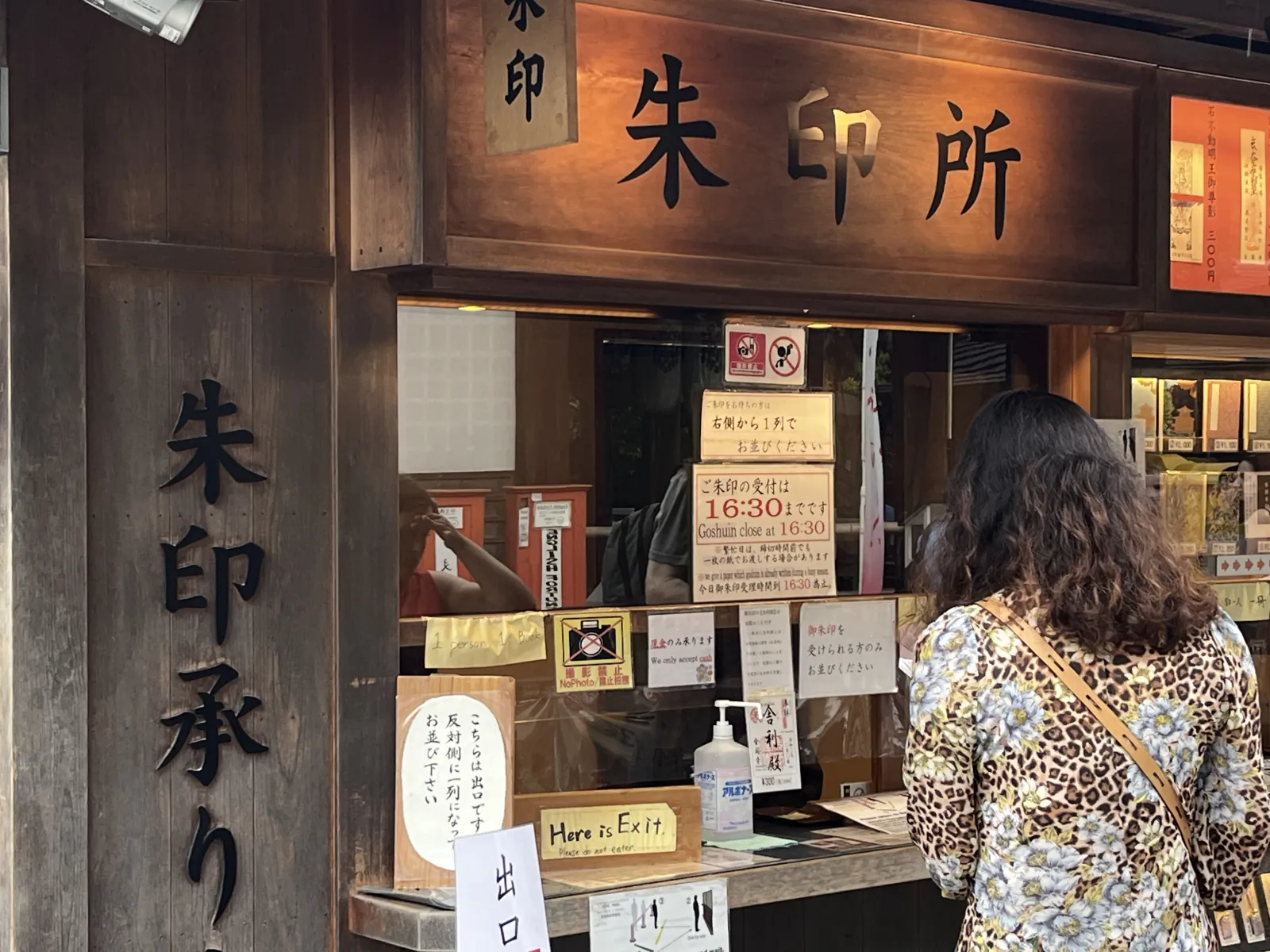
The prescribed garden walk continues past the main viewing point along the pond and through the remainder of the 32,000-square-meter complex, visiting a series of smaller gardens, teahouses, and secondary structures that most visitors rush through without stopping.
Sekkatei Teahouse is a small structure visible from the garden path on the hillside above the pavilion, associated with the warrior aesthetics of the late Muromachi period. It is not open to general visitors but is visible from the path and helps contextualize the scale of the original complex.
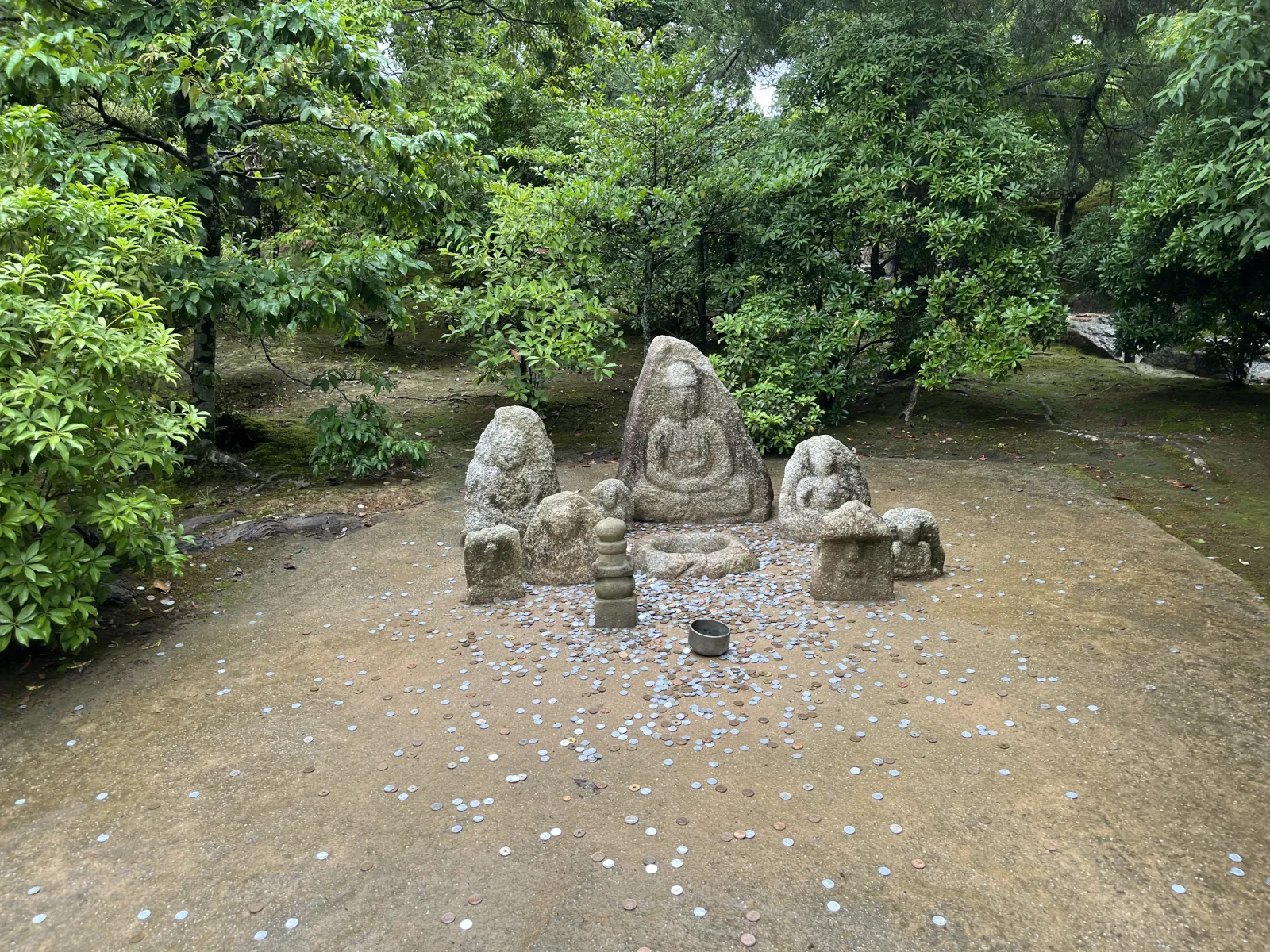
Fudo-do is a small hall at the far end of the garden path, housing an image of Fudo-myo-o (the immovable Wisdom King) attributed to the monk Kobo Daishi. The hall is one of the few structures on the grounds with a pre-Meiji history not interrupted by the 1950 fire.
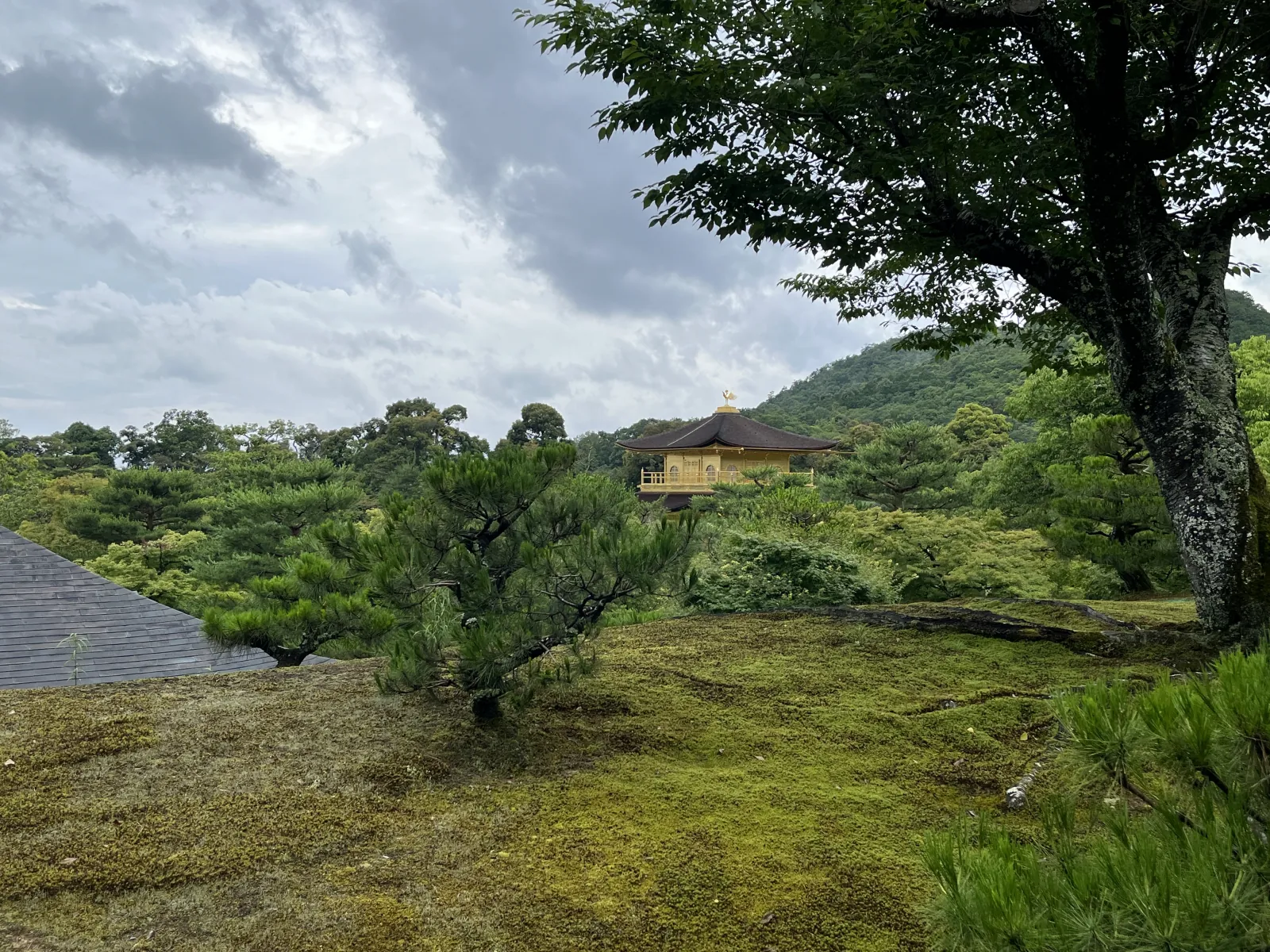
The summit of the garden path provides the only elevated view of Kinkakuji from above and behind—a perspective that shows the garden’s circuit structure and the relationship between the pavilion and the wider Kinugasa hillside. This view is taken by very few visitors and is worth the thirty-second detour.
Practical Information
- Access: Bus routes 12, 59, 101, 102, 204, 205 from Kyoto Station or Karasuma Oike to Kinkakuji-michi stop; 10-minute walk from the bus stop. Approximately 40 minutes from Kyoto Station by bus.
- Admission: ¥500 adults, ¥300 children (includes the garden circuit; no separate pavilion interior admission, as the interior is not open to visitors)
- Hours: 9:00 AM – 5:00 PM daily, including national holidays
- Duration: Allow 45 minutes for the garden circuit at a comfortable pace; 20 minutes at a rushed pace
- Combination: Ryoan-ji (the famous rock garden) is a 15-minute walk from Kinkakuji and is most efficiently visited as a consecutive stop. Nijo Castle and Daitoku-ji are also accessible within 30 minutes of Kinkakuji by bus or taxi.