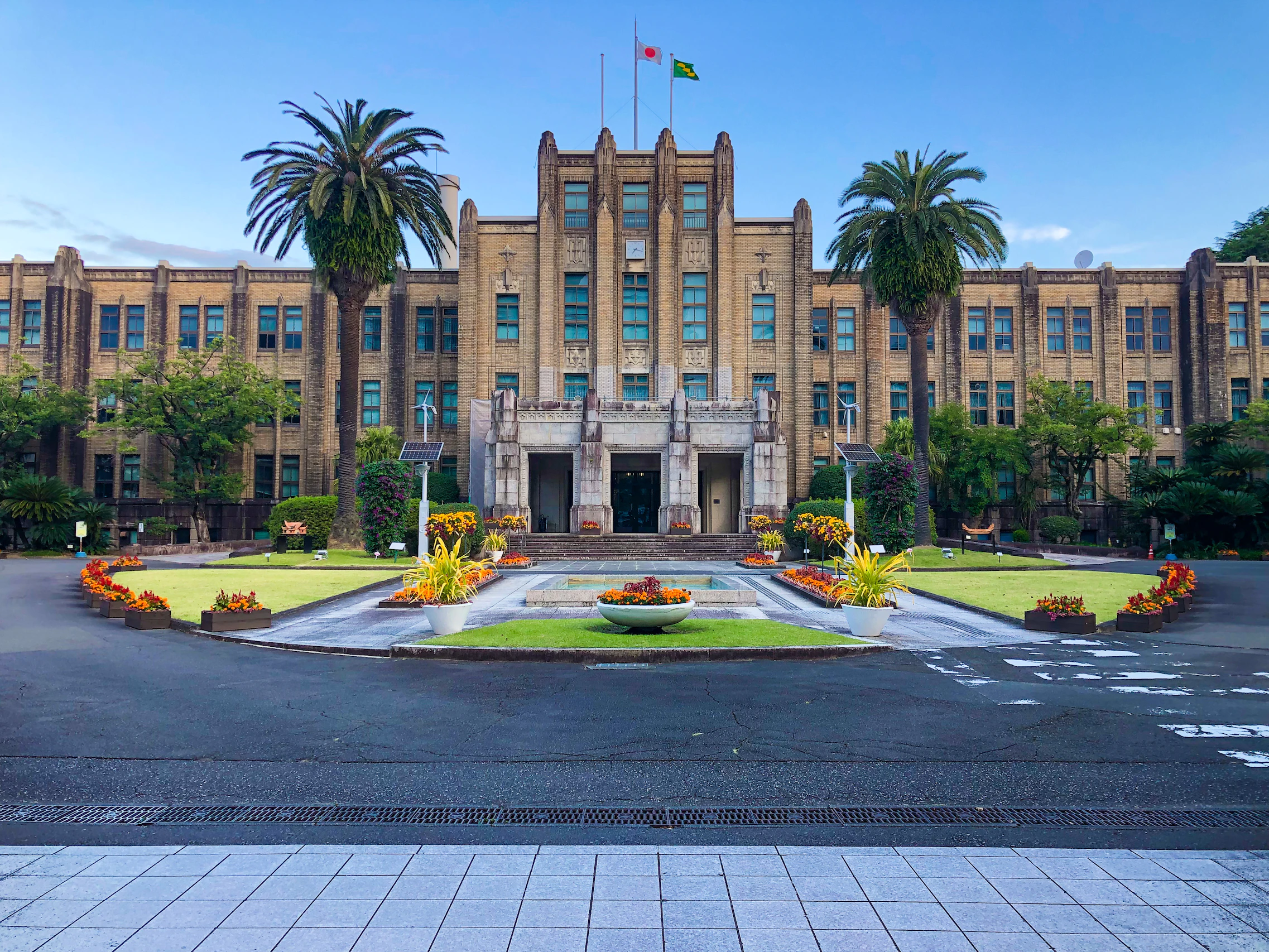
Miyazaki, on the sunny southeastern coast of Kyushu, is where Japanese mythology says the country began. According to the ancient chronicles, this is where the gods descended to earth and where Japan’s legendary first emperor set out from. That mythological weight, combined with a subtropical climate, palm-lined coastline, and some of the best surf in the country, gives Miyazaki a character unlike anywhere else in Japan—relaxed, warm, and quietly sacred.
It’s far from the main tourist routes, which is exactly why it stays uncrowded. Here’s how to read this southern coast.
Takachiho Gorge: The Sacred Heart
Inland, in the mountains, Takachiho Gorge is the spiritual center of Miyazaki and one of the most atmospheric places in Kyushu. A narrow chasm of sheer volcanic cliffs, with the Manai Falls spilling into emerald water below, it is most famously experienced by rowing a small boat right up to the base of the waterfall.
Takachiho is steeped in myth—it’s tied to the legend of the sun goddess Amaterasu hiding in a cave and plunging the world into darkness. At nearby Takachiho Shrine, nightly yokagura sacred dance performances re-enact the myths. This is where Miyazaki’s mythological identity feels most alive.
The Shrine Coast: Aoshima and Udo
Miyazaki’s coastline holds two of Japan’s most striking shrines:
- Aoshima—a small subtropical island ringed by extraordinary wave-cut rock formations known as the “Devil’s Washboard,” with a vermilion shrine at its forested center, connected to the mainland by a causeway.
- Udo Jingu—a shrine built dramatically inside a coastal cave on a cliff above the sea. Visitors buy clay pellets (undama) to toss at a target on a rock in the surf below for good luck. It’s associated with marriage, childbirth, and the sea, and the setting is unforgettable.
Sun, Surf, and the Nichinan Coast
The Nichinan Coast running south is a scenic drive of palm trees, clear water, and consistent waves—Miyazaki is one of Japan’s premier surfing destinations, with a laid-back beach culture rare in the country. Miyazaki City itself is sunny and easygoing, with Miyazaki Jingu (honoring the legendary first emperor, Jinmu) and green spaces like Heiwadai Park.
Eat This
- Charcoal-grilled chicken (sumibi-yaki)—Miyazaki’s signature: chunks of free-range chicken grilled hard over open flame until smoky and charred. Genuinely one of the best things to eat in Kyushu.
- Chicken nanban—fried chicken with tartar sauce, invented in this prefecture.
- Mango—Miyazaki’s luxury mangoes are famous across Japan.
- Local shochu—Miyazaki is a major producer of the distilled spirit.
Local Tips Most Visitors Miss
- Takachiho is inland and remote—it takes effort to reach (best by car or bus from the coast), but it’s the prefecture’s highlight; don’t skip it for convenience.
- Book the Takachiho rowboats early—they’re limited and popular; timed tickets sell out.
- Rent a car. Miyazaki’s sights are strung along the coast and into the mountains; public transport is thin.
- Catch a yokagura dance at Takachiho Shrine for the mythological context.
- Fly in. Miyazaki Airport connects to major cities and saves a long overland trip.
Practical Info
| Item | Detail |
|---|---|
| Access | Miyazaki Airport (flights from Tokyo/Osaka); or train/bus across Kyushu |
| Don’t miss | Takachiho Gorge, Aoshima, Udo Jingu, the Nichinan coast |
| Eat | Charcoal-grilled chicken, chicken nanban, Miyazaki mango, shochu |
| Best time | Spring and autumn; warm and pleasant much of the year |
| Getting around | Rental car strongly recommended |
Miyazaki is where Japan’s story begins—gods descending to a sacred gorge, shrines built into sea caves, and a sunny coast that surfs and grills its way through an easygoing southern life. It’s a long way from Tokyo, and that distance is precisely what keeps it special.