For more than two centuries, while the rest of Japan was sealed off from the world under a strict policy of isolation, one small fan-shaped island in Nagasaki harbor stayed open. Dejima was Japan’s only authorized window to the West—a single controlled channel through which Dutch traders, and through them European science, medicine, and goods, trickled into a closed country. Add the Chinese merchants who had traded here for even longer, and the result is a city unlike anywhere else in Japan: a port whose entire identity was built on facing outward.
You feel it the moment you arrive. Nagasaki has churches and Chinese temples, Western mansions and Japanese shrines, all packed onto steep hills above the sea. It is the most cosmopolitan small city in Japan, and one of the most moving.
The Layers: Reading a City Built by Outsiders
Glover Garden and the European Quarter
On a hillside overlooking the harbor sits Glover Garden, the preserved estate of Thomas Glover, a Scottish merchant who helped arm and modernize Japan in the turbulent years around the Meiji Restoration. The Western-style houses and harbor views capture the moment Japan reopened and rushed to industrialize—Glover’s fingerprints are on everything from coal mining to the company that became Mitsubishi.
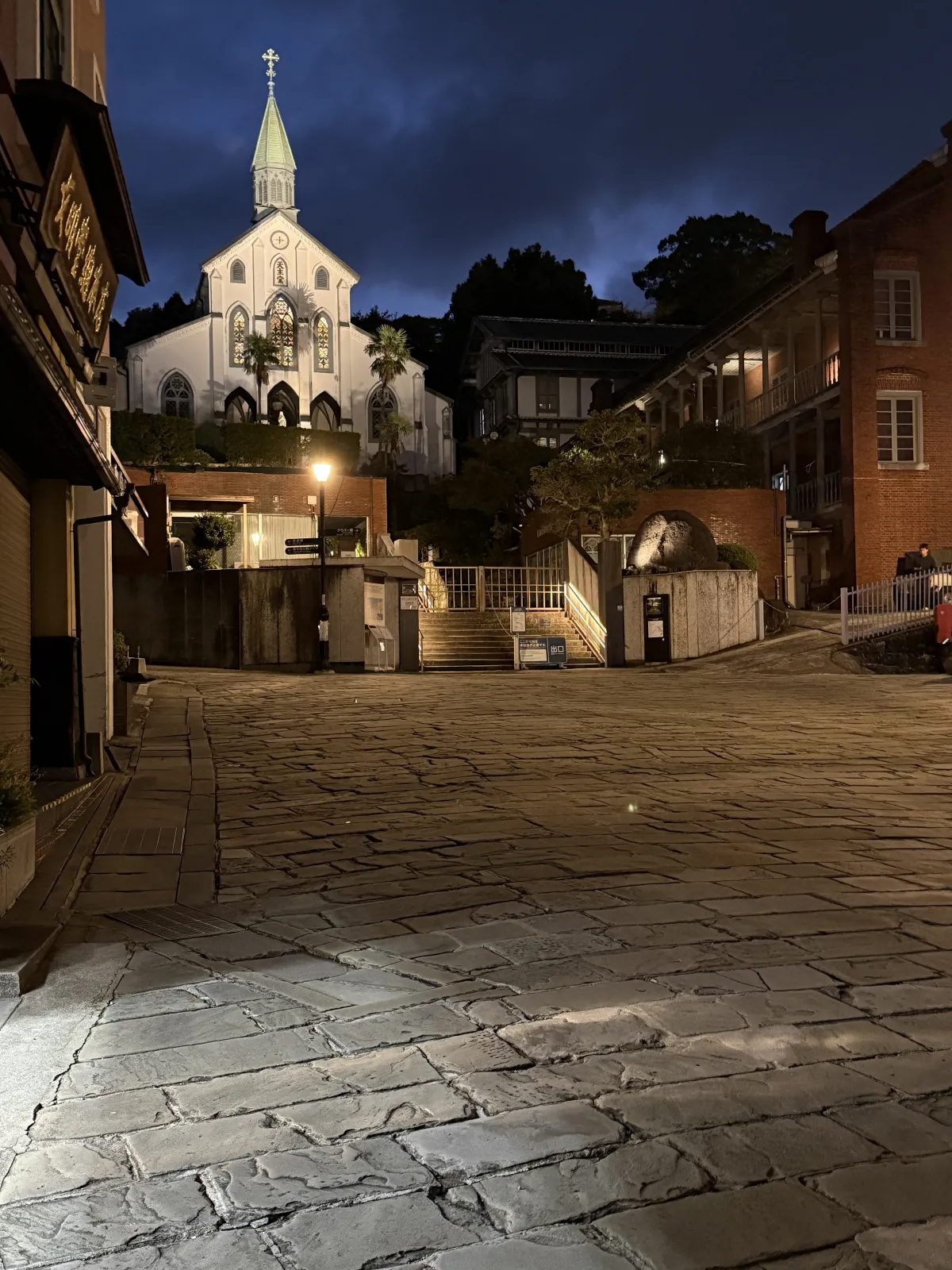
Just below, Oura Church (1864) is the oldest standing Christian church in Japan and a UNESCO World Heritage Site. Its story is extraordinary: shortly after it was built, hidden Christians who had secretly kept their faith through 250 years of brutal persecution revealed themselves here. That history of underground faith runs deep in Nagasaki.
The Chinese Layer
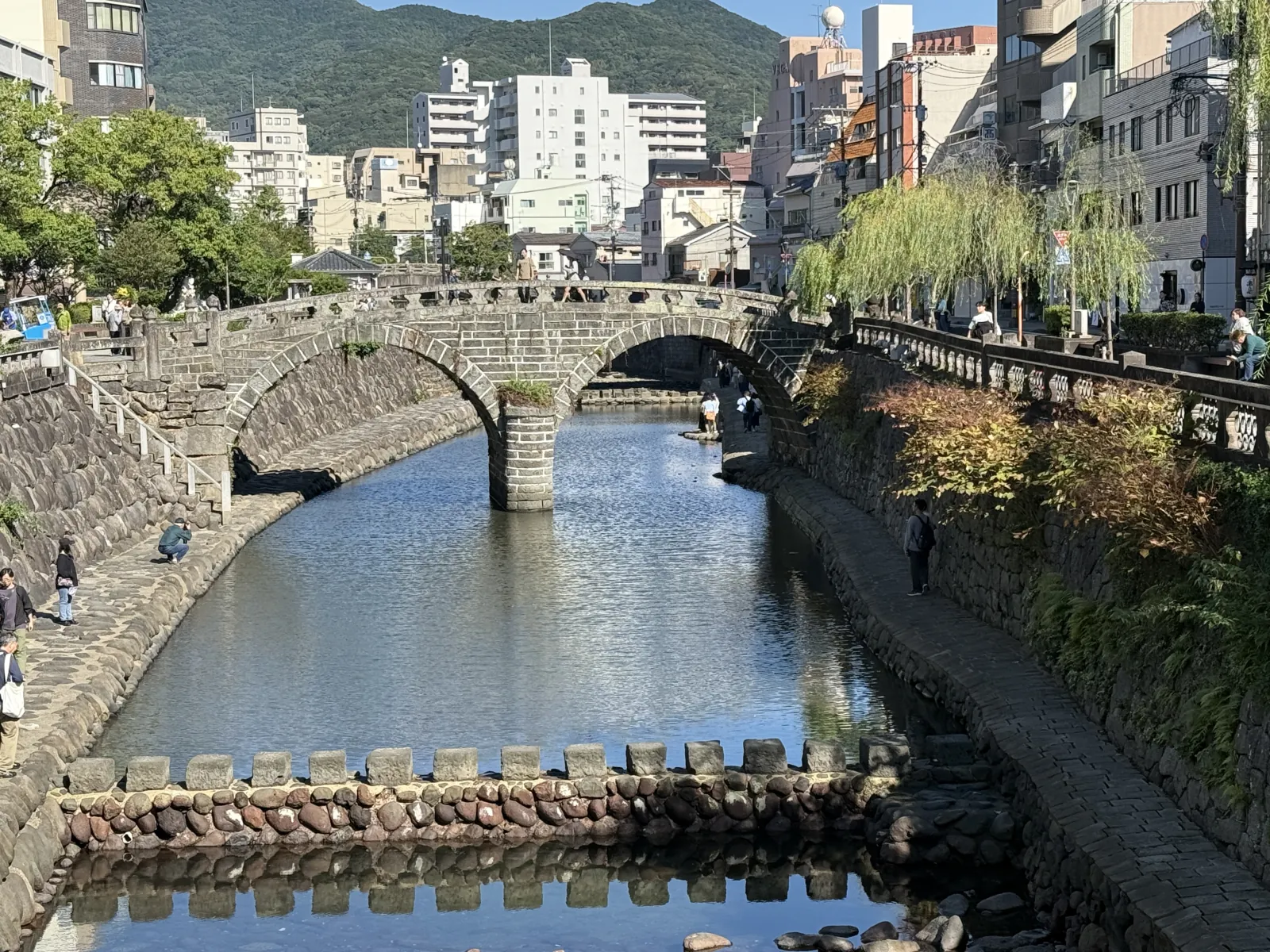
China shaped Nagasaki even longer than Europe did. The city has one of Japan’s three historic Chinatowns, and Meganebashi (Spectacles Bridge), Japan’s oldest stone arch bridge (1634), was built by a Chinese monk. Its twin arches reflect in the river to form the “spectacles” of the name. The Chinese influence is also why Nagasaki’s most famous foods taste the way they do.
The Peace Park: What August 9, 1945 Means Here
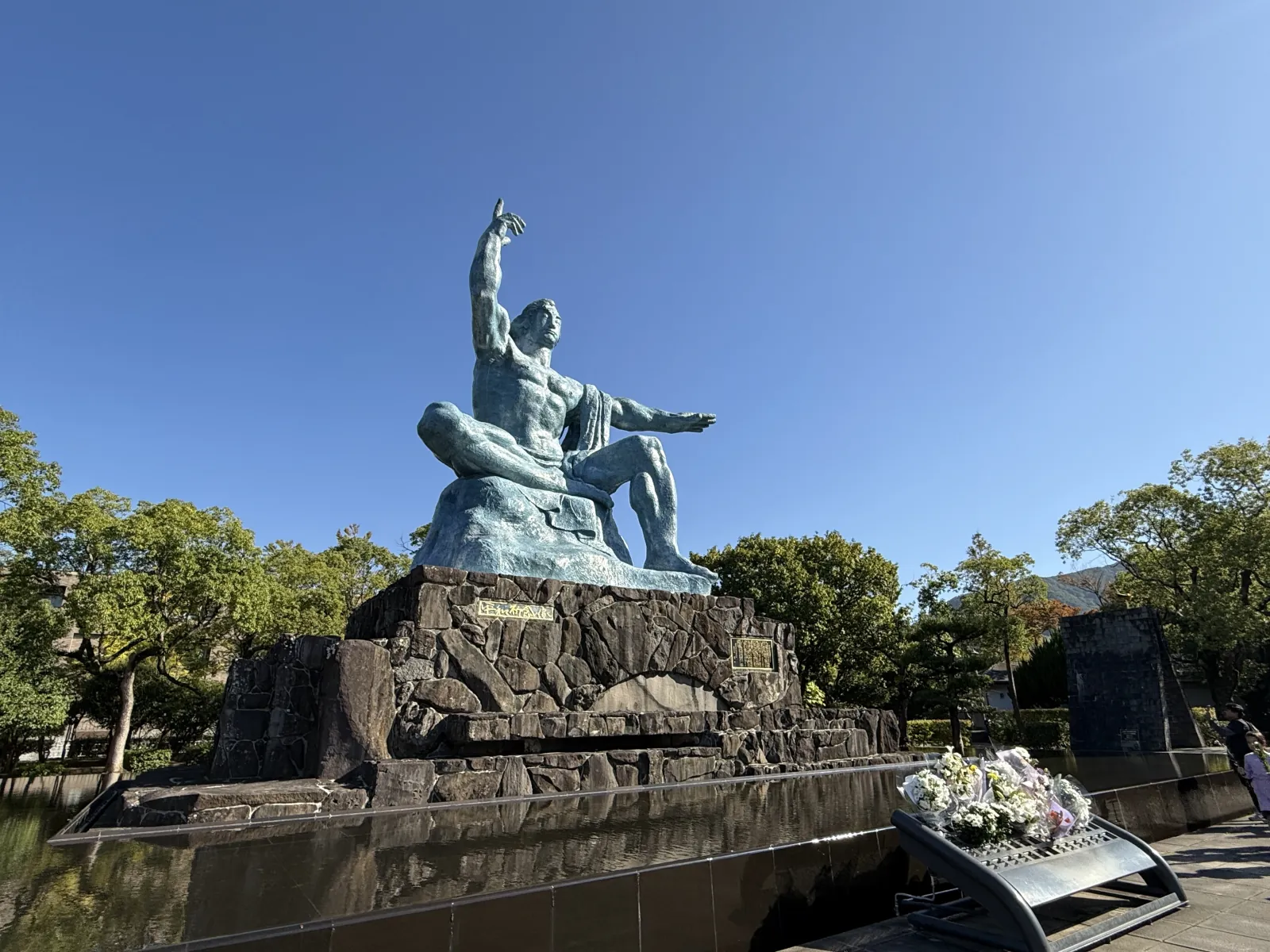
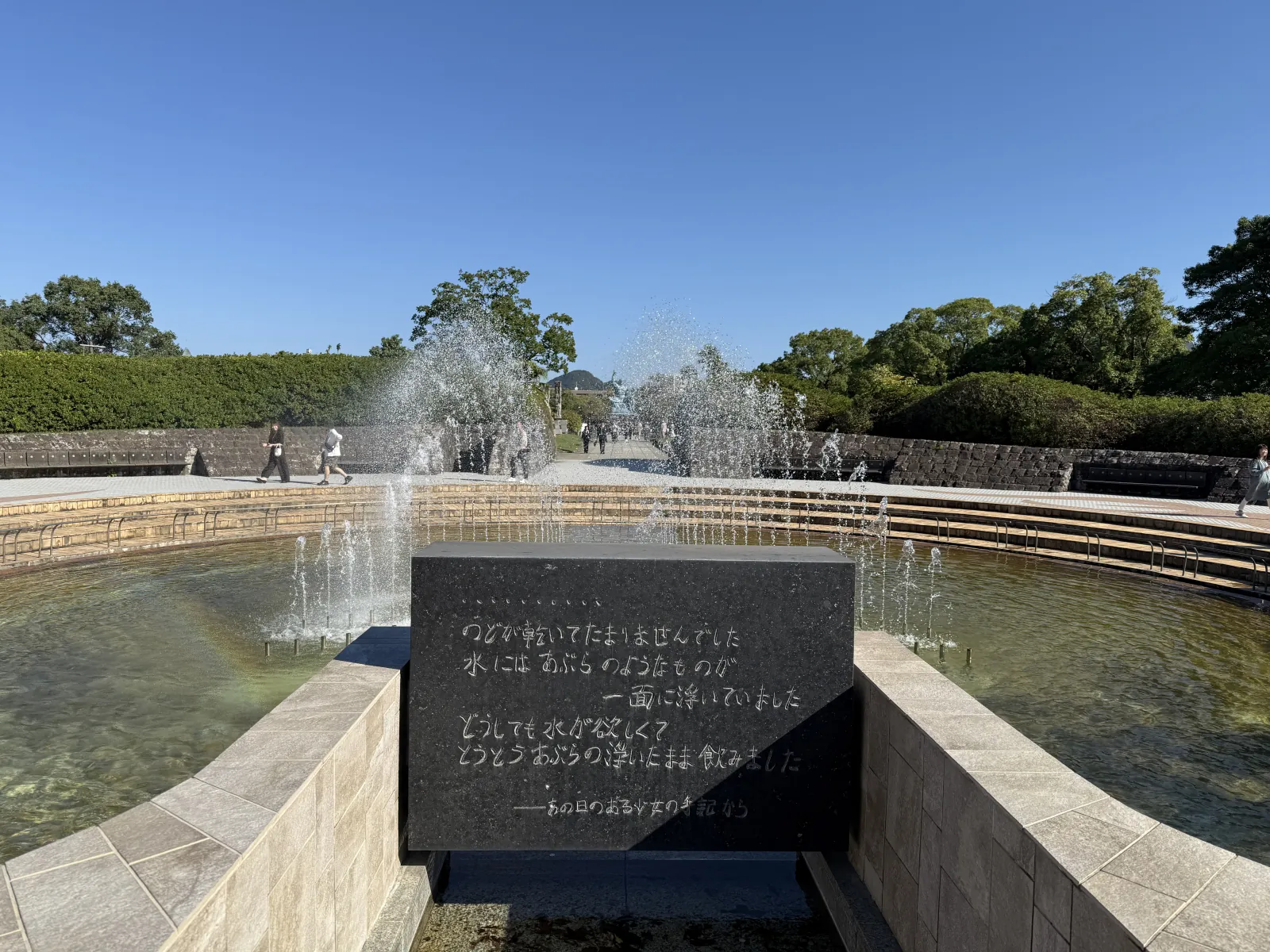
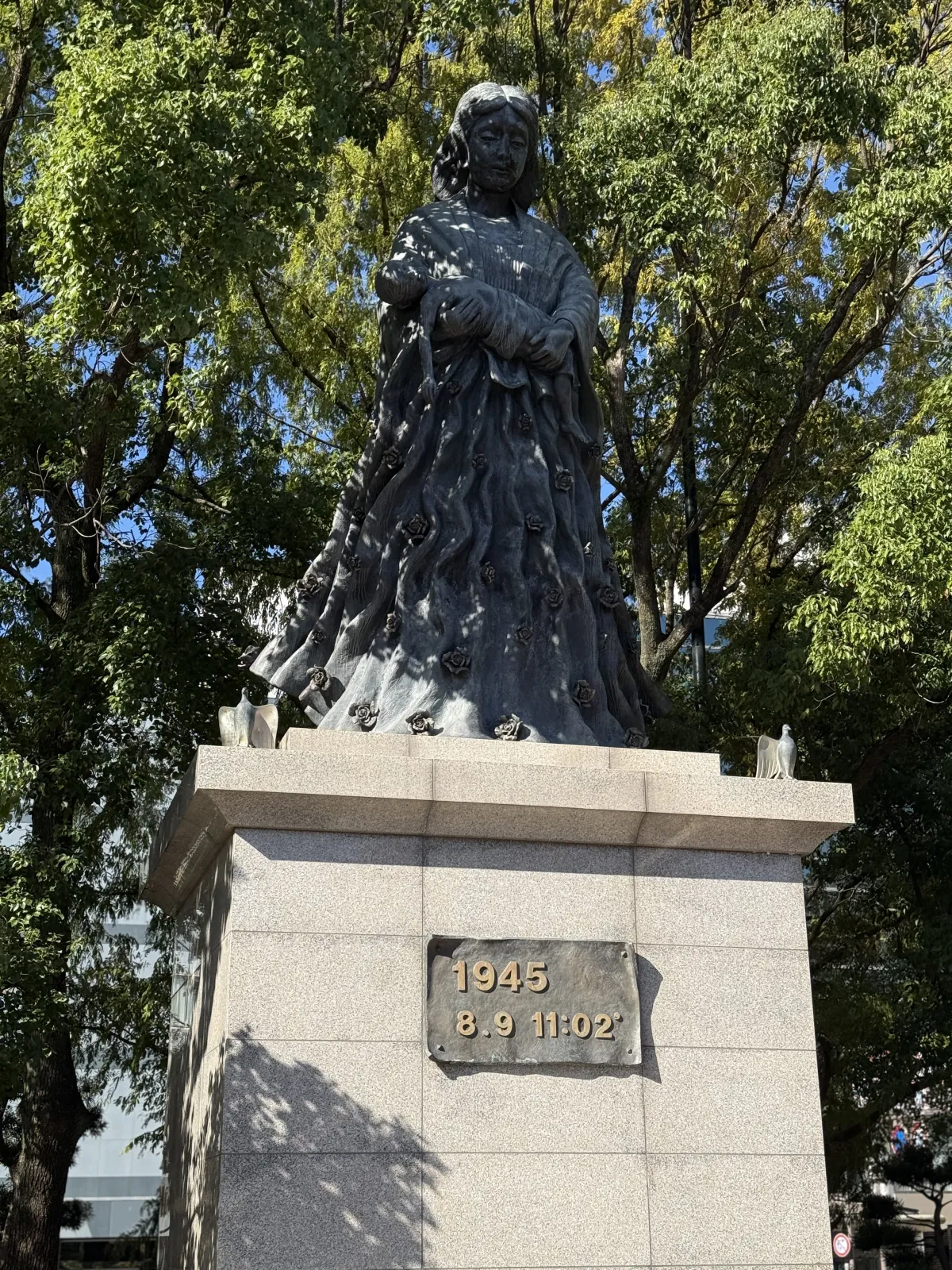
On August 9, 1945, the second atomic bomb fell on Nagasaki. The Atomic Bomb Museum and the Peace Park confront this directly and unflinchingly, through artifacts, testimony, and the quiet, towering Peace Statue.
A local note on how to approach it: Nagasaki’s relationship with its bombing is different in tone from Hiroshima’s. It is quieter, more inward, threaded with the city’s Christian history—many of the victims were members of that long-persecuted Catholic community, and the Urakami Cathedral nearby was near the hypocenter. Give this part of the city unhurried time. It is not a sightseeing stop; it is the reason much of the world knows Nagasaki’s name.
The Food: Dishes That Exist Only Here
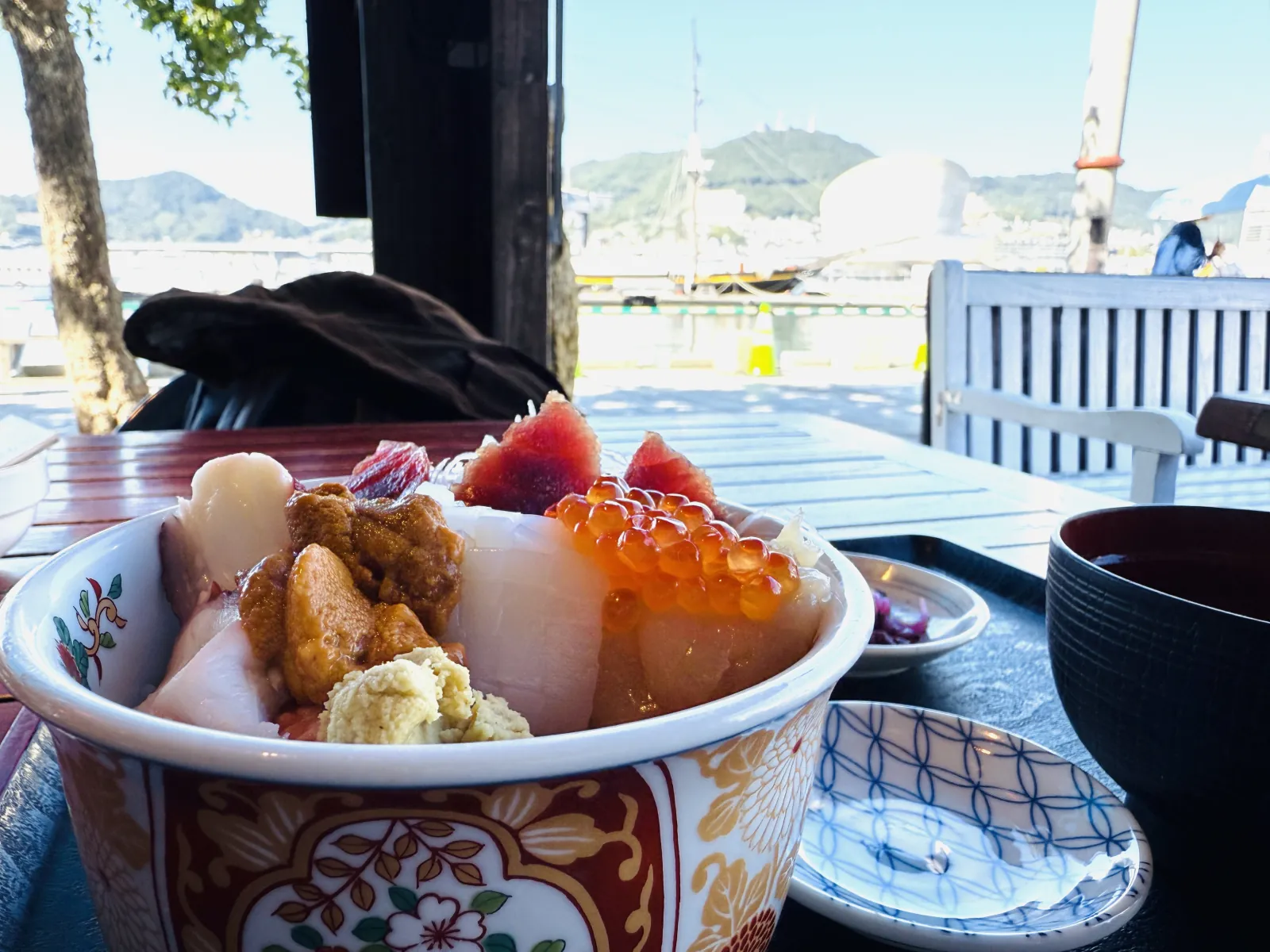
Nagasaki’s outward-facing history produced a cuisine found nowhere else in Japan:
- Champon—thick noodles in a rich pork-and-seafood broth, born in the city’s Chinatown to feed Chinese students cheaply. The local comfort food.
- Sara udon—its crispy-fried-noodle cousin, topped with a thick savory sauce.
- Castella—a moist sponge cake brought by Portuguese traders in the 1500s and perfected over centuries; the definitive Nagasaki souvenir.
- Turkish rice (Toruko raisu)—pilaf, spaghetti, and a pork cutlet on one plate. No connection to Turkey; pure Nagasaki invention and a window into the city’s playful, fusion spirit.
Local Tips Most Visitors Miss
- Buy a one-day tram pass. Nagasaki’s vintage streetcars reach almost every sight cheaply, and the city’s hills make walking everywhere tiring.
- Wear good shoes. Nagasaki is built on slopes; Glover Garden and the residential lanes involve real climbing (there are some outdoor escalators to help).
- See the night view. Nagasaki is rated one of Japan’s great night vistas—the harbor and hillside lights from Mount Inasa are worth the ropeway trip.
- Give it two to three days. The history here rewards slowness; rushing it in a day misses the point.
- Pair it with the wider Kyushu trip—it connects by train to Fukuoka and the rest of the island.
Practical Info
| Item | Detail |
|---|---|
| Access | ~2 hr from Fukuoka by train; Nagasaki Airport for direct flights |
| Getting around | One-day tram pass; comfortable shoes for the hills |
| Don’t miss | Glover Garden, Oura Church, Dejima, Peace Park, Meganebashi, Mt. Inasa night view |
| Eat | Champon, sara udon, castella, Turkish rice |
| Best time | Spring and autumn; allow 2–3 days |
Nagasaki is the Japanese city that never stopped looking outward. Dutch traders, Chinese monks, Portuguese cake, hidden Christians, and a wound that reshaped the world—all layered onto steep streets above a beautiful harbor. Take your time here. Few cities in Japan hold this much history in so small a space.