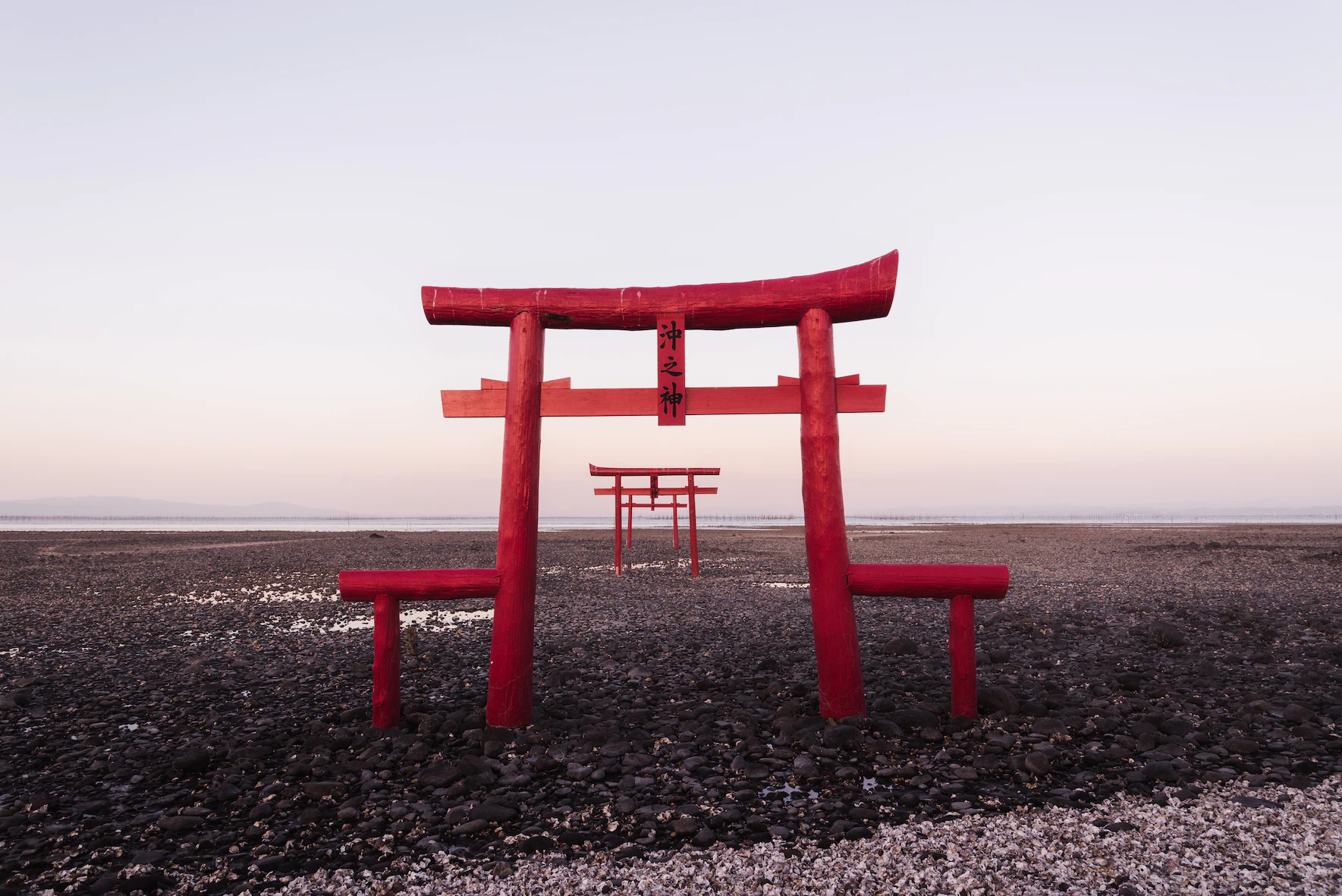
Saga is the quiet prefecture wedged between Fukuoka and Nagasaki that almost every traveler crosses without stopping. Yet this small corner of northern Kyushu is where Japanese porcelain was born, where some of the country’s gentlest “beauty” hot springs flow, and where one of Japan’s largest ancient settlements has been excavated. It rewards the curious traveler who’s willing to step off the main Kyushu route for a day or two.
Think of Saga as a place for two specific pleasures: handling beautiful ceramics where they’re made, and soaking in waters famous for the skin.
Arita and Imari: Where Japanese Porcelain Began
In the early 1600s, the first porcelain in Japan was fired in Arita, after kaolin clay was discovered nearby. Arita-yaki (Arita ware), exported to Europe through the port of Imari, became prized in the courts and palaces of the West—you’ll find it in European collections to this day.
Arita today is a working porcelain town: hillside kilns, galleries, and shops where you can watch the craft and buy pieces directly from makers. The Kyushu Ceramic Museum traces the 400-year history. For anyone who loves craft, ceramics, or design, this is a genuine pilgrimage—and a chance to buy something with real provenance.
Ureshino and Takeo: The Beauty Hot Springs
Saga has two of Kyushu’s best-loved onsen towns:
- Ureshino Onsen is famous as a bihada-no-yu (“beautiful skin hot spring”): its silky, alkaline water leaves skin noticeably smooth. Pair a soak with the local Ureshino tea and onsen-yudofu (tofu simmered in the hot-spring water).
- Takeo Onsen has welcomed bathers for over a thousand years, marked by a striking vermilion gate. It’s also home to the photogenic Takeo City Library, a beautifully designed modern library-bookshop, and a 3,000-year-old sacred camphor tree.
History and the Sky
- Yoshinogari Historical Park—one of Japan’s largest reconstructed Yayoi-period settlements (over 1,700 years old), with watchtowers, moats, and pit dwellings that bring the dawn of Japanese civilization to life. Excellent for families and history lovers.
- Saga International Balloon Fiesta—every autumn, the skies fill with color at the largest hot-air balloon competition in Asia, drawing pilots from around the world. If you’re in Kyushu in late autumn, it’s worth timing.
- Karatsu Castle—an elegant hilltop castle overlooking the sea, lovely in cherry blossom season, and home to the spectacular autumn Karatsu Kunchi festival.
Eat This
- Saga beef (Saga-gyu)—one of Japan’s finest, lesser-known wagyu brands; arguably better value here than the famous names.
- Yobuko squid—served so fresh it’s still translucent, a coastal delicacy.
- Ureshino tea and onsen yudofu—the classic hot-spring-town pairing.
Local Tips Most Visitors Miss
- Detour off the Fukuoka–Nagasaki route—Saga sits right between them and is easy to slot in for a day.
- Buy ceramics at the source in Arita—and visit during the late-April/early-May Arita Ceramics Fair if you can, when the whole town becomes a market.
- Ureshino for skin, Takeo for the library and gate—pick based on your mood, or do both.
- Time the Balloon Fiesta (late autumn) if you’re in Kyushu then.
- Saga beef is the sleeper food pick—seek it out.
Practical Info
| Item | Detail |
|---|---|
| Access | Between Fukuoka and Nagasaki by train; Saga and Takeo on the Kyushu rail network |
| Don’t miss | Arita porcelain town, Ureshino & Takeo onsen, Yoshinogari Park |
| Eat | Saga beef, Yobuko squid, Ureshino tea, onsen yudofu |
| Best time | Spring (ceramics fair, blossoms), late autumn (balloon fiesta) |
| Getting around | Rental car helps for Arita and the onsen towns |
Saga is the Kyushu prefecture that hides between the famous ones—the birthplace of Japanese porcelain, two of the region’s gentlest hot springs, and an ancient settlement most visitors never hear of. Step off the main line, buy a piece of Arita ware, and soak your skin smooth; Saga keeps its rewards for those who stop.