Saitama is the prefecture directly north of Tokyo, and Tokyoites have a faintly affectionate, faintly teasing relationship with it—the bedroom suburb, the place people commute from. But that reputation hides a useful truth for travelers: some of the easiest, least touristy day trips from Tokyo are right here. You can be walking a perfectly preserved Edo-period merchant street, or floating down a river gorge, within an hour of Ikebukuro.
If your Tokyo days are full and you want one half-day that feels like old Japan without the Kyoto crowds or the Shinkansen fare, Saitama is the answer most guidebooks overlook.
Kawagoe: “Little Edo,” 30 Minutes from Tokyo
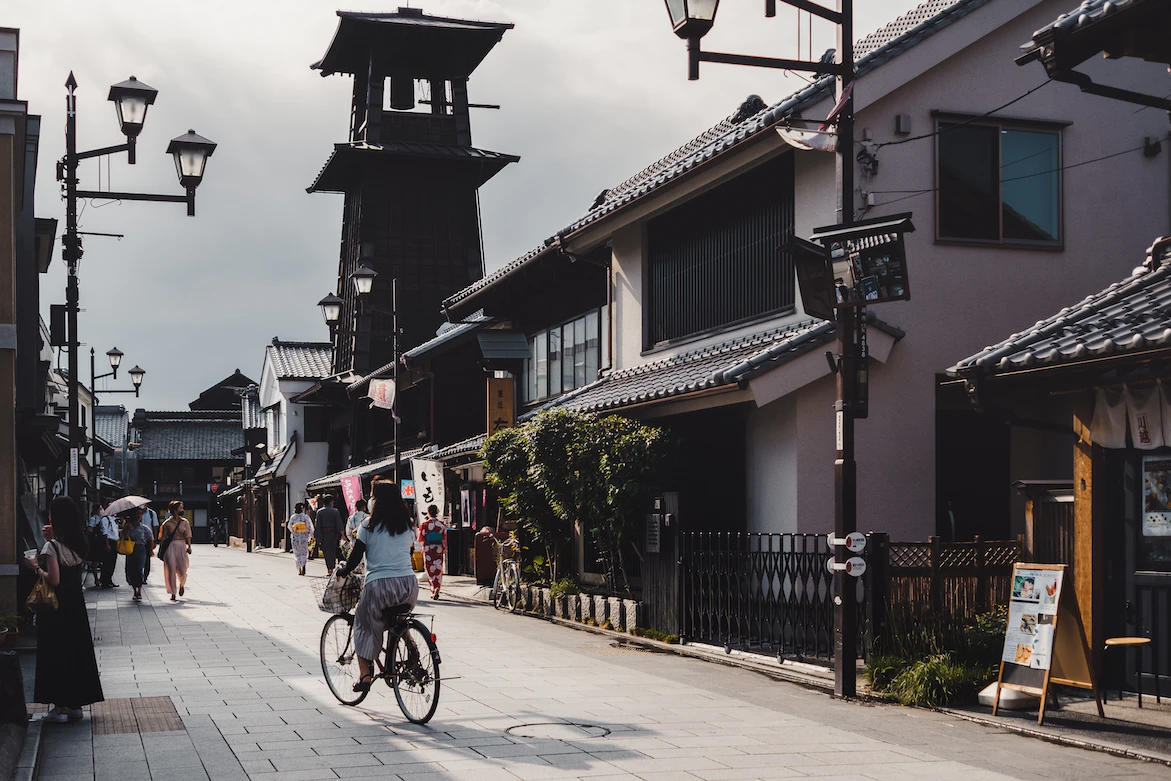
The headline destination is Kawagoe, nicknamed “Koedo” (Little Edo) for streets that survived where Tokyo’s own Edo-era cityscape was erased by fire, earthquake, and war. Walking Kurazukuri Street, lined with dark clay-walled kura warehouses now housing shops and cafés, is the closest you’ll get to the look of old Tokyo—in Tokyo’s own backyard.
Don’t miss:
- Toki no Kane, the wooden bell tower that has marked the hours for over 350 years—Kawagoe’s symbol.
- Kashiya Yokocho (Candy Alley), a lane of nostalgic Japanese sweet shops.
- Kawagoe Hikawa Shrine, famous for summer wind-chime displays and matchmaking blessings.
The local food obsession is sweet potato—try it as ice cream, chips, and cakes throughout the old town. Rent a kimono for the day and the whole place becomes a film set.
The Railway Museum: Better Than It Sounds
In Omiya, the Railway Museum is one of Japan’s best, and not only for train fans. You can board real locomotives, classic carriages, and retired Shinkansen, try driving simulators, and trace the history of the railways that built modern Japan. For families, it’s a reliable, weatherproof half-day with full English signage. Allow two to three hours.
Nagatoro and Chichibu: The Wild Side
West Saitama turns mountainous and is where locals go for nature:
- Nagatoro—sometimes called the “Rhine of Japan,” a river valley where you ride traditional wooden boats down the Arakawa River between dramatic rock terraces (the Iwadatami). Cherry blossoms in spring, fiery foliage in autumn, whitewater rafting in summer.
- Chichibu—a mountain town centered on Chichibu Shrine, with its intricate carvings. Its Night Festival (December 2–3) is one of Japan’s three great float festivals and a UNESCO Intangible Cultural Heritage—giant illuminated floats, fireworks in winter air, and huge crowds.
Eat This
- Sweet potato everything in Kawagoe—the local specialty in every form.
- Saitama udon—the prefecture is a major wheat region with several distinct local udon styles.
- Miso potatoes (misopotato)—a Chichibu-area snack of fried potato in sweet miso.
Local Tips Most Visitors Miss
- Kawagoe is a half-day, not a full one—pair it with central Tokyo rather than building a whole day around it.
- Go on a weekday to enjoy Kurazukuri Street without the weekend crush.
- Book Chichibu accommodation far ahead if you’re visiting for the December Night Festival—it sells out.
- Use an IC card (Suica/Pasmo)—every line into Saitama takes it; Kawagoe is direct from Ikebukuro or Shinjuku.
- Combine Nagatoro and Chichibu into one nature day; they’re on the same rail line west.
Practical Info
| Item | Detail |
|---|---|
| Access | Kawagoe ~30 min from Ikebukuro/Shinjuku; Omiya ~25 min from Tokyo; Chichibu ~80 min from Ikebukuro |
| Don’t miss | Kawagoe old town, Railway Museum, Nagatoro river boats, Chichibu Night Festival (Dec 2–3) |
| Eat | Kawagoe sweet potato, Saitama udon, Chichibu miso potatoes |
| Best time | Spring and autumn; December for the Chichibu festival |
| Tip | Best as a half-day add-on to a Tokyo trip |
Saitama is the day trip hiding in Tokyo’s shadow. No bullet train, no crowds, no special planning—just a short ride to preserved Edo streets, a river gorge, and one of the country’s great winter festivals. Sometimes old Japan is closer than you think.