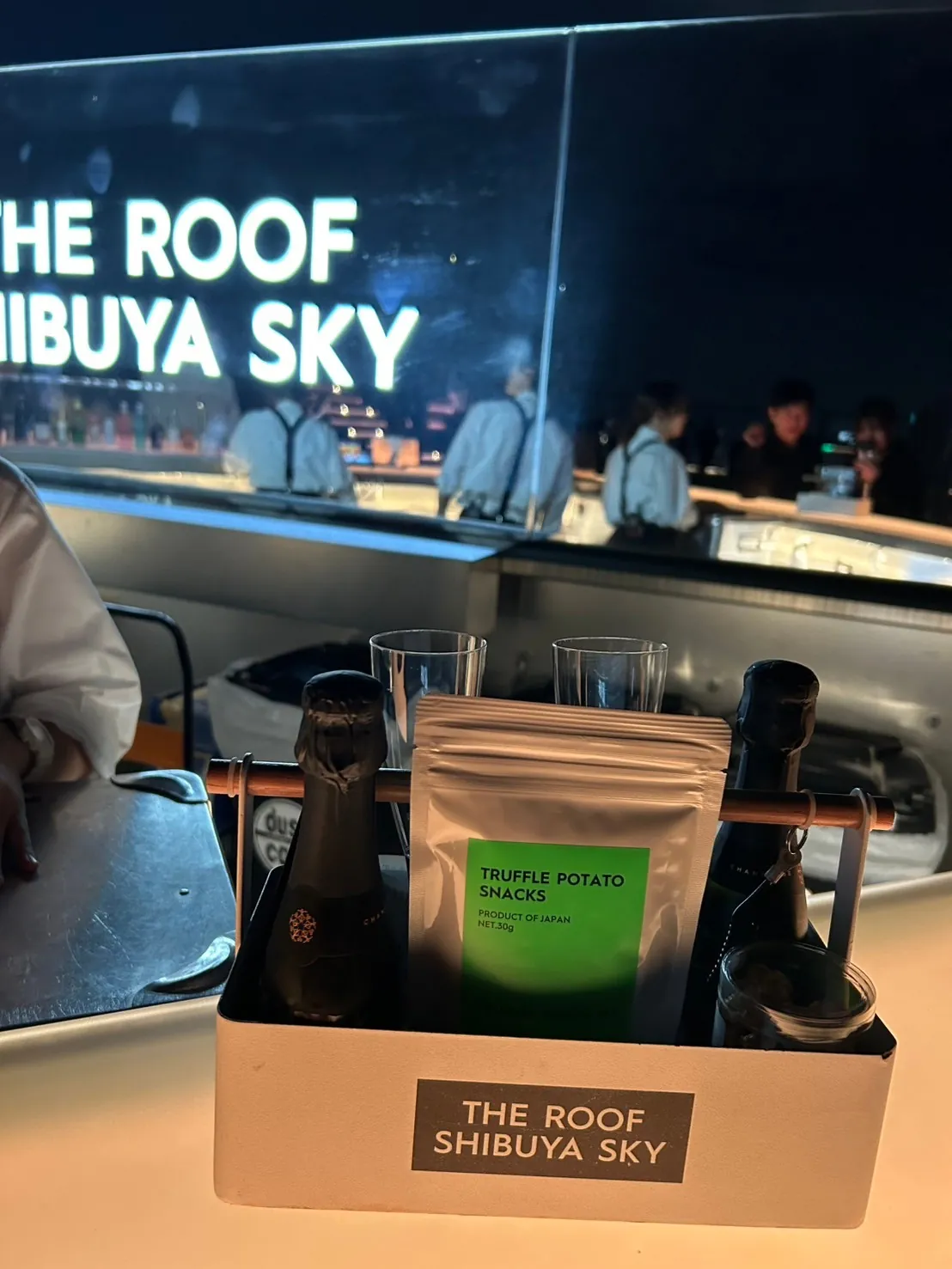
Tokyo has a competitive observation deck market. The Skytree at 634 meters. Tokyo Tower at 333 meters. The Metropolitan Government Building observation floors at 202 meters—and free. What Shibuya Sky offers at 229 meters is not a height competition. It is a specific thing that none of the others can offer: standing directly above the Shibuya Scramble Crossing, on a completely open-air platform, watching 3,000 people cross below you every 90 seconds.
Most Tokyo observation decks are enclosed glass boxes. You look through the city. Shibuya Sky puts you inside the wind at 229 meters with nothing between you and the view except a chest-high transparent railing.
What Shibuya Sky Actually Is
Shibuya Scramble Square is a 47-story skyscraper that opened in November 2019, the first major building completed as part of Shibuya’s decade-long redevelopment project. Shibuya Sky occupies the top three floors: the Sky Gallery on the 45th and 46th floors (indoor exhibition space and lounges) and the Sky Stage—the open-air rooftop—at the very top.
The Sky Stage is the main event. An uncovered outdoor platform, ringed by a chest-height transparent acrylic railing, roughly the footprint of a large apartment block. Wind is a constant presence. In winter, this means cold. In summer, it means relief from the heat below.
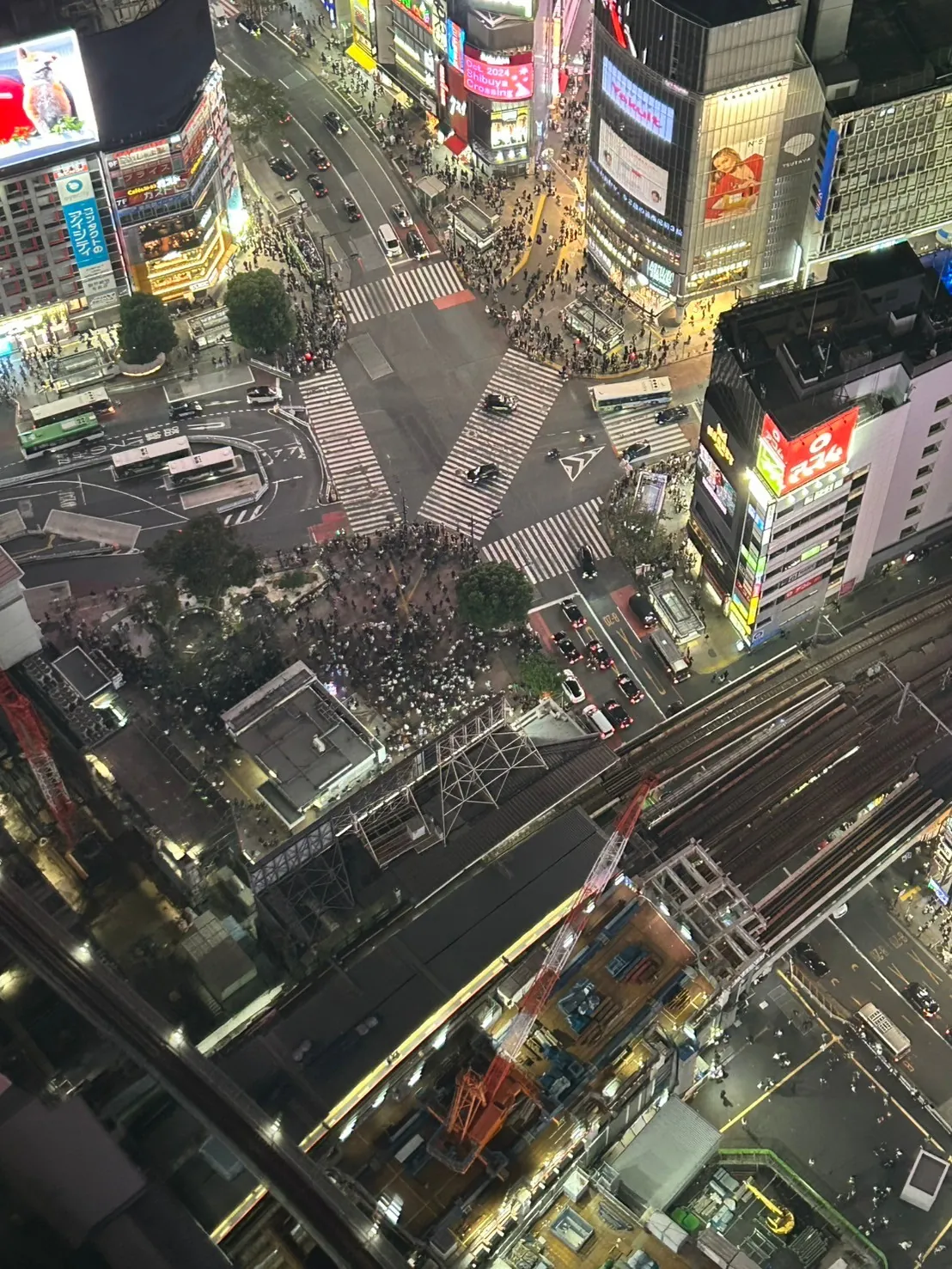
The Scramble Crossing directly below is not immediately recognizable as the same intersection you stood in from street level. From 229 meters, it becomes geometry—the radiating pedestrian streams visible as pattern rather than as crowd. The 90-second crossing cycle, invisible to participants, becomes the organizing rhythm of the entire view: the intersection fills, clears, fills again. You understand for the first time how the system works.
The View: What to Look For
Below: The Scramble Crossing is directly south of the building. At peak hours (roughly 4–8 PM on weekdays, earlier on weekends), crossing cycles carry up to 3,000 people per light change. The flow is self-organized—no marshals, no painted lanes—and from this altitude the absence of direction becomes visible as grace.
West: On clear days—typically in winter after cold fronts have swept the atmosphere clean—Mount Fuji is visible on the western horizon approximately 95 kilometers away. The mountain is not dramatic at this distance; it is a low, perfectly symmetrical cone sitting above the Shinjuku tower cluster. Its presence registers as confirmation rather than spectacle, which is closer to how Japanese people have related to the mountain for centuries.
North: Shinjuku’s high-rise concentration provides the northward visual anchor. The Tokyo Metropolitan Government Building, the Park Hyatt tower, the cluster around Nishi-Shinjuku form the most recognizable skyline segment from this position. At sunset, they catch light before the rest of the city.
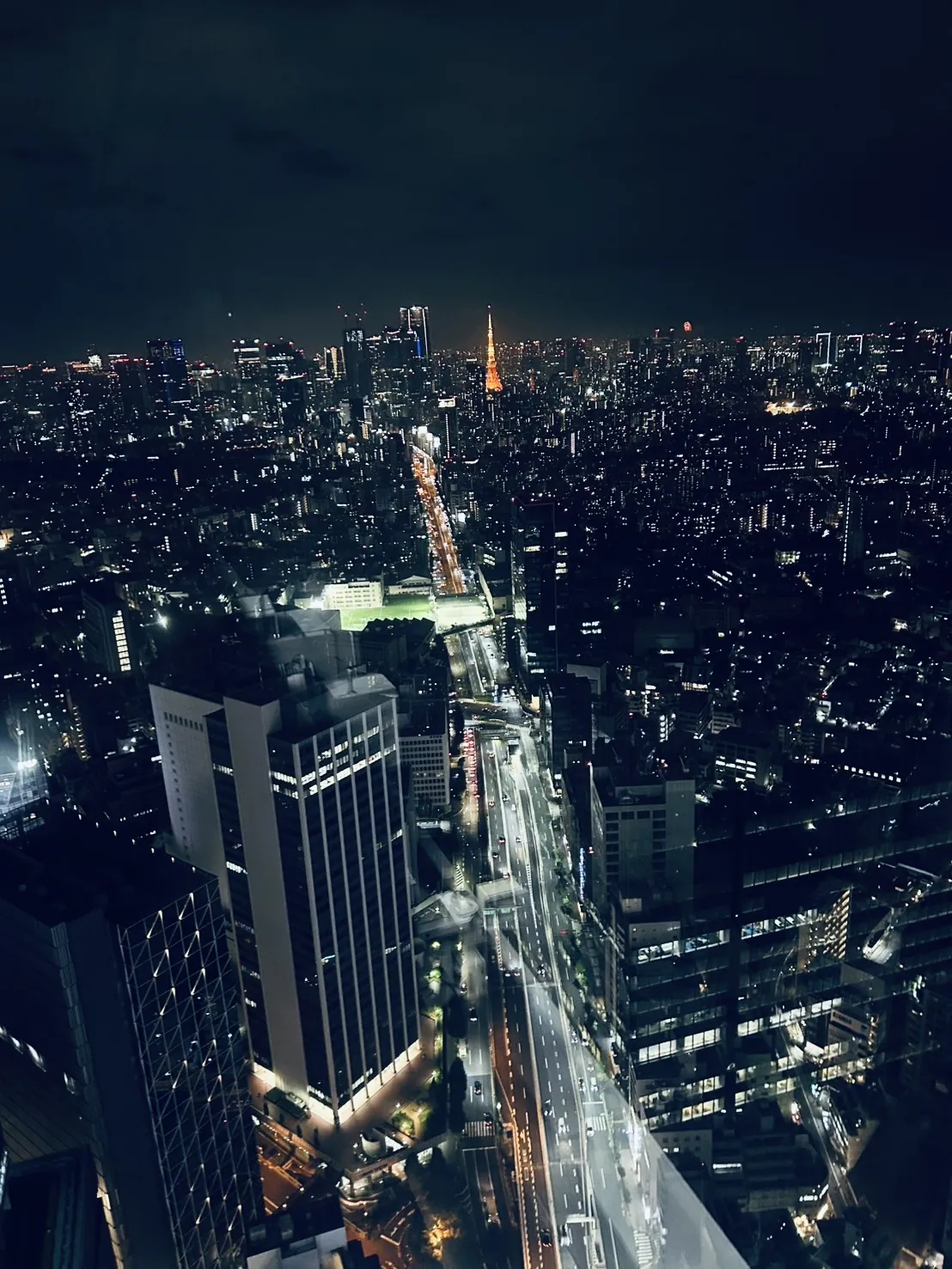
Night: Tokyo at night from 229 meters retains a human scale that the Skytree at 634 meters dissolves. You can still identify neighborhoods—the warm neon core of Shibuya and Shinjuku, the darker residential spread beyond, the distant thread of the Tama River. It is the city as an intelligible place rather than an abstract light field.
Timing: The Sunset Window
The most sought-after visit window is the sunset-to-dusk transition: approximately 30 minutes before to 45 minutes after sunset. This is when the sky color and the city illumination are simultaneously active—daylight still giving the view depth and color while the neon and street lighting intensify.
Sunset timing varies significantly through the year:
- Winter (December–February): Sunset around 4:30–5:00 PM. Cold and clear conditions make this the most consistently photogenic season. Mount Fuji views peak in January and February. Book the 4:00 PM entry slot.
- Spring (March–May): Sunset 5:30–6:30 PM and moving later. Atmospheric haze increases in April and May, reducing Fuji visibility, but city color at golden hour is warm and clear.
- Summer (June–August): Sunset 6:30–7:00 PM. The open-air platform is genuinely comfortable in summer evenings when the city heat below has begun to lift. The sky at summer sunset stays colorful longer than in winter.
- Autumn (September–November): Sunset 5:00–6:00 PM and moving earlier. October and November produce some of the clearest air of the year; Fuji visibility returns. Strongly recommended season for first visits.
One practical note: the Sky Stage closes temporarily during strong winds. Shibuya is an exposed site at 229 meters, and the open-air platform has a wind closure threshold. Check the Shibuya Sky website for wind closure notices on the day of your visit—closures are announced the morning of.
Tickets: Book in Advance
The sunset windows sell out weeks ahead on weekends and public holidays. This is not a venue you can reliably walk up to at 5 PM on a Saturday and enter.
Pricing:
- Adults (18+): ¥2,000
- University students: ¥1,600 (student ID required)
- Junior high and high school: ¥1,200
- Children (4 and older): ¥900
- Children under 4: free
Booking: The official Shibuya Scramble Square website sells timed-entry tickets up to 30 days in advance. This is the correct booking channel—third-party sites exist but charge markup fees. Entry is managed in 30-minute windows; arrival within your window is required.
Same-day purchase: Available at the 14F ticketing counter when slots remain unsold. Sunset windows are typically exhausted by early afternoon on weekends. Midday and morning slots are more reliably available same-day.
The Rules: What They Mean in Practice
All loose items must be secured before ascending to the Sky Stage. Bags, tripods, hats, and scarves go into coin lockers available on the indoor floors. This requirement is not excessive caution—objects dropped or blown from 229 meters reach the street at high velocity. The wind at rooftop level is significantly stronger than at street level and can take possession of a hat or an unsecured phone faster than the reflex to grab it.
Cameras and phones are unrestricted on the roof. Selfie sticks are not permitted (they extend beyond the safety perimeter). Full-size tripods are prohibited, but compact alternatives—gorillapods, small camera stands—are acceptable.
Dress for wind and temperature differential. The Sky Stage is reliably 5–8°C colder than street level in winter; the wind effect compounds this. A layer you did not need on the street below will be necessary on the roof. This is the most common complaint from first-time visitors who did not plan for it.
After the Descent: The Neighborhood Below
The Scramble Square building’s lower floors and the surrounding blocks are worth an hour after the observation deck.
Nonbei Yokocho (Drunkard’s Alley), two minutes’ walk behind the train tracks, is approximately 40 tiny bars in a single narrow lane—some operating since the 1940s, technically illegal by current fire codes but protected as historical atmosphere. The contrast between standing above the crossing at 229 meters and sitting elbow-to-elbow with a salaryman who has been coming to the same stool for thirty years is a specifically Tokyo experience.
The Scramble Square building’s floors below the observation deck contain retail and food options ranging from the predictable to the locally sourced. The basement food hall, accessed from B1 and B2, is the more interesting option.
Practical Information
- Location: Shibuya Scramble Square, Shibuya 2-24-12; direct connection from Shibuya Station (JR, Tokyu, Tokyo Metro exits)
- Ticketing: 14F counter on arrival; advance booking via official website strongly recommended for sunset slots
- Hours: 10:00 AM – 10:30 PM daily (last entry 10:00 PM); Sky Stage subject to wind closures
- Admission: ¥2,000 adults; ¥900 children (4 and older)
- Best timing: Sunset window in winter (November–February) for Fuji views and clear air; any clear evening year-round for city views
- Access: Shibuya Station east exit; 2-minute walk via the second-floor pedestrian bridge connecting the station to Scramble Square
The Skytree is taller. Tokyo Tower is older. The Metropolitan Government Building is free. Shibuya Sky is the one where the wind is real and the city moves below you as a live thing, not a diagram. That specificity—an open roof above the world’s busiest crossing—is what the other decks cannot replicate.