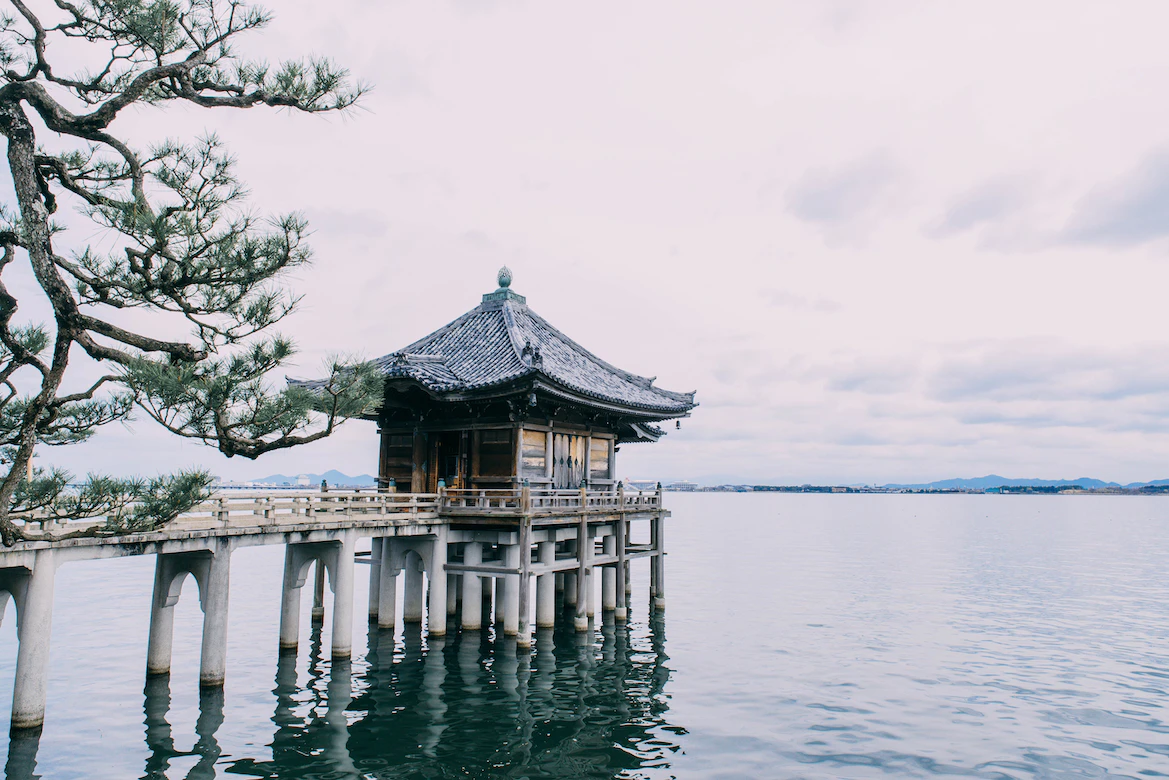
Shiga has the bad luck and good fortune of sitting right next to Kyoto. Bad luck, because almost everyone heading to Kansai stops in Kyoto and never crosses the small mountain range into Shiga. Good fortune, because that means this prefecture—built around Lake Biwa, Japan’s largest lake—stays calm and uncrowded while offering an original castle, a world-altering mountain monastery, and wide-open water scenery, all a short train ride from the Kyoto crowds.
For travelers who’ve “done” Kyoto and want something quieter and more genuine without going far, Shiga is the obvious, overlooked answer.
Lake Biwa: The Heart of the Prefecture
Lake Biwa is so large it essentially is Shiga—a vast freshwater sea that has shaped the region’s life, food, and culture for centuries, and historically supplied water and transport to Kyoto and beyond. Its shores offer beaches, cycling paths, lakeside onsen, and birdlife, and its scenery shifts with every season. A lap of the lake by car or bike (the “Biwaichi” cycling route) is a beloved local trip. Simply sitting by the water, with the mountains beyond, is the antidote to Kyoto’s intensity.
Hikone Castle: The Real Thing
Hikone Castle is one of only twelve original castles left in Japan—structures that survived from the feudal era rather than postwar concrete reconstructions—and it’s designated a National Treasure. Built in the early 1600s, its elegant keep, gardens, and surrounding moats are the real thing, and the views over Lake Biwa from the top are superb. In spring, cherry blossoms fill the grounds. It’s one of the best places in Kansai to experience an authentic samurai-era castle without Himeji’s crowds.
Enryakuji and Otsu: Spiritual Power Above the Lake
- Enryakuji, atop Mount Hiei on the Kyoto–Shiga border, is the headquarters of Tendai Buddhism and a UNESCO World Heritage Site—one of the most historically powerful temples in Japan, set among ancient cedars. For over a thousand years it shaped Japanese religion and politics. The forested complex is serene, especially in autumn, with views down to Lake Biwa, and is easily reached from Kyoto by cable car.
- Otsu, the capital, sits at the lake’s southern tip and holds Ishiyama-dera, an ancient temple where (by tradition) Murasaki Shikibu began writing The Tale of Genji, the world’s first novel.
Eat This
- Omi beef (Omi-gyu)—one of Japan’s three oldest and most prestigious wagyu brands, raised here for centuries; a quieter, often better-value alternative to the famous names.
- Funazushi—an ancient, intensely fermented lake-fish sushi; the original ancestor of modern sushi and very much an acquired taste, but a genuine piece of culinary history.
- Lake Biwa fish—small freshwater fish and shellfish prepared in local home-style dishes.
Local Tips Most Visitors Miss
- Use Shiga as a Kyoto day trip—Otsu and the lake’s south shore are barely 10–15 minutes from Kyoto Station.
- Hikone Castle over Himeji if you want an original castle without the crowds (though both are worth it).
- Enryakuji is reachable from the Kyoto side via the Eizan cable car—an easy half-day with big historical payoff.
- Try Omi beef—it’s a sleeper among Japan’s top wagyu and easier to enjoy here at the source.
- Cyclists: the Biwaichi lake loop is a bucket-list ride; rentals are available around the shore.
Practical Info
| Item | Detail |
|---|---|
| Access | Otsu ~10 min from Kyoto Station; Hikone ~50 min; Mt. Hiei by cable car |
| Don’t miss | Lake Biwa, Hikone Castle, Enryakuji on Mt. Hiei, Ishiyama-dera |
| Eat | Omi beef, funazushi, Lake Biwa freshwater fish |
| Best time | Spring (castle blossoms), autumn (Mt. Hiei foliage), summer (lake activities) |
| Tip | Ideal quiet day trip from Kyoto |
Shiga is Kyoto’s quiet neighbor—a giant lake, a genuine original castle, and a thousand-year-old mountain monastery, all minutes from the crowds yet a world away from them. Cross the hills the day-trippers don’t, and Kansai opens up again.