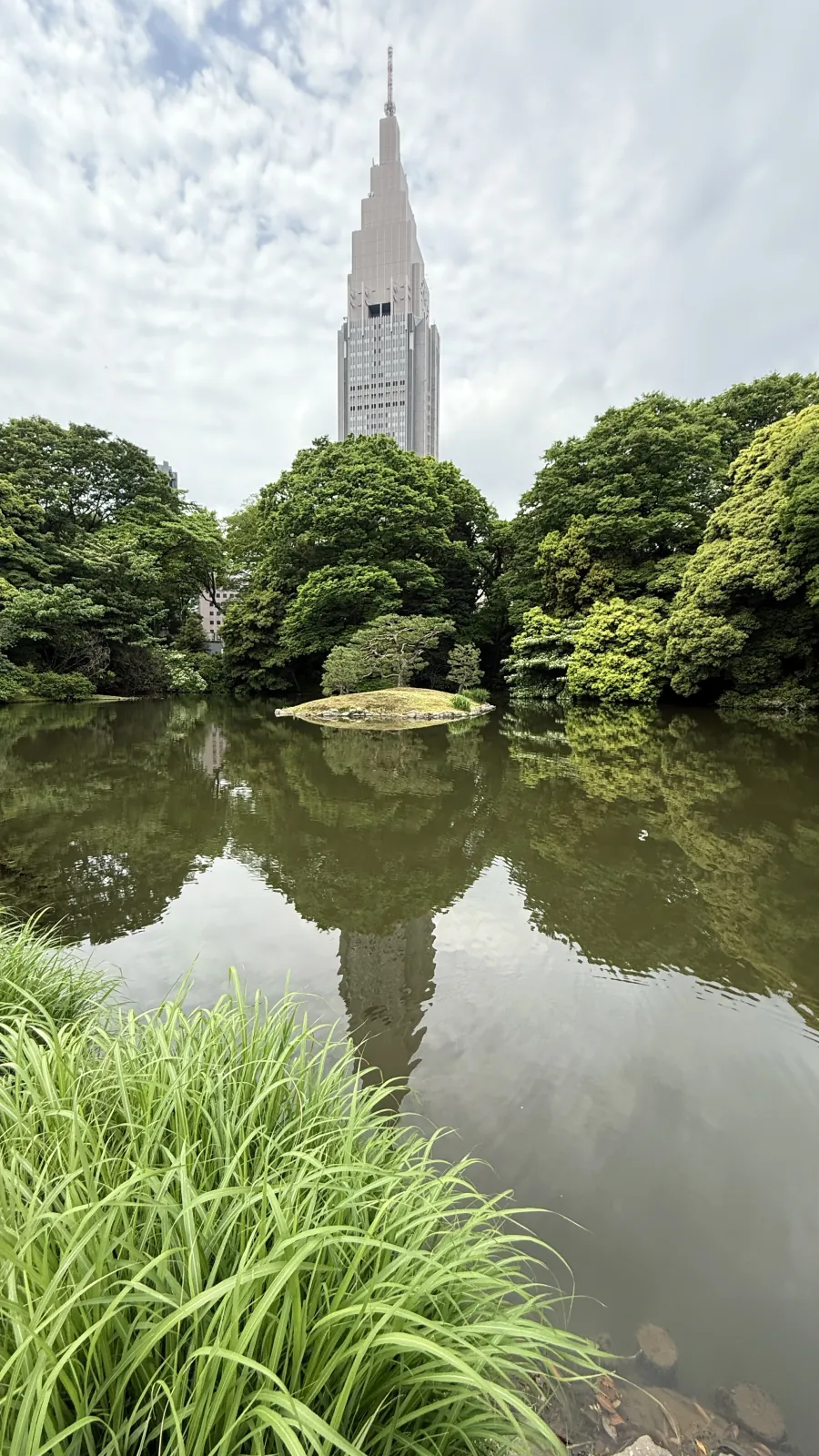
A short walk from Shinjuku—the busiest train station in the world, moving more than three million people a day—there is a gate, and behind that gate the noise simply stops. Shinjuku Gyoen is 58 hectares of deliberate calm pressed against the loudest part of Tokyo. I have used this garden for over twenty years the way Tokyo residents actually use it: not as a sightseeing checkbox, but as a pressure valve.
That is the right way to understand it. Shinjuku Gyoen is not a place you “see.” It is a place you slow down inside of.
Why This Garden Is Different from Tokyo’s Other Parks
Tokyo has many parks. Yoyogi is for crowds and buskers; Ueno is a cultural campus. Shinjuku Gyoen is the one designed for quiet, and it enforces that design.
It began as the estate of the Naito family, feudal lords of the Edo period, became an imperial garden completed in 1906, and opened to the public after the war. That imperial pedigree is why it feels different the moment you enter: the scale is generous, the planting is intentional, and—crucially—alcohol is banned and sports and games are discouraged. The result is a park that stays serene even on its busiest days. People come here to read, to nap, to walk slowly. The garden quietly trains you to do the same.
Three Gardens, Three Moods
What makes Gyoen unusual is that it holds three completely different garden philosophies in one space, and walking between them is the actual experience.
The Japanese Traditional Garden
This is the heart of the place and where you should spend most of your time. Ponds, stone-lined paths, arched bridges, a wooden teahouse (Rakuu-tei), and Japanese maples that turn fierce red in late autumn. Japanese garden design is about borrowed scenery and controlled reveals—you are never meant to see everything at once. Walk it slowly and let each turn open a new composition. This is the section that rewards patience.
The Landscape (English) Garden
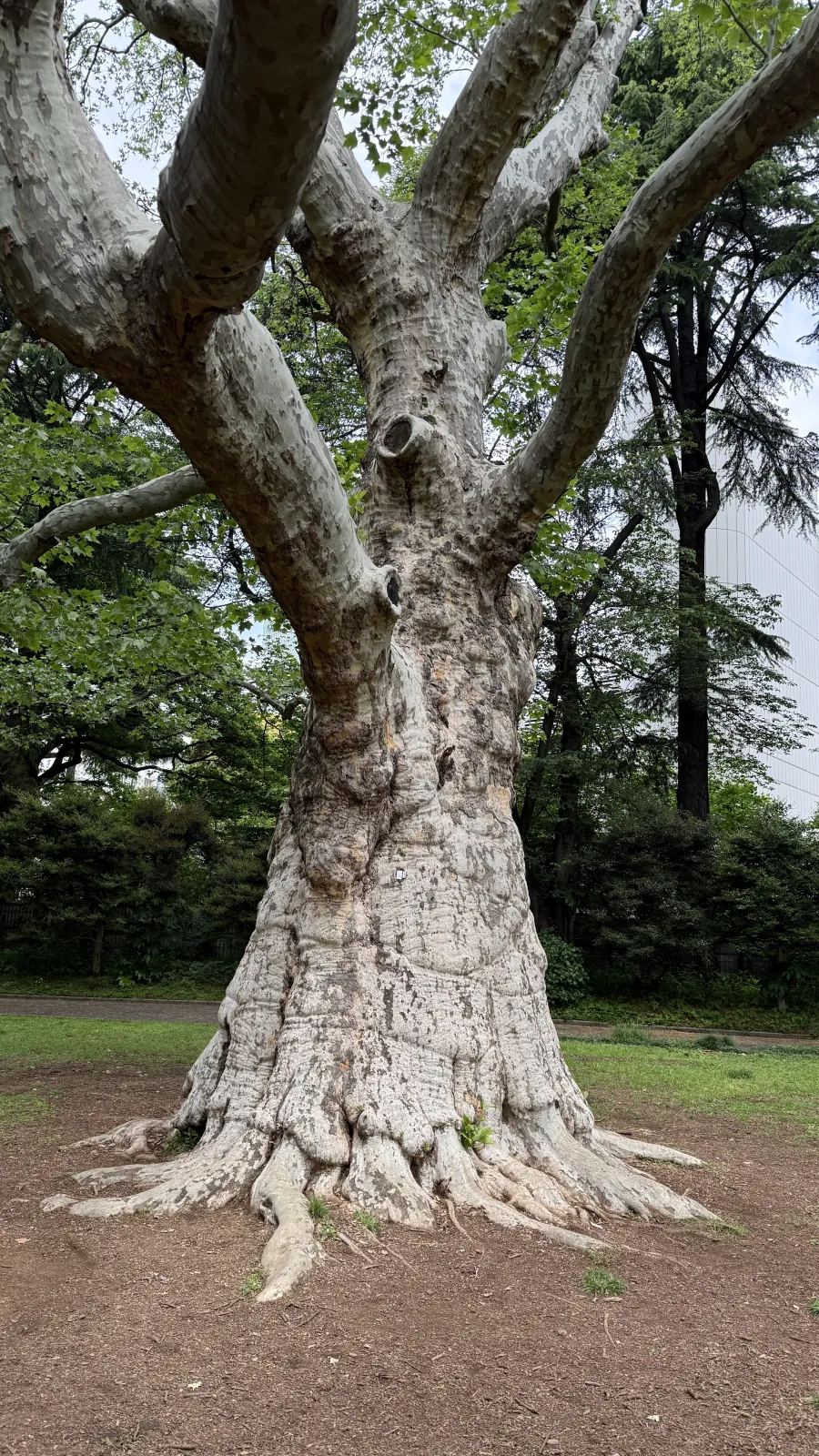
Wide open lawns and enormous, isolated trees—designed in the English style for exactly one purpose: lying down. This is where Tokyoites spread a mat, eat a convenience-store lunch, and do nothing for an hour. Even in peak cherry blossom season, the lawn is big enough that you can find your own patch of quiet.
The Formal (French) Garden
Symmetrical rows of plane trees and a rectangular rose garden, modeled on French formal design. It is the most “ornamental” section and best in late spring and autumn when the roses bloom. Pleasant, but if you are short on time, prioritize the Japanese garden over this one.
The Cherry Blossom Truth Most Guides Skip
Shinjuku Gyoen is one of the best hanami (cherry blossom) spots in Tokyo, and here is the local reason why: it has over a thousand cherry trees across roughly a dozen varieties, which means the bloom is staggered. While most of Tokyo’s cherry blossoms come and go in a frantic single week, Gyoen’s later-blooming varieties extend the season well into mid- and late April. If you mistime the famous early bloom elsewhere, this is your insurance.
The catch: during peak bloom the garden requires advance online reservations and sells timed-entry tickets. Do not show up on a sunny early-April weekend expecting to walk in. Book ahead, go on a weekday, and arrive at opening (9 AM) for the version of the garden that feels almost private.
Local Tips Most Visitors Miss
- Go on a weekday morning. The difference between a Tuesday at 9 AM and a Saturday at 1 PM is the difference between meditation and a theme park queue.
- Enter from Sendagaya Gate, not Shinjuku. The Shinjuku (Shinjuku-gyoemmae) gate is the busiest. The Sendagaya gate, near the JR Sobu Line, is calmer and puts you near the traditional garden first.
- The greenhouse is the rainy-day move. A large tropical greenhouse near the center stays beautiful and warm regardless of weather.
- Bring your own food, leave the alcohol. Picnics are welcome; alcohol is not, and bag checks are real. There is also a quiet café if you’d rather not carry anything.
- Autumn rivals spring. November’s maples and the annual chrysanthemum display draw far smaller crowds than cherry season but are just as beautiful.
Practical Info
| Item | Detail |
|---|---|
| Access | 5-min walk from Shinjuku-gyoemmae Station (Marunouchi Line); or Sendagaya Gate near JR Sendagaya Station |
| Hours | 9:00 AM–4:30 / 6:00 / 7:00 PM depending on season (last entry 30 min before close) |
| Closed | Mondays (next weekday if Monday is a holiday); Dec 29–Jan 3 |
| Admission | Adults ¥500; students & seniors ¥250; children free |
| Best time to visit | Weekday mornings; late March–mid April (cherry), November (maples) |
| Note | Timed online reservation required during peak cherry blossom season |
Shinjuku Gyoen is Tokyo’s quiet apology for being so loud everywhere else. Most visitors rush it in forty minutes between Shinjuku errands. Give it two unhurried hours instead—lie on the English lawn, walk the Japanese garden twice, and let the city’s volume drain out of you. That is what the garden was built for, and it still does the job.