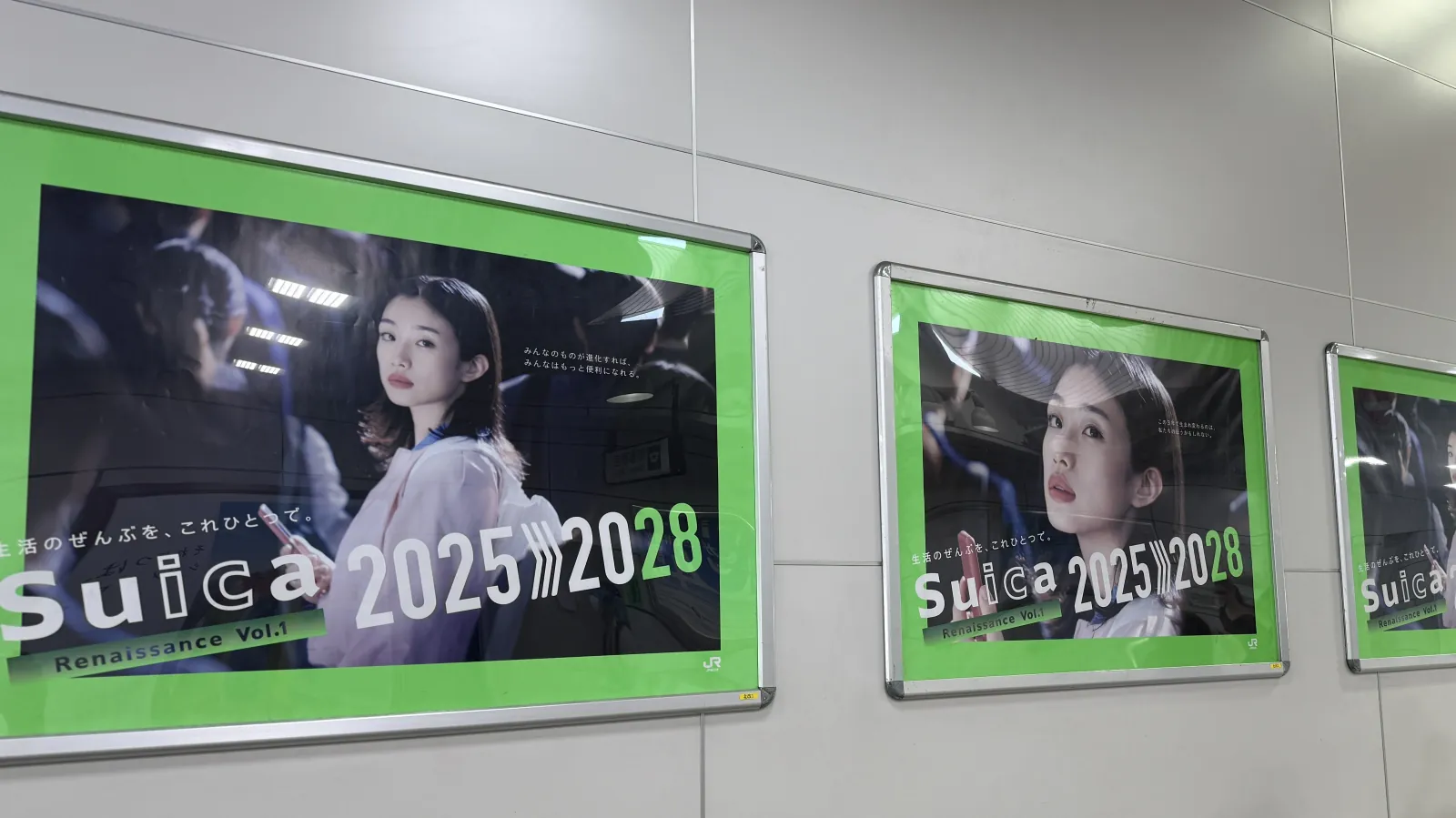
Before you board your first train in Japan, you will need to make one small decision that affects every subsequent journey: which IC card to get, and in what form. Make this decision correctly at the start and it disappears into the background of your trip entirely. Make it incorrectly and you will be standing at a ticket machine with a queue behind you, calculating fares in a language you do not read.
This guide covers what IC cards are, which one to choose depending on your situation, how to set up the mobile version on your phone, and what the current limitations are for foreign visitors—as of 2026.
What IC Cards Are and Why You Need One
An IC card (Integrated Circuit card) is a rechargeable contactless payment card that serves as both a transit pass and a small-purchase payment method across Japan. You load yen onto it in advance and tap in and out at train and subway gates; the fare is deducted automatically. No ticket calculation, no fare machines mid-journey.
The same card works at vending machines, convenience stores (konbini), coin lockers, some taxis, and—increasingly—small restaurants and cafés. In Tokyo you will use it for virtually every transport move you make.
Suica is issued by JR East and works across Tokyo’s JR lines and most private railways and subways. PASMO is issued by the Tokyo metro consortium and is functionally identical to Suica in terms of where it is accepted. For practical purposes, either card works everywhere in the Tokyo metropolitan area. The choice between them is irrelevant to functionality.
Both cards are accepted on most major rail networks nationwide: Osaka’s subway, Kyoto buses, Hiroshima trams, Fukuoka metro, and the Shinkansen for in-station purchases (though not for Shinkansen ticket fares themselves, which require a separate booking).
Which Card to Get: Three Scenarios
Scenario 1: Visit Under 28 Days — Welcome Suica
Since 2019, JR East has issued Welcome Suica, a Suica variant specifically designed for foreign tourists. Key differences from the standard Suica:
- No deposit required (standard Suica requires a ¥500 refundable deposit)
- Valid for 28 days from first use—after which the remaining balance is forfeited and the card cannot be recharged
- Available at: Narita Airport (Terminal 1, 2, and 3 JR ticket offices), Haneda Airport (JR ticket office), and Tokyo Station Suica machine
- Initial load: Choose from ¥1,000, ¥2,000, ¥3,000, ¥4,000, or ¥5,000
Welcome Suica is the straightforward choice for tourists on a standard short visit. The tradeoffs are the 28-day expiry (unused balance cannot be refunded) and limited availability locations. If you arrive late at night and the ticket offices are closed, you will need a standard Suica or PASMO from a machine instead.
Scenario 2: Longer Stay or Repeat Visitor — Standard Suica or PASMO
Standard Suica and PASMO have no expiry, carry a ¥500 refundable deposit, and can be recharged indefinitely. The ¥500 deposit is returned when you surrender the card at a JR East ticket window or PASMO machine.
Available from ticket machines at any JR or metro station. Select “Suica” or “PASMO” on the machine’s language menu (English is available), insert ¥1,000 minimum for the initial purchase, and the card is immediately operational.
Scenario 3: iPhone or Android — Mobile Suica
Mobile Suica eliminates the physical card entirely. Once set up, your phone functions as an IC card at all gates and terminals—tap with the back of your phone as you would with a physical card.
For iPhone users: Apple Pay supports Suica natively in Wallet. Open Wallet, tap the plus sign, search “Suica,” and follow the setup process. You can load yen onto Mobile Suica using Visa, Mastercard, or American Express cards from overseas—though some foreign-issued cards require a workaround through a Japan-registered app account. Once set up, it works identically to a physical card; the phone does not need to be unlocked or have cellular service active when tapping gates.
For Android users: Google Pay supports Suica through the Suica app (download from Google Play). Setup requires a Google account and a compatible NFC-enabled Android device (most current Android phones qualify). The process is slightly more involved than iPhone but the end result is the same: tap-to-pay at any IC gate. As of 2026, Google Pay Suica accepts most major international Visa and Mastercard cards for recharging.
The advantage of Mobile Suica over physical cards is that you cannot leave it in a hotel room and it cannot be lost. The disadvantage is that a dead phone battery renders it non-functional—carry a portable charger on long travel days.
How to Charge (Reload) Your IC Card
Physical card — at a ticket machine: All JR and metro ticket machines have a “Charge” (Chāji) option on the main screen. Insert the card, select the amount (¥1,000 / ¥2,000 / ¥3,000 / ¥5,000 / ¥10,000), insert cash. Machines do not accept foreign credit cards for charging—cash only at the machine.
Physical card — at a convenience store: Any FamilyMart, Lawson, or 7-Eleven can charge your IC card at the register. Hand the card to the cashier and say the amount you want to add—this is the easiest method if you are already buying something. Convenience stores accept cash and, at most locations, credit cards for IC card top-ups.
Mobile Suica: Recharge directly within the Wallet app (iPhone) or Suica app (Android) using a linked credit or debit card. No cash required.
Maximum balance: ¥20,000. If your card is near the limit, gates will alert you; simply charge before topping up further. The balance is displayed at the gate each time you tap out.
Where IC Cards Are Accepted
Always accepted:
- JR lines across Japan (Yamanote, Chuo, Sobu, Tohoku/Joetsu/Hokuriku Shinkansen in-station kiosks, etc.)
- Tokyo Metro and Toei subway lines
- Most private railways in Tokyo (Keio, Odakyu, Tokyu, Seibu, Tobu, Keikyu, etc.)
- Most major city metros nationwide (Osaka, Kyoto, Nagoya, Fukuoka, Sapporo)
- Highway buses operated by major carriers
- Tokyo and major city airport buses
Generally accepted:
- 7-Eleven, FamilyMart, Lawson, Ministop convenience stores
- Most vending machines
- Coin lockers at major stations
- McDonald’s, major chain restaurants
- Some taxis (look for IC card sticker on the window)
Not accepted:
- Shinkansen boarding tickets (fares must be booked separately through a JR ticket machine, JR Pass, or Shinkansen booking system)
- Some rural bus routes and local private rail lines
- Small independent shops and restaurants without IC terminals
Current Limitations for Foreign Visitors (2026)
Foreign credit cards and charging machines: Station ticket machines in Japan do not accept non-Japanese credit or debit cards for IC card charging. You must use cash at machines. This is the most common point of confusion for foreign visitors. The workaround is either to use Mobile Suica (which accepts foreign cards within the app) or to charge at convenience store registers using a card-accepting terminal.
Welcome Suica balance forfeiture: The balance remaining when the 28-day validity expires is not refundable under any circumstances. Plan your load amount accordingly—for a two-week trip in Tokyo, ¥3,000–¥5,000 is a reasonable starting load for transport; top up as needed.
Regional IC card compatibility: Japan has several regional IC card systems (ICOCA in Kansai, manaca in Nagoya, nimoca in Fukuoka) that are mutually compatible with Suica for most functions. If you are traveling across multiple regions, a Suica or PASMO is the most universally accepted single card to carry.
Suica and PASMO supply constraints: In 2023–2024, a semiconductor shortage caused temporary stock limitations for physical Suica and PASMO cards. As of 2026, supply is normalized, but during peak travel seasons (Golden Week, Obon, New Year) Welcome Suica stock at airports can occasionally run low. Mobile Suica setup is not affected by physical card supply.
Practical First Steps at the Airport
- On arrival at Narita or Haneda, proceed to the JR ticket office before leaving the arrival hall
- If you want Welcome Suica: present your passport (required for the tourist version) and purchase with cash or credit card
- If the office is closed or you prefer Mobile Suica: set up via Apple Pay or Google Pay before your flight—this is the most efficient option for tech-comfortable travelers
- Initial load of ¥2,000 is sufficient to reach central Tokyo from either airport and leave a working balance for the first day
The IC card will become invisible within a day or two: a tap in, a tap out, a tap at the convenience store. That invisibility is the point. Japan’s transit system is designed to produce friction-free movement at scale, and the IC card is the mechanism that makes that possible for everyone using it, including visitors who arrived an hour ago and do not yet know where they are going.