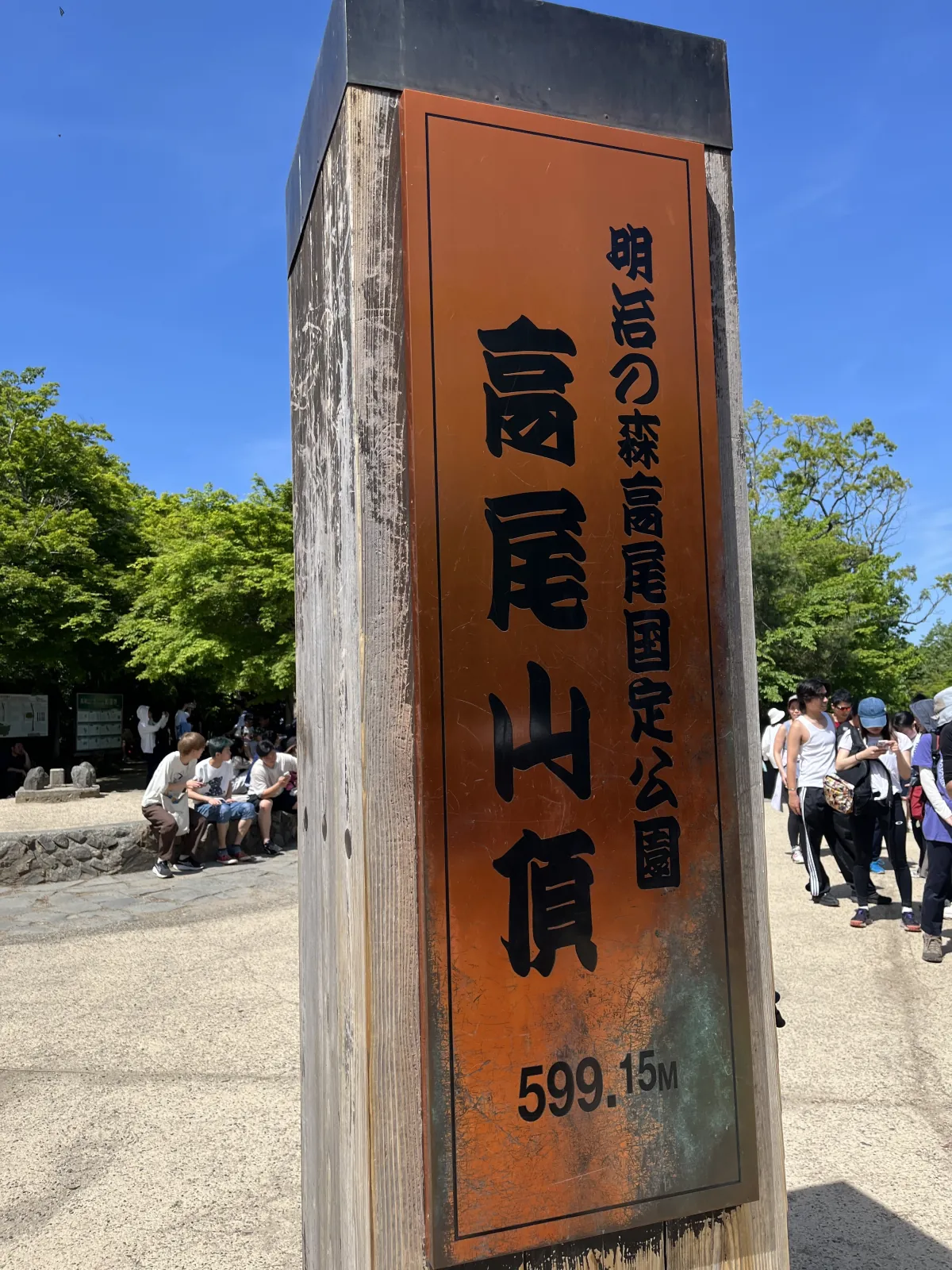
Mount Takao is, by one measure, the most climbed mountain in the world. Approximately 2.5 million people visit each year—more than Mount Fuji, more than Ben Nevis, more than Snowdon. The statistic is initially hard to reconcile with the experience of actually being there, because Takao does not feel like a tourist conveyor belt. It feels like a mountain.
The explanation is that most of those 2.5 million visitors are concentrated on one trail, arriving within a three-hour window, and dispersing to a handful of predictable destinations. Go against the grain in any single dimension—trail choice, timing, day of the week—and you will find yourself with a 599-meter mountain largely to yourself, forty-seven minutes from Shinjuku by express train.
Why Takao Matters: The Mountain Tokyo Kept
The geological fact of Mount Takao—a 599-meter peak in the Tama Hills, 47 kilometers west of central Tokyo—tells you less about the place than the cultural fact of its survival. Tokyo is a city with an instinct for replacing things, and the pressure on the land surrounding it has been continuous since the postwar economic expansion. That Takao has not been developed, quarried, or converted into another suburb of Hachioji is the result of active choices made over several decades.
Part of the protection is attributable to Yakuo-in, the Buddhist temple complex that has occupied the mountain since 744 AD and whose institutional continuity creates obligations around the land that pure commercial logic cannot easily override. Part is the result of the mountain being designated a quasi-national park. Part is simply the cumulative effect of millions of people who have been coming here since childhood and would notice its absence.
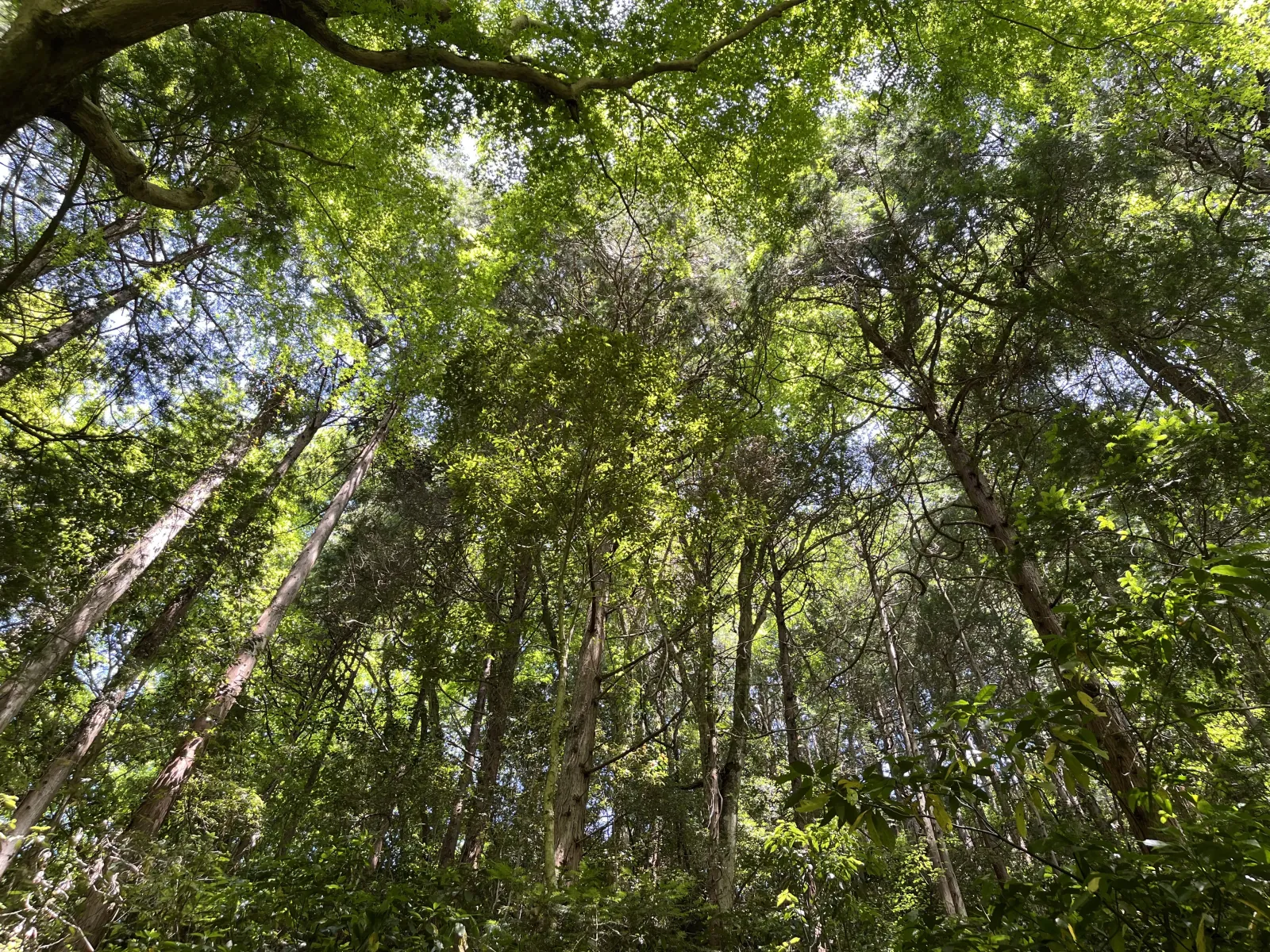
The result is a piece of intact montane forest in the western edge of one of the world’s most densely populated urban areas—a forest with wild boar, over a hundred species of birds, and sections where you can walk for forty minutes without seeing a building or hearing anything louder than water on stone.
Choosing Your Trail: The Six Routes and What They Offer
The mountain has six numbered trails plus the Inariyama ridge route, each with a distinct character. Understanding the differences is the most important logistical decision before arriving.
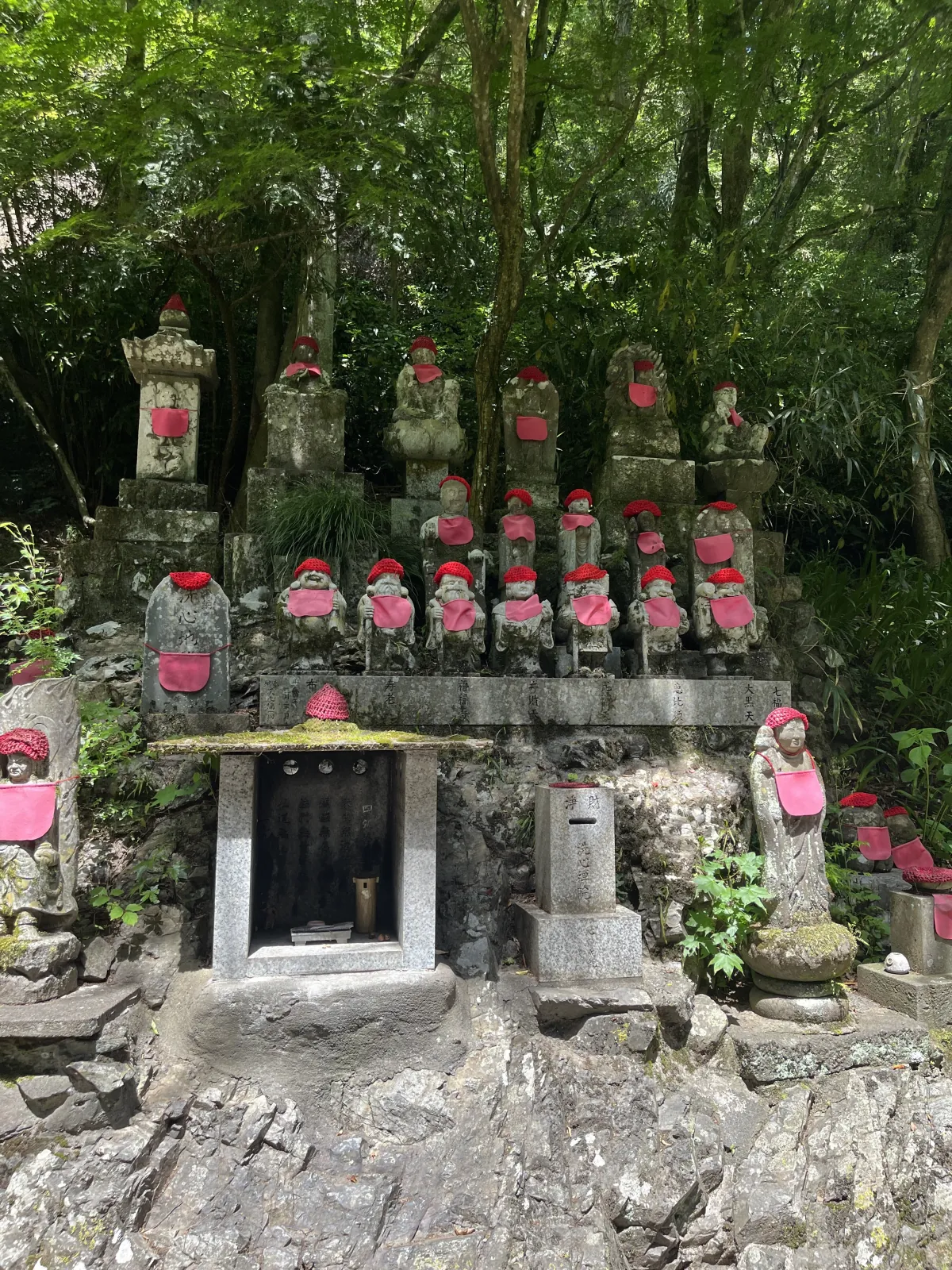
Trail 1 (Omote-sando) is the main route: wide, paved for much of its length, passing through the commercial zone near the cable car station and leading directly to Yakuo-in and the summit. Time: approximately 100 minutes. Difficulty: low. This is the correct choice for first-time visitors, families with young children, and anyone whose primary goal is the temple itself.
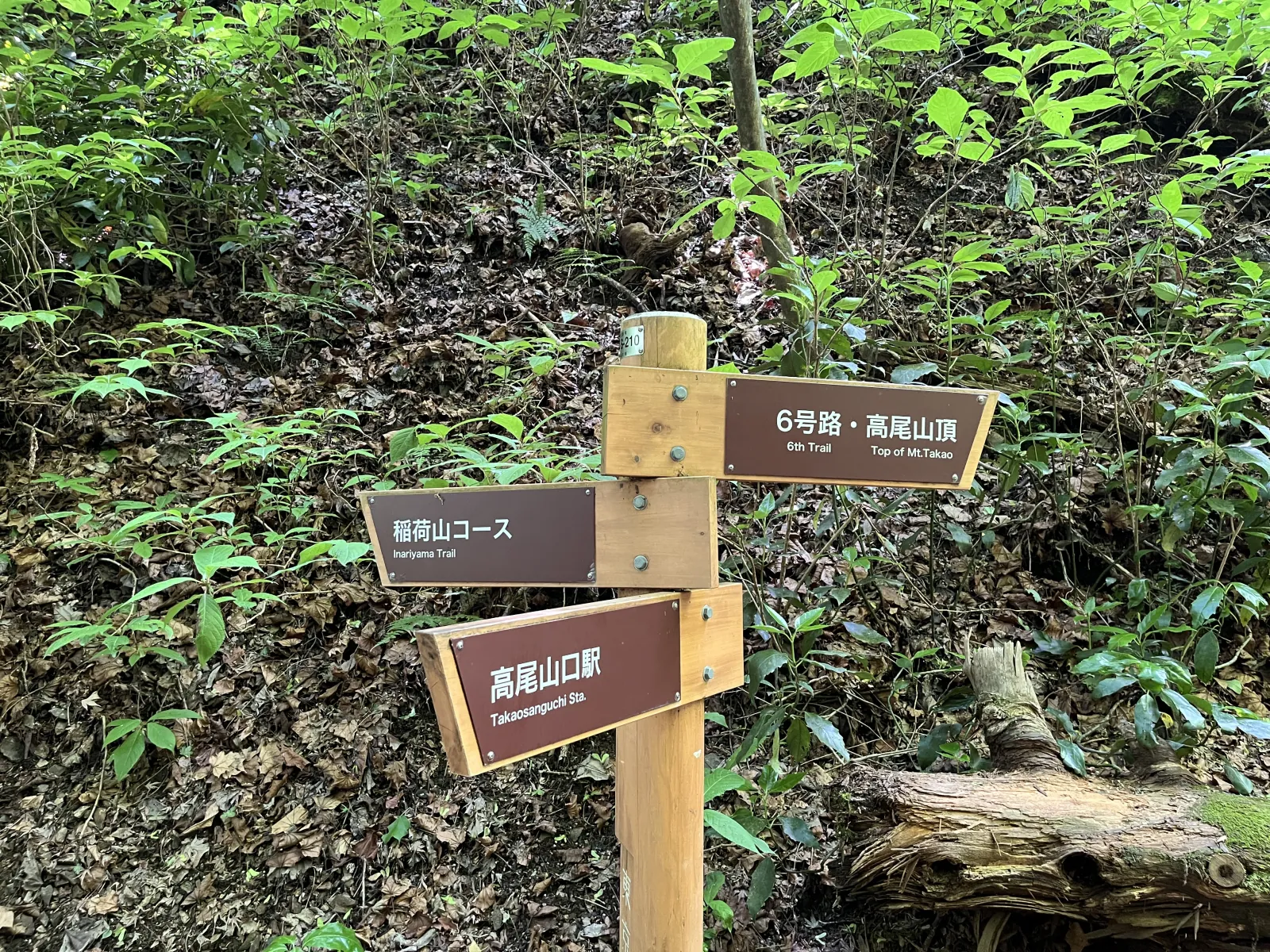
Trail 4 runs parallel to Trail 1 on the northern slope and is significantly less used despite being almost as easy. The path is earthen rather than paved, passes through cedar forest, and has one suspension bridge. Time: approximately 90 minutes. The most sensible upgrade for visitors who have already done Trail 1 once.
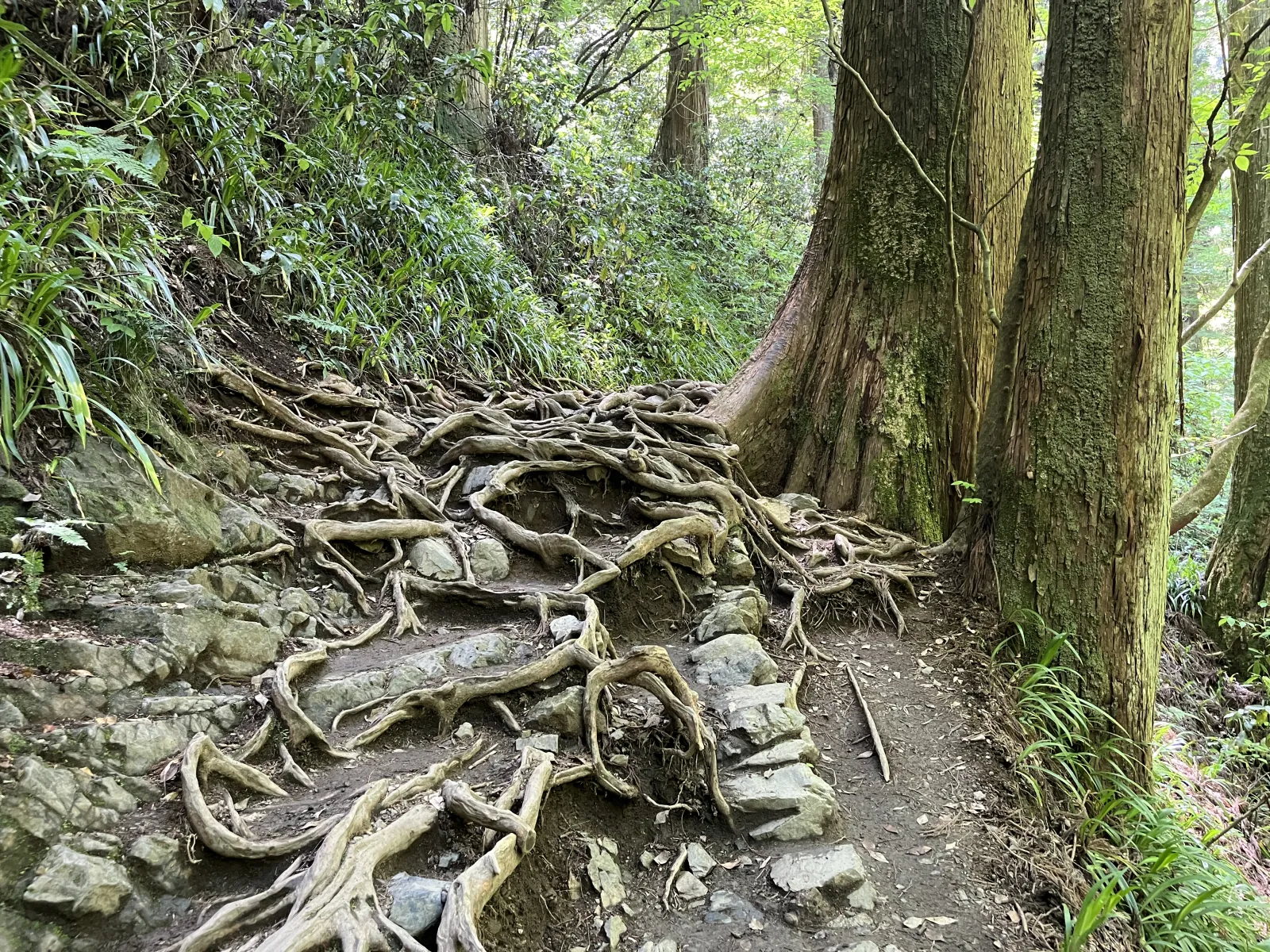
Trail 6 (Biwa-waterfall route) follows a stream through dense forest, passing a waterfall used by practitioners of misogi (Shinto water purification ritual) before joining Trail 1 near the summit. The trail involves some creek crossings that can be wet after rain. Time: approximately 90 minutes. Best for the experience of genuine forest without significant technical difficulty.
Inariyama Ridge Route is the most demanding standard option. It follows the western ridge, involves real elevation gain and descent, and offers the longest stretches of solitude. Time: approximately 105 minutes. The right choice for those who have been on Takao before and want to understand why it has the reputation it does among regular visitors.
Trails 2, 3, and 5 are shorter connecting routes used primarily for multi-loop circuits. Trail 5 loops around the summit zone for those wanting to extend summit time without repeating the ascent trail.
The cable car and chair lift reach the midpoint at roughly 470 meters, reducing hiking time to the summit by approximately 40 minutes—the practical choice for those primarily interested in the summit views and Yakuo-in.
Yakuo-in: The Temple That Has Watched Over This Mountain Since 744
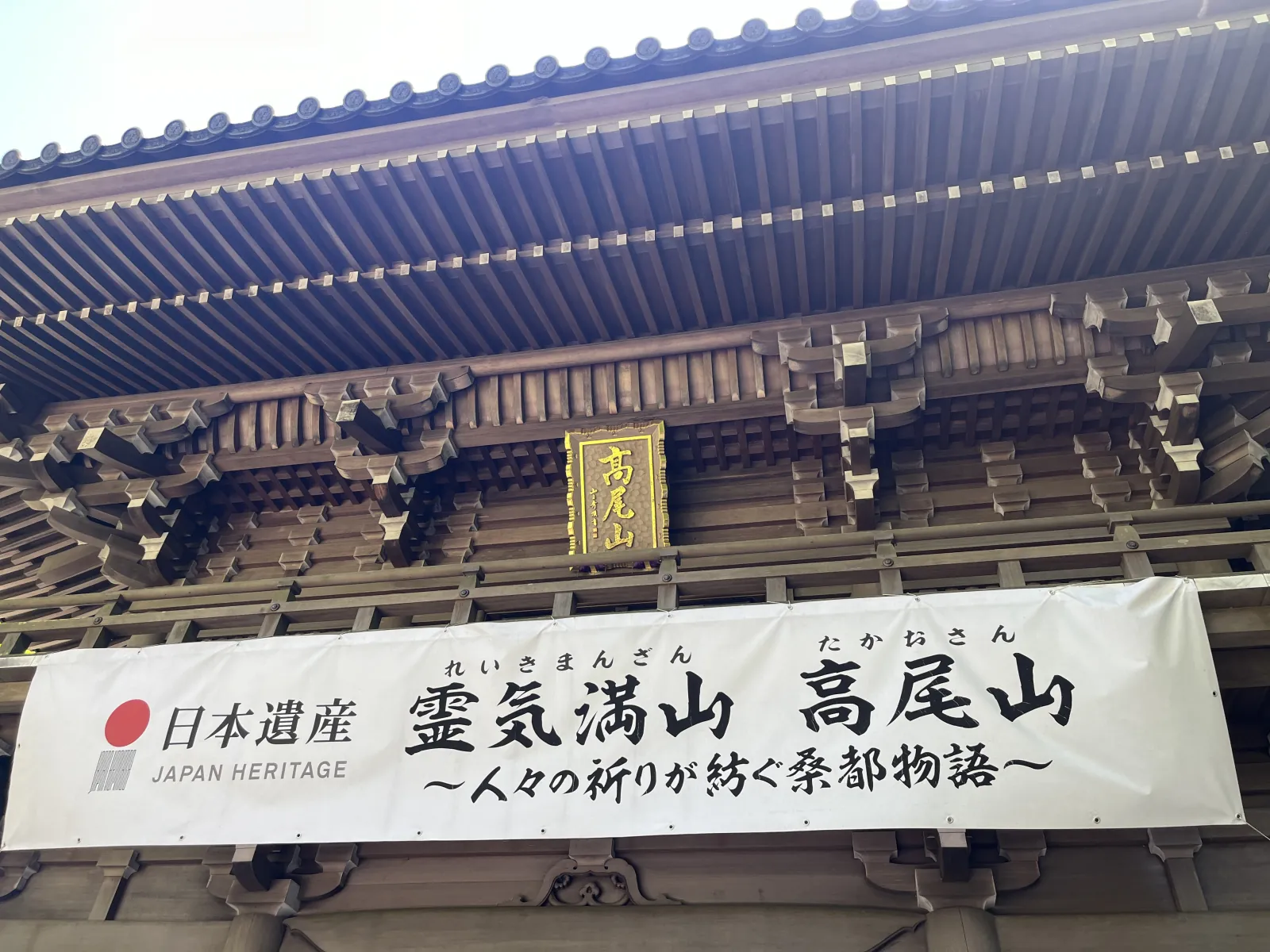
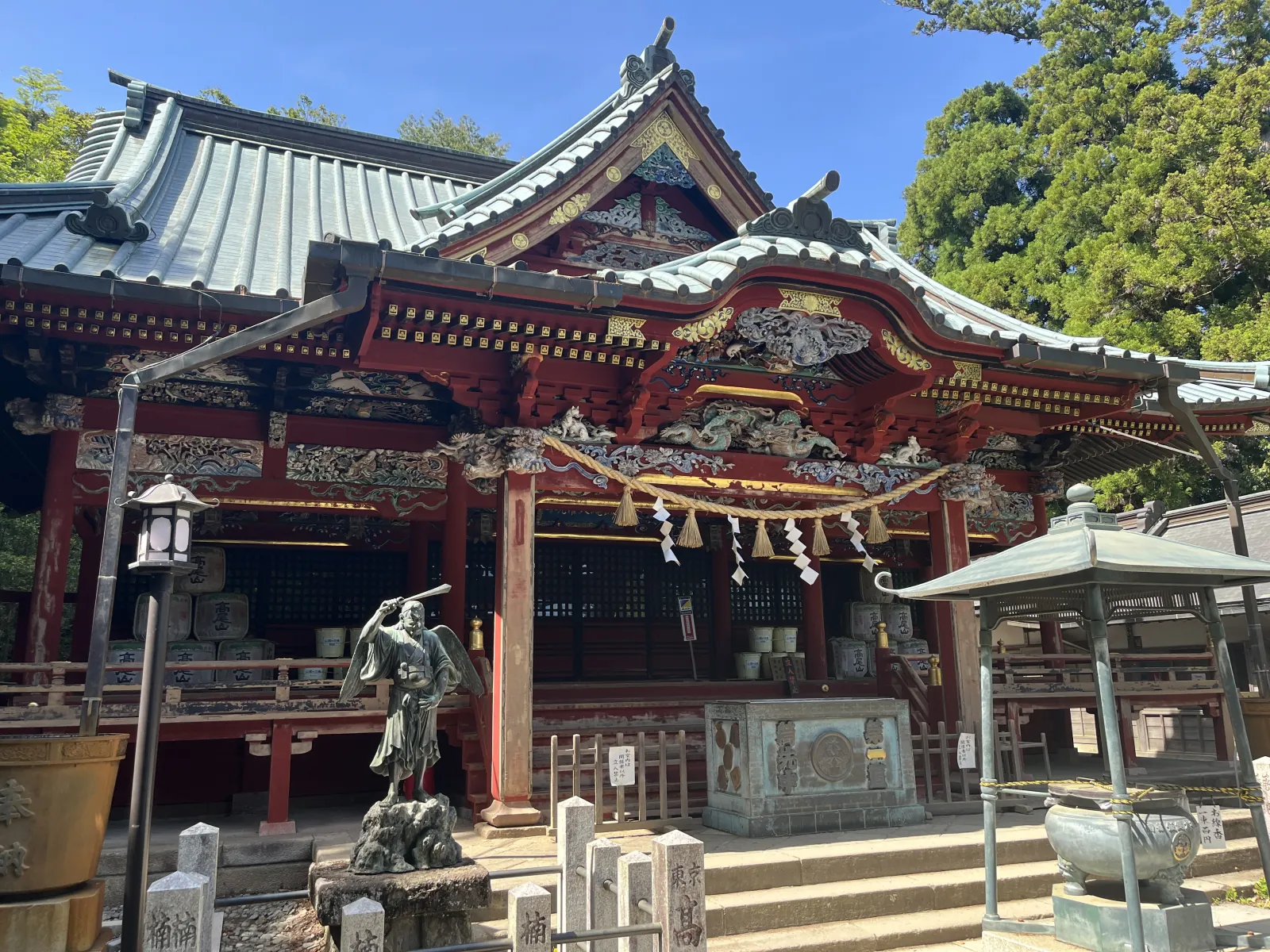
The central institution of Mount Takao is Yakuo-in (高尾山薬王院), founded in 744 AD during the reign of Emperor Shomu by the monk Gyoki—the same itinerant Buddhist missionary who oversaw the construction of Todai-ji’s Great Buddha in Nara. The temple is affiliated with the Shingon sect and dedicated to Izuna Daigongen, a syncretic deity combining Buddhist and Shinto elements.
What most visitors notice first is not the main hall but the tengu. Yakuo-in is closely associated with tengu—the long-nosed supernatural beings from Japanese folklore who are depicted throughout the complex in carved wood, painted lacquer, and bronze. The Takao tengu are understood as guardians and messengers of the mountain, associated with ascetic practice rather than malevolence. The large tengu statues at the main gate carry an expression the Japanese call ikioi—a forceful vitality that reads as both warning and welcome.
The Fudo-do hall, housing the principal object of worship, is the oldest surviving structure on the mountain. On the first and fifteenth days of each month it opens for public worship; the interior incense and chanting at these times produce an atmospheric density that the regular visitor experience does not replicate.
Above the main complex, a fifteen-minute walk through cedar brings you to a smaller upper precinct that is noticeably quieter—where the atmosphere of the mountain asserts itself more strongly than in the busier sections below.
The Summit: Views and What You Are Looking At
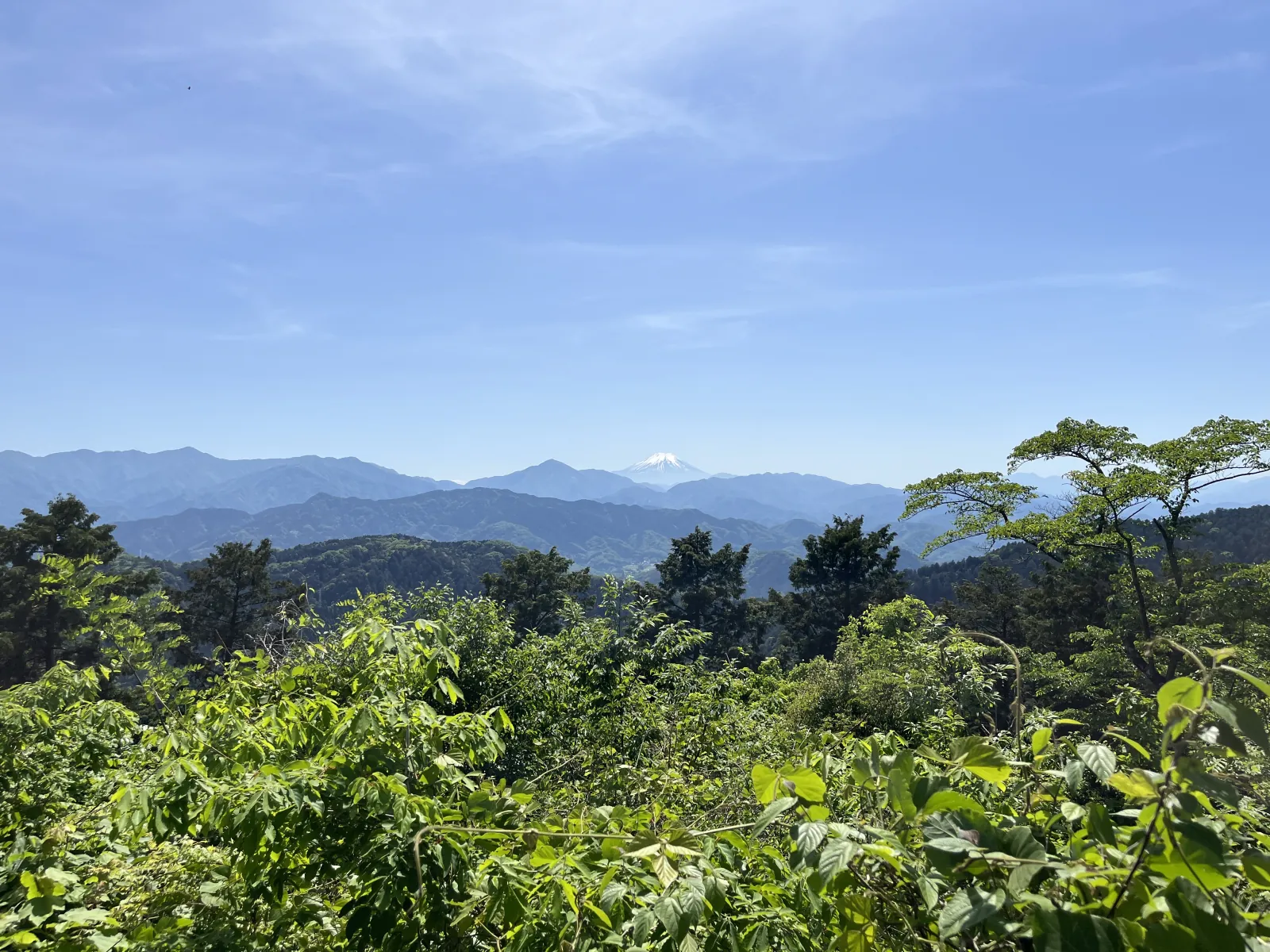
The summit at 599 meters provides a panoramic view that in clear conditions extends to the Southern Alps, Chichibu mountains, and—in winter on mornings with excellent visibility—the cone of Mount Fuji, approximately 70 kilometers southwest.
Fuji visibility is not guaranteed and is highly dependent on atmospheric conditions. The best window is late October through early March, on mornings after rainfall has cleared the atmosphere, before thermal haze develops. Check weather forecasts the evening before and prioritize early starts—the summit before 9 AM offers both the best visibility and the lowest crowd density.
Looking east, you see Tokyo. The vertical density of Shinjuku’s skyscrapers is legible at this distance as a distinct cluster against the horizontal sprawl; on exceptional days, the Skytree is visible as a thin vertical accent in the eastern sky. A major mountain with intact forest and a major city sharing a single sightline—this is not something most urban areas in the world can produce.
What to Eat: Mountain Food with Actual History
Tororo soba (grated mountain yam over cold buckwheat noodles) is the canonical Takao dish. Mountain yam (yamaimo) has been cultivated in the Takao region for centuries and was historically associated with Yakuo-in through its fortifying properties. The grated yam is poured over cold soba in its viscous, slightly sticky form. Every restaurant on the approach offers a version; differences are in the quality of the buckwheat and the freshness of the yam.
Nameko soup (small, naturally glutinous mushrooms in clear broth) is served at summit stalls and mid-mountain restaurants. In cold weather it functions as a practical counterweight to the chill. Takao beer, brewed in small batches and sold at several points on the mountain, carries the particular satisfaction of drinking locally produced beer at altitude with the Tokyo skyline in the distance.
Seasonal Calendar: Four Reasons to Return
Spring (late March to early April): Cherry blossom season. The mountain has a mix of Yoshino cherry and mountain cherry that bloom sequentially, extending the season longer than at lower elevations. The simultaneous appearance of cherry blossoms and new green leaves in the understory—briefly coinciding with the kerria rose—is the most photographically dense moment of the year.
Summer: The fullest expression of the forest—cedar at darkest green, canopy continuous, temperature three to five degrees cooler than central Tokyo. Evening visits arriving after 4 PM, staying for sunset, are underutilized by day-trippers.
Autumn (mid-November to early December): The mountain’s most crowded season after cherry blossom. The maple groves within and around Yakuo-in turn deep red; the contrast between red maples and unchanged cedars is a visual combination that appears only in forests managed for religious purposes over many centuries. Weekend afternoons in late November are the peak crowd moment of the year; weekday mornings are substantially more manageable.
Winter: Fuji season. The trails are clear, the air cold, the summit views at their best. Cedar pollen season begins in late January—a material concern for visitors with allergies.
Practical Information
- Access: Takaosanguchi Station (Keio Takao Line), 47 minutes from Shinjuku on the Keio Limited Express
- Cable car: Every 15 minutes, 8:00 AM – 5:45 PM (extends seasonally); ¥490 one way, ¥950 round trip
- Chair lift: 9:00 AM – 4:30 PM; ¥490 one way, ¥950 round trip
- Best timing: Weekdays before 10 AM on any trail; weekends before 9 AM on Trails 4, 6, and Inariyama
- Full circuit time: Ascent via Trail 6, descent via Trail 4 or Inariyama: 4 to 4.5 hours
- Shorter option: Summit via Trail 1 with cable car descent: 2 hours from base station