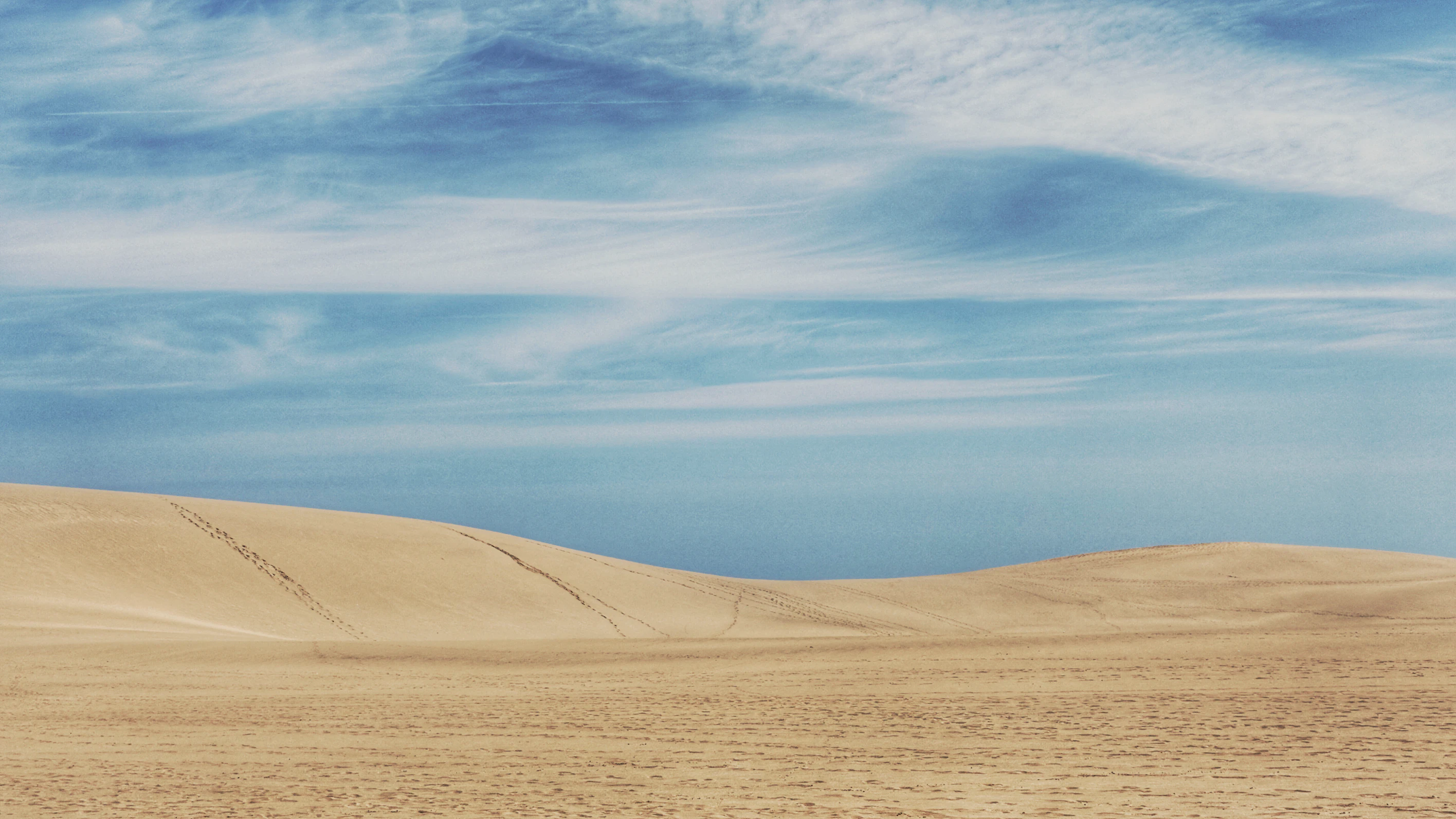
Tottori is the least-populated prefecture in Japan, and it holds something most people don’t believe exists here until they see it: a desert. Or near enough—the Tottori Sand Dunes roll for kilometers along the Sea of Japan, rising up to 90 meters, golden hills of sand meeting deep blue ocean. It is one of the most surreal landscapes in the country, the opposite of every temple-and-cherry-blossom image of Japan, and it’s the reason to point yourself at this quiet corner of the San’in coast.
Few foreign travelers make it here, which is precisely the appeal. Tottori is Japan with the volume turned down—empty roads, uncrowded sights, and seafood the rest of the country envies.
The Sand Dunes: Japan’s Most Surreal Landscape
The Tottori Sand Dunes are the country’s largest dune system, formed over 100,000 years by sand carried down from the mountains and sculpted endlessly by the wind. The ridges shift and reform constantly, so the landscape is never quite the same twice. Climb to the highest ridge—it’s more of a workout than it looks—and you’re rewarded with the dramatic line where sand meets sea.
It’s not just for looking. You can take a camel ride, try sandboarding down the slopes, or paragliding over them. Right beside the dunes, the Sand Museum displays astonishing large-scale sculptures carved entirely from sand by international artists, with a new theme each year. Go at sunrise or sunset, when the low light turns the ridges to sharp relief.
Misasa Onsen: The Radium Hot Springs
Inland from the dunes, Misasa Onsen has drawn bathers for over 800 years. Its waters are radium hot springs—containing trace radon, and long believed to have particular health benefits through a mild “hormesis” effect. Whatever the science, the experience is the classic one: soak in a traditional ryokan, walk the small riverside town in a yukata, dip your feet in the public footbaths. It’s an unhurried, deeply Japanese way to spend a night.
The Coast, the Castle, and the Rabbit
- Uradome Coast—a 15-kilometer stretch of scenic shoreline where mountains drop into clear water, full of sea caves and rock formations. Walk the cliff trails or take a sightseeing boat through the coves.
- Tottori Castle Ruins—a hilltop site above the city, the original castle long gone but the views and cherry blossoms very much present.
- Hakuto (White Rabbit) Beach—tied to one of Japan’s oldest myths, the tale of the White Rabbit of Inaba healed by the god Okuninushi (the same deity worshipped at Izumo, next door). A pretty beach with a story woven into the national mythology.
Tottori is also, improbably, the birthplace of Detective Conan and GeGeGe no Kitaro—two of Japan’s most beloved manga—and has small towns themed around each for fans.
Eat This
- Snow crab (matsuba-gani)—Tottori’s winter glory. The Sea of Japan crab caught here is among the best in the country, and crab season (roughly November–March) is the single best time to come for food.
- Tottori wagyu—premium local beef.
- Tottori pears (nashi)—the prefecture’s famous sweet, crisp pears.
Local Tips Most Visitors Miss
- Come in winter for the crab. If food is your priority, snow-crab season is unmatched—it’s why Japanese travelers come.
- Dunes at golden hour. Sunrise and sunset are dramatically better than harsh midday for both the view and photos.
- Rent a car. Tottori’s sights are spread along the coast and inland; public transport is thin.
- Pair it with Shimane next door for a complete, crowd-free San’in coast trip.
- Check the Sand Museum’s annual theme—it fully changes each year and is worth timing.
Practical Info
| Item | Detail |
|---|---|
| Access | Tottori Airport (flights from Tokyo); or limited express on the San’in line |
| Don’t miss | Sand Dunes, Sand Museum, Misasa Onsen, Uradome Coast |
| Eat | Snow crab (winter), Tottori wagyu, Tottori pears |
| Best time | Winter for crab; spring/autumn for comfortable dune weather |
| Getting around | Rental car strongly recommended |
Tottori is proof that Japan still has surprises—a desert by the sea in its emptiest prefecture, radium baths older than most countries, and winter crab worth crossing the islands for. It asks for a car and a little effort, and pays you back in landscapes and meals almost no other visitor will see.